How to Choose Cabinet Door Hinges for Humid Climates
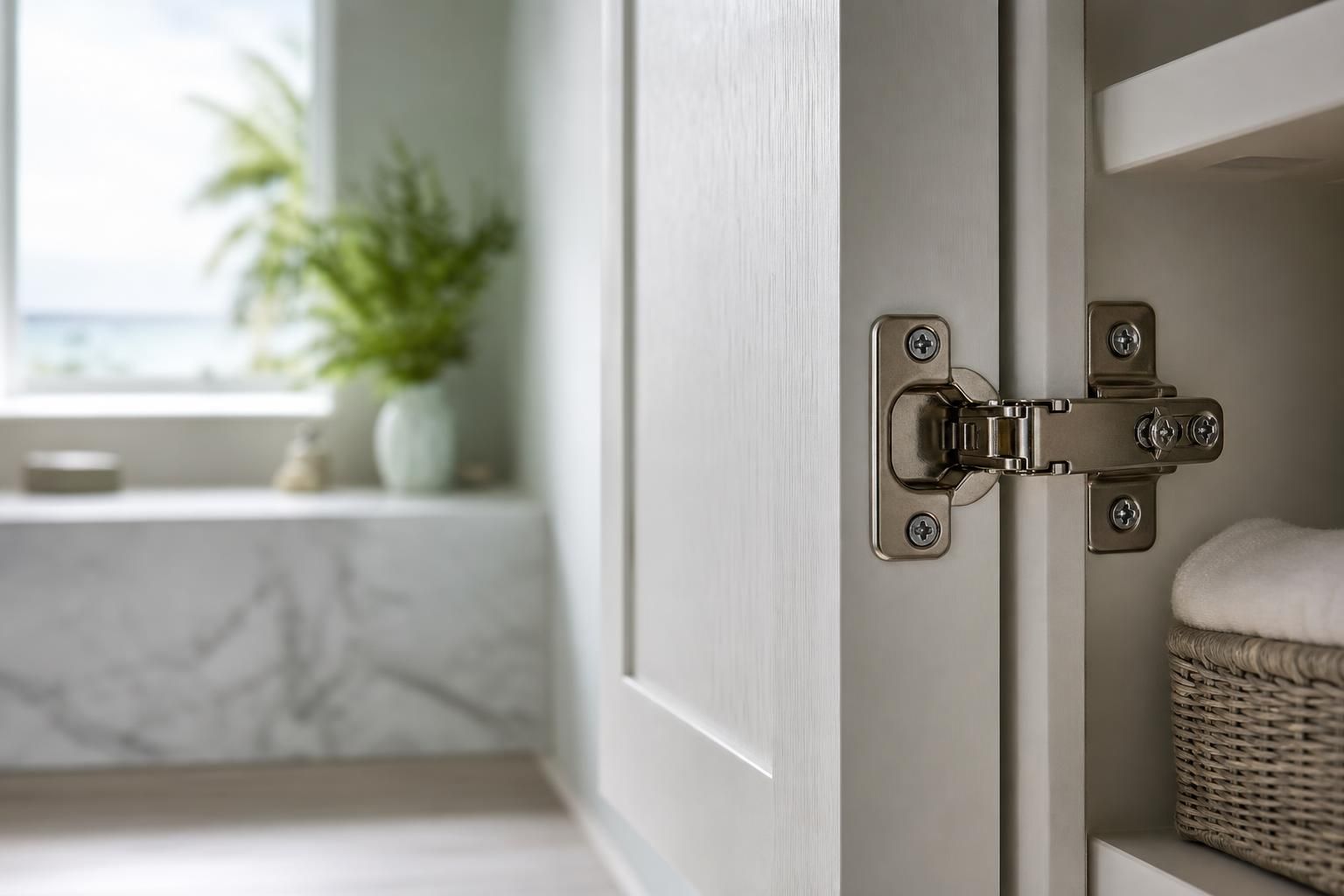
Key takeaway
Choosing cabinet door hinges comes down to three decisions: the hinge type that matches your door style (overlay, inset, or face-frame), the opening angle and weight capacity you need for the cabinet's use, and a corrosion-resistant finish suited to a humid, salt-air climate like Oahu's. Getting these right affects how doors sit, how long they last, and how much maintenance they demand over time.
Key takeaways
- Match the hinge to your door's overlay style first — full overlay, half overlay, or inset — since this narrows your hardware options immediately.
- In coastal or humid homes, prioritize stainless steel or heavily plated hinges over basic zinc, which corrodes faster near salt air.
- Soft-close, adjustable hinges cost more upfront but make long-term alignment easier on humidity-prone wood and MDF doors.
Start With Your Door's Overlay Style
Hinges are built for a specific relationship between the cabinet door and the box frame, so this is the first filter, not an afterthought.
- Full overlay doors cover almost the entire cabinet frame, common in modern slab and flat-panel kitchens. These need full overlay hinges, which have minimal arm curvature.
- Half overlay doors sit over half the frame thickness, typical when two doors share a center stile. These require half overlay hinges with a more pronounced bend.
- Inset doors sit flush inside the frame opening, giving a furniture-like look but demanding tighter tolerances. Inset hinges (often including specialty options like butt hinges or knife hinges) are built for that precision.
Mixing these up is the most common hardware mistake — a full overlay hinge on an inset door simply won't close correctly, no matter how it's adjusted.
Pick a Hinge Mechanism for How the Cabinet Gets Used
Beyond overlay type, the mechanism determines daily feel and long-term wear.
- Concealed European hinges mount inside the cabinet, are fully adjustable in three directions (depth, height, side-to-side), and are the standard choice for most kitchen and bathroom remodels today.
- Soft-close hinges use a built-in hydraulic or spring damper so the door eases shut instead of slamming — a meaningful upgrade in households with kids, or in vacation rentals where guest wear adds up fast.
- Weight and door size matter more than most homeowners expect. Larger or heavier doors, like tall pantry panels or thick slab fronts, need two or three hinges per door instead of the standard two, or hinges rated for a heavier load, to prevent sagging over time.
Standards bodies like the American National Standards Institute publish performance classifications (through ANSI/BHMA hardware standards) that grade hinges by cycle testing and load capacity — professional installers use these grades to match hinge strength to door weight rather than guessing.
Account for Hawaii's Humidity and Salt Air
Interior hardware in most of the mainland U.S. rarely has to contend with year-round humidity above 60% or airborne salt, but that's standard conditions across Oahu. The National Oceanic and Atmospheric Administration notes that Hawaii's trade-wind climate keeps relative humidity consistently elevated compared to drier mainland regions, and homes near the coast also deal with salt-laden air that accelerates metal corrosion.
That combination has real consequences for hinge hardware:
- Basic zinc-plated hinges can develop surface corrosion and stiffness within a few years in coastal or non-air-conditioned units.
- Stainless steel hinges, or hinges with a heavier nickel or chrome plating, resist pitting and keep their adjustment range longer.
- Hinges paired with doors that haven't been properly sealed are especially vulnerable, since swelling wood puts extra lateral stress on the hinge arms and screws. If your cabinet doors are already sticking or binding, it's worth addressing the moisture issue directly — see how to prevent cabinet doors from swelling in Hawaii's climate before assuming the hardware itself has failed.
For condo and vacation-rental kitchens that run without air conditioning for stretches of time, upgrading to a marine-grade or stainless hinge at the outset is usually cheaper in the long run than replacing corroded hardware every few years.
Match the Hinge Finish to Your Cabinet Hardware
Hinges are mostly hidden when doors are closed, but the opening angle and any visible hinge cup or arm should still coordinate with pulls, knobs, and faucet finishes for a cohesive look. Common finish options include satin nickel, matte black, oil-rubbed bronze, and polished chrome. If you're finalizing a broader hardware palette, it's worth settling on cabinet finishes and door style at the same time you're working with a custom kitchen cabinet designer, since hinge visibility changes depending on whether doors are overlay or inset.
Consider Opening Angle for Function
Standard concealed hinges open to around 110–120 degrees, which is sufficient for most base and wall cabinets. But certain layouts benefit from wider-opening hardware:
- Cabinets next to an appliance or island may need 170-degree hinges so the door clears obstructions fully.
- Corner cabinets with blind storage or lazy Susans often require specialty hinges designed for that specific geometry.
- Deep pull-out drawers or pantry cabinets sometimes use hinges paired with soft-close slides rather than traditional door hinges at all.
Walking through your kitchen layout with measurements in hand — or using a 3D design visualizer during planning — makes it easier to catch these clearance issues before hardware is ordered rather than after doors are hung.
When to Replace Rather Than Repair
Not every alignment problem means new hinges. Many concealed hinges have adjustment screws that fix minor sagging or gaps without replacement. Replacement makes more sense when:
- The hinge cup itself has stripped out of the door, leaving no solid material for screws to grip.
- Visible rust or pitting has formed on the hinge arm or screws.
- The door no longer closes flush even after adjustment, suggesting the hinge mechanism itself has worn out.
If you're already planning a full cabinet installation or kitchen remodel, it's worth discussing hinge grade with whoever is handling the project — see what to look for in kitchen cabinet installation for the broader installation process, since hinge selection is typically part of that scope rather than a separate purchase.
Frequently Asked Questions
Q: What's the difference between overlay and inset cabinet hinges?
Overlay hinges are made for doors that sit on top of the cabinet frame (full or half overlay), while inset hinges are made for doors that sit flush inside the frame opening. The two are not interchangeable, so you need to know your door style before buying hinges.
Q: Are soft-close hinges worth the extra cost?
For most households, yes — soft-close hinges reduce slamming wear on both the door and cabinet box, which matters over years of daily use. They're especially useful in vacation rentals or family kitchens where doors get opened and closed frequently by different people.
Q: How many hinges does a cabinet door need?
Most standard-height doors use two hinges, but taller or heavier doors, such as pantry or full-height panels, often need three to prevent sagging. The right count depends on the door's weight and height, not a fixed rule.
Q: Do I need special hinges for a humid or coastal home in Hawaii?
Yes — stainless steel or heavily plated hinges hold up better than basic zinc hardware in Oahu's humidity and salt air. Standard hinges can corrode or stiffen within a few years in coastal or non-air-conditioned units.
Q: Can I replace cabinet hinges without replacing the whole door?
In most cases, yes, as long as the new hinge matches the existing cup size and overlay type, or the door is re-drilled to fit a different hinge pattern. If the door material has swollen or the hinge cup has stripped out, the door itself may need attention first.