Best Cabinet Brands for Humid Climates Like Hawaii
Key takeaway
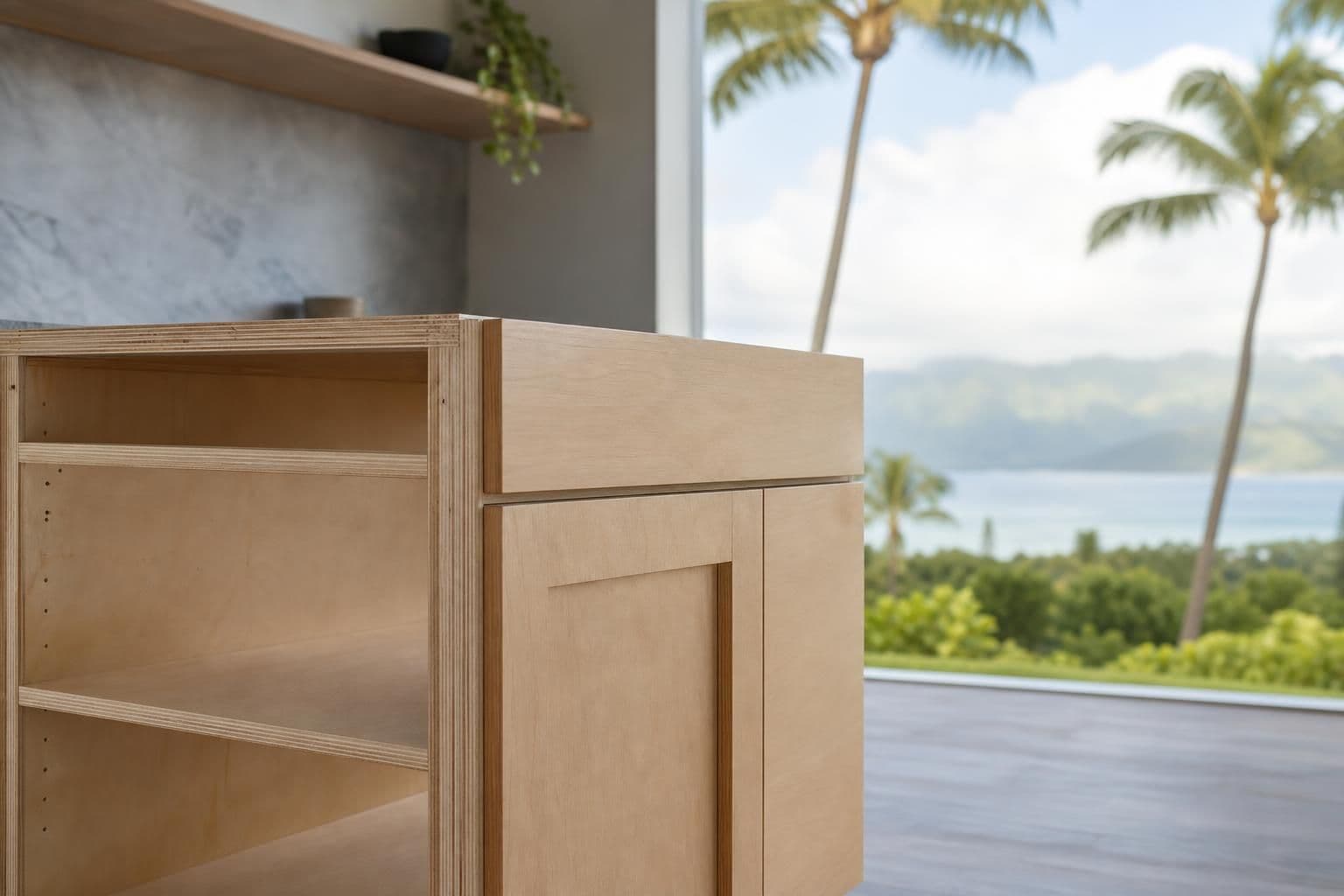
There's no single cabinet brand that universally performs best in humidity — what matters is the construction behind the label. The brands that hold up in Hawaii's climate are the ones using marine-grade or moisture-resistant plywood boxes, sealed edges, and finishes rated for high humidity, rather than standard particleboard or MDF built for mainland showroom conditions. Before comparing brand names, compare the materials and construction specs each one actually offers.
Key takeaways
- Prioritize plywood or PVC-core cabinet boxes over particleboard or raw MDF, which absorb moisture and swell in humid air.
- Check that edges, backs, and cabinet bottoms are fully sealed or laminated — exposed board edges are where swelling starts.
- Ask about hinge and drawer hardware ratings separately from the cabinet box, since humidity and salt air affect metal components differently than wood.
Why Humidity Changes the Cabinet Equation
Standard cabinet construction is engineered for interior climates that hover around 30-50% relative humidity. Honolulu routinely sits well above that range, especially during rainy season, and condo units near the water deal with salt-laden air on top of moisture. Wood and wood composites expand and contract as they absorb and release ambient moisture, and materials that aren't built to manage that cycle will warp, swell, or delaminate over a few humid seasons rather than a few decades.
The National Institute of Standards and Technology has documented how wood-based building materials change dimension with moisture content, which is the same mechanism behind cabinet doors that stop closing flush or drawer boxes that stick in summer. Cabinet brands marketed as humidity-tolerant are really just controlling for this mechanism more aggressively than a standard product line.
Core Material Is the Real "Brand" Decision
Most of what separates a humid-climate-ready cabinet from a standard one happens before any finish is applied — it's the core material of the box itself.
| Core Material | Moisture Resistance | Typical Use |
|---|---|---|
| Raw particleboard | Low — swells and crumbles when wet | Budget mainland cabinetry, not recommended for Hawaii |
| Standard MDF | Low to moderate — edges absorb moisture fast | Interior painted doors only, with sealed edges |
| Furniture-grade plywood | High — layered grain resists warping | Cabinet boxes, drawer boxes in humid regions |
| Marine-grade plywood | Very high — void-free layers, moisture-rated glue | Kitchens, baths, lanai-adjacent cabinetry |
| PVC/thermofoil-wrapped board | High — fully sealed outer layer | Vanities, laundry, high-moisture rooms |
The APA – The Engineered Wood Association sets grading standards for plywood panels, including bond durability ratings that indicate how a panel holds up under repeated moisture exposure. When comparing cabinet lines, asking which core material and plywood grade is used tells you more than the brand name on the catalog cover.
Construction Details That Matter More Than the Label
Two cabinets from different brands using the same core material can still perform differently based on how they're assembled. Look for:
- Sealed or laminated edges on every cut panel, not just the visible face — exposed MDF or particleboard edges are the most common failure point.
- Full plywood backs and bottoms, since cabinet interiors near sinks and dishwashers take the most consistent moisture exposure.
- Dovetail or doweled drawer joints rather than stapled construction, which loosens as wood moves seasonally.
- Soft-close hinges rated for humidity, since standard steel hardware can corrode faster in salt-air environments — a topic covered in more depth in this guide to cabinet hardware finishes for salt air.
Finishes That Hold Up in Hawaii's Climate
The finish on a cabinet door is a moisture barrier as much as it is a design choice. Catalyzed conversion varnishes and factory-applied UV finishes seal the wood surface more completely than hand-applied lacquer, which matters when a kitchen sits a few hundred feet from the ocean. Thermofoil and laminate finishes go a step further by wrapping the entire door in a continuous moisture-resistant layer, which is one reason they're common in condo and vacation-rental renovations where low maintenance matters as much as looks.
Door style also plays a role in how a finish performs over time. Slab doors have fewer seams and profile edges where moisture can collect compared to heavily routed traditional styles, which is part of why clean-lined contemporary cabinet styles have become popular in Oahu renovations beyond just the aesthetic.
Where This Matters Most in an Oahu Home
Not every cabinet in a house needs the same moisture spec. Kitchens, bathrooms, and laundry rooms justify the upgrade to marine-grade plywood or PVC-core construction; a bedroom closet system typically doesn't face the same exposure. For smaller Oahu units adding storage through an ADU, the same humidity principles apply at a smaller scale — worth reviewing alongside custom closet cabinet options built for ADU units if you're planning built-ins beyond the kitchen.
Installation quality also affects how well any cabinet brand performs long-term. Gaps at the wall, unsealed cut edges made on-site, or cabinets installed flush against a damp exterior wall without a moisture break can undermine even a well-built box. Understanding what a professional cabinet installation process looks like helps homeowners evaluate whether a quote includes the prep work — like moisture barriers and proper shimming — that protects the investment.
Hawaii cabinet costs typically run above mainland averages because most core materials and hardware are shipped in and labor rates reflect local conditions; getting a local quote is the most reliable way to compare options for your specific kitchen or bath layout. Teams familiar with island humidity, like VC Flooring & Stone, can walk through core material and finish options during a design consultation rather than relying on a catalog spec sheet alone.
Frequently Asked Questions
Q: Is plywood always better than MDF for humid climates?
For structural cabinet boxes, yes — plywood's layered grain resists warping better than MDF, which can swell at exposed edges. MDF still works for painted doors or interior panels as long as every edge is fully sealed.
Q: Do thermofoil cabinets work well in Hawaii?
Thermofoil can perform well because the wrap seals the entire door surface against moisture, making it a practical choice for bathrooms and laundry areas. The tradeoff is that extreme heat near windows or ovens can eventually cause the wrap to lift at edges over time.
Q: How can I tell if a cabinet brand is actually built for humidity?
Ask specifically about the core material, plywood grade, and whether all cut edges are sealed or laminated — brand marketing claims matter less than these construction details. A showroom that can show you a cross-section of the cabinet box is a good sign.
Q: Does cabinet hardware need to be humidity-rated too?
Yes, separately from the box material — standard steel hinges and slides can corrode faster in humid, salt-air environments than in mainland interiors. Stainless steel or coated hardware designed for coastal exposure typically holds up longer.
Q: Are solid wood cabinets a good choice for Oahu kitchens?
Solid wood can work but tends to move more with humidity swings than engineered plywood, especially in large panel doors. Many Oahu renovations use solid wood for face frames and trim while relying on plywood boxes for the structural parts most exposed to moisture.