How to Prevent Cabinet Doors From Swelling in Hawaii
Key takeaway
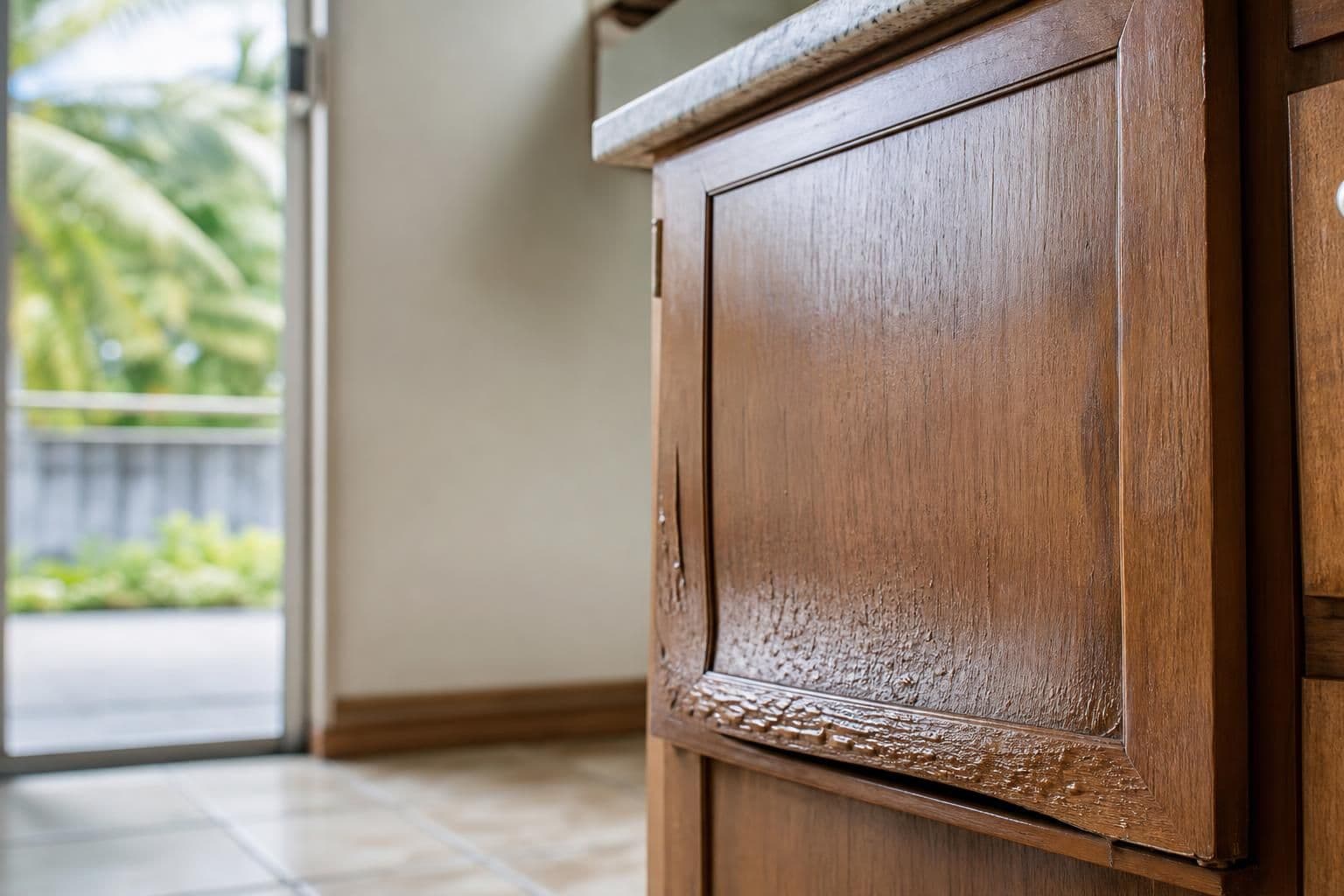
Cabinet doors swell when wood or wood-based panels absorb moisture from humid air or direct water contact, causing the fibers to expand faster than the door's frame or hinges can accommodate. You prevent it by choosing moisture-stable materials (like PVC, thermofoil, or marine-grade plywood boxes), keeping indoor humidity below roughly 60%, improving airflow around sinks and stoves, and wiping up splashes before they soak into seams and edges.
Key takeaways
- Keep kitchen and bathroom relative humidity under 50-60% using exhaust fans or a dehumidifier — sustained moisture above that range is what drives swelling.
- Choose cabinet boxes and doors rated for humid climates (PVC, thermofoil, or exterior-grade plywood) rather than raw MDF or particleboard.
- Wipe standing water off cabinet edges near sinks, dishwashers, and tub surrounds right away — edges and corners absorb moisture fastest.
Why Oahu's Climate Makes Cabinets More Prone to Swelling
Honolulu's year-round humidity sits well above what most mainland cabinet lines are designed for, and the rainy season from roughly November through March adds extra moisture load indoors even when windows stay shut. Wood is hygroscopic — it absorbs and releases moisture with the surrounding air — and the U.S. Forest Products Laboratory notes that wood moisture content rises and falls directly with relative humidity, which is why cabinets in coastal, humid regions swell, warp, or stick far more often than the same products installed in drier climates (USDA Forest Products Laboratory). Add salt air near windward and coastal neighborhoods, and the combination accelerates both wood expansion and hardware corrosion.
Condo and vacation-rental units add another layer: many sit closed up for stretches between guests or owner visits, with no air conditioning running to pull moisture out of the air. That stagnant, humid environment is exactly the condition that lets cabinet doors absorb water vapor steadily over weeks instead of drying back out between uses.
Choose Materials Built for Humidity From the Start
The single biggest swelling-prevention decision happens before installation, when you pick the cabinet material. Not all cabinet construction handles moisture the same way:
- Raw MDF and particleboard soak up moisture at exposed edges and swell permanently once saturated — they don't shrink back to original size when they dry.
- Plywood boxes with waterproof glue resist swelling far better than particleboard because the layered grain structure limits how far moisture travels through the panel.
- PVC and thermofoil doors are essentially moisture-proof on the surface since there's no exposed wood grain to absorb water.
- Solid wood doors can perform well if properly sealed on all six sides, including the often-skipped back and edges, but they still move seasonally with humidity swings.
For a deeper breakdown of which lines hold up best in island conditions, see this guide to cabinet brands built for humid climates. If you're still in the planning stage of a kitchen remodel, it's worth reviewing cabinet ideas suited to island homes before settling on a material.
Control Indoor Humidity and Airflow
Material choice only does part of the job — the air around the cabinets matters just as much. The EPA recommends keeping indoor relative humidity between 30% and 50% to limit moisture-related damage and mold growth in homes (EPA Indoor Air Quality), and that range is a practical target for kitchens and bathrooms specifically, since those rooms generate the most localized humidity from cooking, dishwashing, and showering.
Practical steps that help:
- Run the kitchen exhaust fan or range hood every time you cook, even for short stovetop use.
- Use the bathroom fan during and for 15-20 minutes after every shower.
- Keep air conditioning or a portable dehumidifier running in condo units left vacant between stays, since AC naturally pulls humidity out of the air as it cools.
- Leave a small gap between cabinet backs and exterior walls where possible, so air can circulate instead of trapping moisture against the wood.
Protect the Spots That Take the Most Moisture
Swelling rarely starts in the middle of a door — it starts at edges, seams, and the areas right under sinks. These spots deserve the most attention:
- Under-sink cabinets: check supply lines and the garbage disposal connection periodically for slow drips that go unnoticed until the cabinet floor swells.
- Dishwasher-adjacent cabinets: a worn door gasket on the dishwasher can send steam directly into the neighboring cabinet box over time.
- Bathroom vanity doors: towel drips and counter splashes pool at the base of the door if there's no gap or drip edge.
- Doors facing a window with no overhang: wind-driven rain during Oahu's rainy season can reach cabinets near an open lanai door or unscreened window.
Wiping these areas dry after use, rather than letting water sit, is a simple habit that does more to prevent swelling than most people expect.
Maintenance Habits That Extend Cabinet Life
A few consistent habits keep moisture from building up in the finish and seams over months and years:
- Reseal exposed wood edges (cut corners, drilled hardware holes) with a matching finish or clear sealant if you notice the original finish wearing thin.
- Avoid steam cleaners directly on cabinet faces — the concentrated heat and moisture can force water past the finish faster than normal splashes would.
- Check hinges periodically; a sagging or misaligned door rubs against the frame and can wear through the finish at the contact point, creating a spot where moisture gets in.
- If you're mid-renovation and comparing fabricators or contractors for a kitchen or bath project, confirm how they detail cabinet-to-countertop and cabinet-to-backsplash seams, since gaps there are a common moisture entry point — a question worth asking when you choose a countertop fabricator or vet a bathroom remodel contractor in Oahu.
When Swelling Has Already Started
A door that's slightly sticking but not visibly warped can sometimes be saved by letting it dry out fully in a well-ventilated space and then resealing exposed edges. Once a door has visibly bowed, delaminated, or separated at a seam, though, the damage is usually structural rather than cosmetic, and sanding or refinishing won't reverse it. At that point replacement of the affected door — or the whole run of cabinets if several doors came from the same vulnerable batch — is typically the more durable fix than repeated patch repairs.
Frequently Asked Questions
Q: What causes cabinet doors to swell in humid climates like Hawaii?
Swelling happens when wood or wood-composite panels absorb moisture from humid air or direct water contact faster than they can release it, causing the fibers to expand. Sustained high indoor humidity, poor ventilation, and water exposure near sinks or dishwashers are the most common triggers.
Q: Can a swollen cabinet door go back to normal?
A door that's only slightly swollen and hasn't warped may shrink back close to its original size once it fully dries in a ventilated space, especially if it's solid wood. Particleboard and MDF doors, however, usually stay permanently expanded once saturated because the compressed fibers don't recompress on their own.
Q: What's the best material for cabinets in a humid, coastal environment?
PVC and thermofoil doors resist moisture best because they have no exposed wood grain, while plywood boxes with waterproof glue outperform particleboard for the cabinet frame itself. Solid wood can work too if it's sealed on all sides, including edges and the back, not just the visible face.
Q: Does running air conditioning really help prevent cabinet swelling?
Yes — air conditioning actively removes moisture from indoor air as it cools, which keeps relative humidity closer to the 30-50% range recommended for homes. This matters especially in condos and vacation rentals left unoccupied for stretches, where humidity can otherwise build up unchecked.
Q: Where on a cabinet should I check first for swelling damage?
Start at the bottom edges and corners of doors near sinks, dishwashers, and tub surrounds, since these areas absorb moisture fastest and show swelling before the rest of the panel does. Exposed hardware holes and cut edges without a finish coat are also early warning spots.