How to Choose a Kitchen Sink for Quartz Countertops
Key takeaway
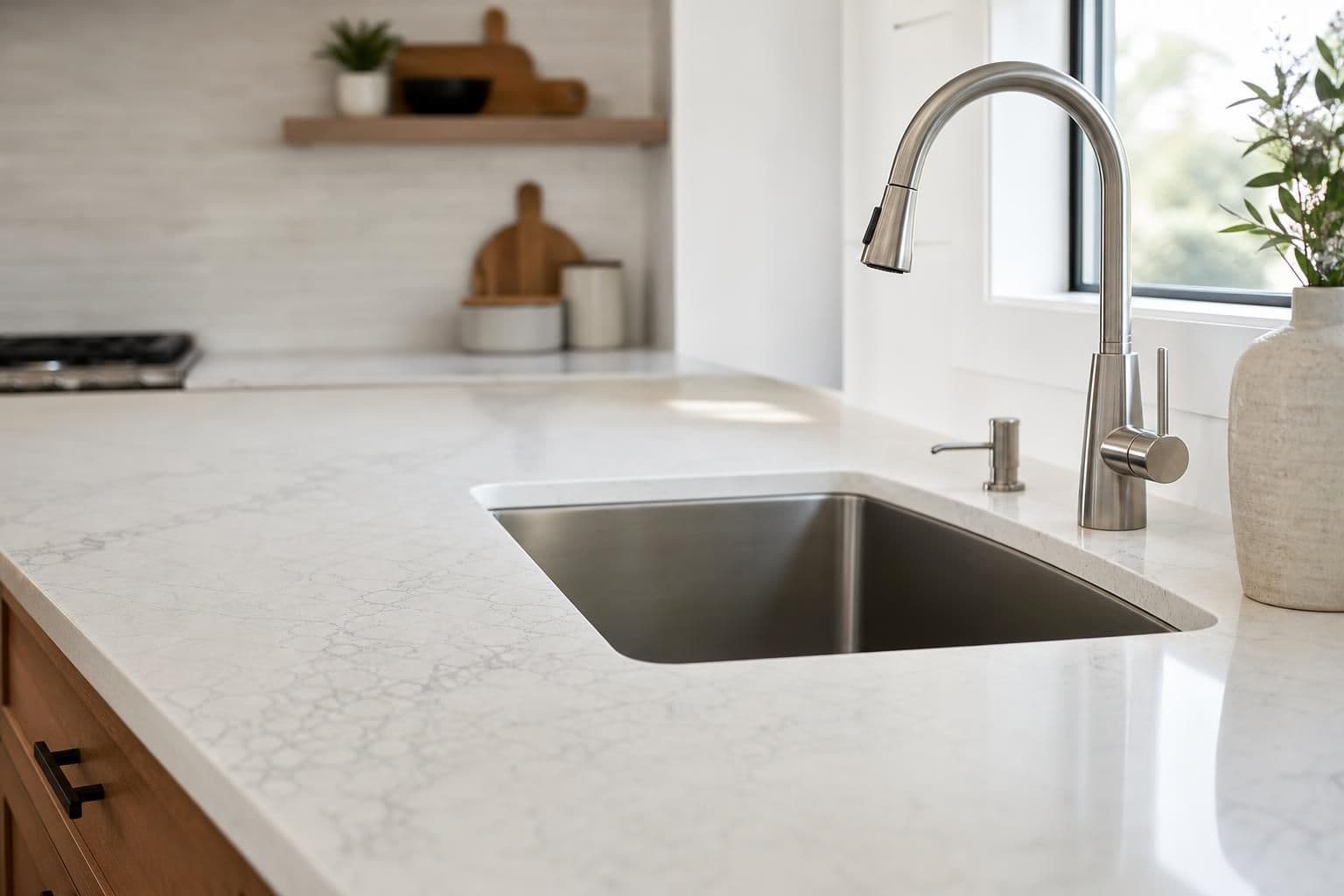
Choose a kitchen sink for quartz countertops based on three factors: mount type (undermount is the standard pairing because quartz edges can be finished and sealed cleanly), sink material that won't scratch or chip the quartz edge (stainless steel, fireclay, or granite composite are the safest choices), and a size that matches your cabinet base and daily use. Undermount sinks are preferred with quartz because the countertop edge is exposed and can be polished smooth, while drop-in sinks work too but leave a visible rim that collects grime over time.
Key takeaways
- Undermount mounting is the default for quartz because the slab edge can be fabricated and sealed at the sink cutout without a rim.
- Stainless steel, fireclay, and granite composite sinks pair well with quartz; avoid thin, flexible acrylic sinks that can flex and stress the countertop seal.
- Measure your base cabinet opening and faucet hole spacing before ordering — a mismatch means re-cutting the quartz, not just swapping the sink.
Undermount vs. drop-in: which mount works best with quartz
Undermount sinks are fastened to the underside of the quartz slab with clips and silicone adhesive, so the countertop edge is visible and polished all the way around the sink opening. This is the most common pairing with quartz in Hawaii kitchens because it makes wiping counters into the sink effortless — there's no raised lip trapping water or crumbs, which matters in humid island kitchens where standing moisture invites mildew. Drop-in (top-mount) sinks rest on top of the counter with a visible rim; they're less expensive to install and more forgiving if you ever swap sinks later, but the rim seam is a spot where grime and moisture can sit. If your kitchen already has popular quartz countertop colors picked out, confirm with your fabricator whether the slab thickness and edge profile you want will support an undermount cutout before you shop for a sink.
Sink material: what actually holds up against a quartz edge
Quartz is engineered stone — roughly 90% crushed quartz mixed with resin binders — and its polished edge is harder than most sink rims, but the sink material still matters for day-to-day wear and noise.
- Stainless steel (16 or 18 gauge) resists chipping against the quartz edge, is widely available in undermount profiles, and is the easiest to match to a standard cutout.
- Fireclay sinks are heavy, glossy, and resist scratching, but they're rigid — any flex during installation can stress the silicone seal against the quartz, so professional installation matters more here.
- Granite composite sinks are dense and matte-finished; they hold up well to heat and impact but come in a narrower range of mounting depths, so double-check clearance under your cabinet.
- Acrylic or thin fiberglass sinks are the one category to avoid under quartz — they can flex slightly under weight, which stresses the sealant line and can eventually let water seep behind the countertop edge.
Sizing the sink to your cabinet and your kitchen
Base cabinets for kitchen sinks are typically built in standard widths, so measure the interior cabinet opening, not just the countertop overhang, before choosing a sink size. A single large basin (often in the 30- to 33-inch cabinet range) suits households that wash oversized pots or trays, while a 60/40 split double-basin fits better for households that want to separate washing from prep. If you're renovating a condo or vacation rental where kitchen footprints run smaller, a compact single-basin undermount sink often makes more visual and functional sense than squeezing in a double bowl — something worth discussing during a countertop fabricator consultation before the quartz template is cut, since the sink cutout is one of the few things that can't be changed after fabrication.
Edge and seam considerations specific to quartz
Because quartz is fabricated off-site and templated to your exact cabinet layout, the sink cutout is cut once and sealed with a color-matched silicone or epoxy bead around the underside lip. A poorly sealed undermount joint is one of the few ways water can actually damage a quartz installation — not the slab surface itself, which resists stains and scratches well, but the particleboard or plywood cabinet base beneath it if moisture seeps through a failed seal over months of daily use. If a sink seal ever does fail or you notice a chip near the cutout edge, it's usually a smaller fix than replacing the slab — see how that process works in repairing a chipped quartz countertop for context on what's salvageable.
Faucet holes, drain placement, and accessory cutouts
Decide on your faucet configuration — single-hole, three-hole with soap dispenser, or a pull-down faucet with a separate air-gap hole for a dishwasher — before the quartz is templated, since every hole is cut into the slab and can't be relocated afterward. The National Kitchen and Bath Association publishes planning guidelines recommending enough clearance around the sink for comfortable movement between the sink, stove, and refrigerator, which is worth considering alongside faucet choice so the finished layout doesn't feel cramped. If you're also weighing WaterSense-labeled faucets to manage water use, the EPA WaterSense program lists certified fixtures that meet efficiency standards without sacrificing flow.
Matching the sink to the rest of your material palette
A sink choice doesn't exist in isolation — it should read as part of the same material story as your cabinets and countertop edge profile. Matte black or brushed stainless sinks tend to read more contemporary against light quartz, while a fireclay apron-front sink leans into a farmhouse look that pairs naturally with shaker-style cabinetry. If you're still deciding between stone options for the surrounding counter, it's worth comparing how quartz stacks up against marble for durability in a working kitchen sink zone, since the area immediately around a sink sees more water exposure than any other part of the countertop.
A quick note on cost and sourcing in Hawaii
Sink prices and quartz fabrication costs in Oahu typically run higher than mainland averages because both materials and skilled labor are shipped or flown in. Rather than estimate a number here, it's more useful to get a quote once you've settled on mount type, material, and size — fabricators can tell you quickly whether a given sink is compatible with the slab thickness and edge style you've chosen. The NSF International sets sanitation and material-safety standards that many commercial-grade stainless and fireclay sinks are certified against, which can be a useful filter when comparing brands.
Frequently Asked Questions
Q: Can any sink be installed under a quartz countertop?
No — the sink needs a rim or mounting lip compatible with undermount clips and adhesive, and thin acrylic or fiberglass sinks that flex aren't recommended because they can stress the silicone seal over time.
Q: Does an undermount sink weaken the quartz countertop?
Not when it's fabricated and installed correctly; the cutout edge is reinforced and sealed as part of the fabrication process, and the surrounding slab carries the structural load, not the sink opening itself.
Q: What sink material is easiest to maintain in a humid climate?
Stainless steel and granite composite sinks resist moisture-related wear well and don't require sealing, making them low-maintenance choices for Hawaii's humidity and salt-air conditions.
Q: Should I pick the sink before or after choosing my quartz slab?
Choose your sink style and mount type before the quartz is templated, since the cutout, faucet holes, and any accessory openings are all cut into the slab and can't be changed after fabrication.
Q: Is a drop-in sink ever a better choice than undermount with quartz?
Yes, in cases where budget or a future kitchen update is a priority, since a drop-in sink can be swapped without recutting the countertop, though it leaves a visible rim seam to clean around.