Popular Quartz Countertop Colors for Island Kitchens
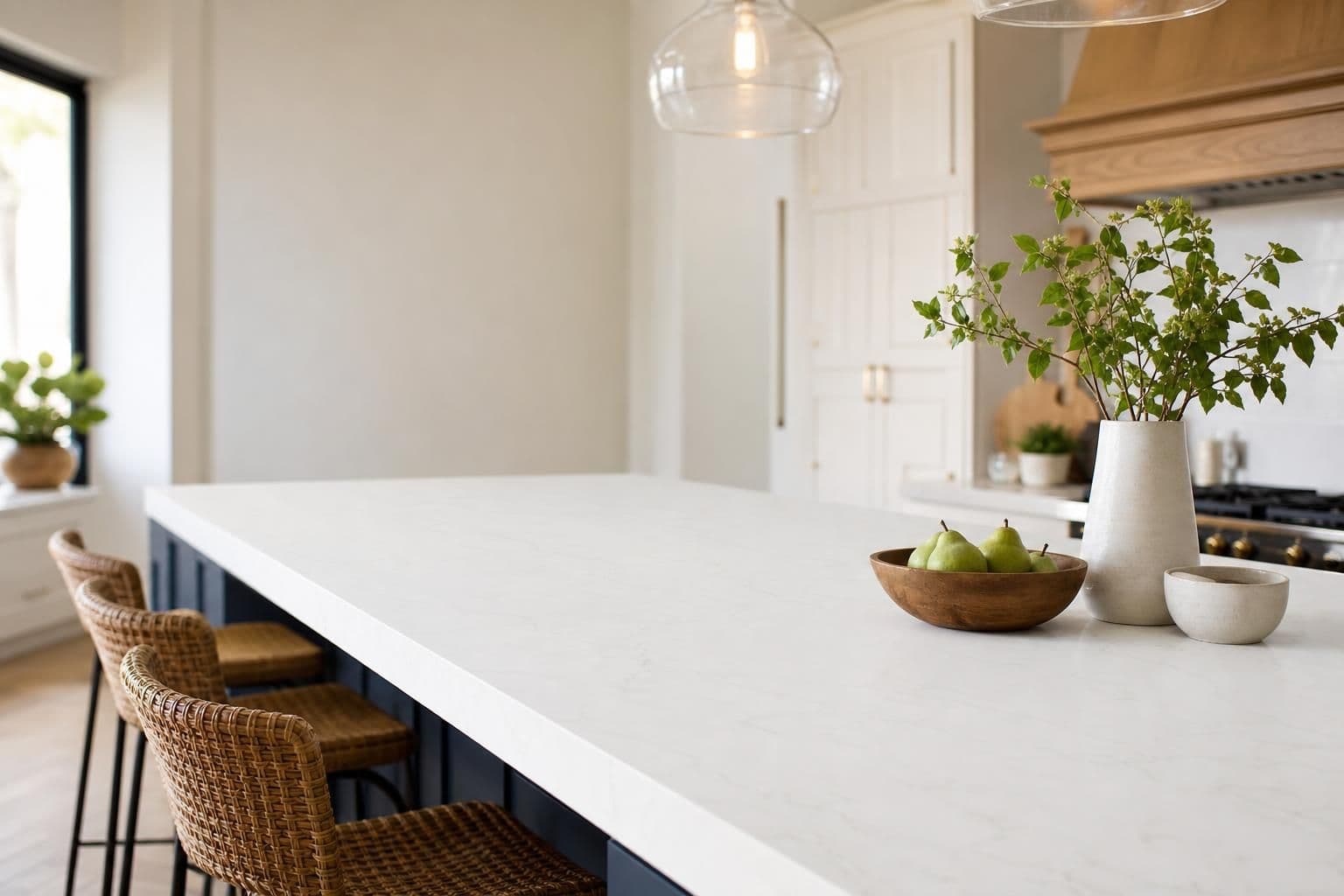
Key takeaway
The most popular quartz countertop colors right now fall into three groups: warm whites with soft veining, mid-tone grays and taupes that hide daily wear, and deeper charcoal or black tones used as a bold contrast in island kitchens. The right choice depends less on trend charts and more on your cabinet color, lighting, and how much contrast or camouflage you want on a daily-use surface. Quartz's manufactured, consistent coloring also means you can match a slab to a specific design scheme far more reliably than with natural stone.
Key takeaways
- Warm white-and-gray veined quartz remains the top seller for open, light-filled kitchens, while deeper charcoal and black tones are trending for contrast islands.
- Because quartz is engineered rather than quarried, color batches stay consistent slab to slab — useful when matching a large kitchen island to perimeter counters.
- In bright, sun-exposed Hawaii kitchens, mid-tone colors with subtle movement tend to show less daily wear and glare than pure white or solid black.
The Color Families Driving Most Quartz Sales
Quartz colors generally sort into five visual categories, and most manufacturers build their lines around these groups rather than one-off shades.
- Bright whites with fine veining — mimic Calacatta or Carrara marble without the staining risk.
- Warm grays and greiges — blend with both cool and warm-toned cabinets.
- Deep charcoal and black — used for waterfall islands or as a contrast to white cabinetry.
- Soft beige and sand tones — pair naturally with wood cabinetry and rattan or woven textures common in island interiors.
- Statement colors — bold blues, greens, or terrazzo-look blends, usually reserved for an accent island rather than full kitchen coverage.
Most kitchens combine two: a quieter perimeter counter in white or gray, and a bolder slab on the island. This mirrors what's covered in more depth in our breakdown of quartz slab color trends for tropical Hawaii homes, which looks specifically at how these palettes read against island light and materials.
How Quartz Gets Its Color
Quartz countertops are engineered from roughly 90–95% crushed quartz mineral bound with polymer resin, and it's the resin stage where pigment, metallic flecks, or veining patterns get introduced before the slab is compressed and cured. Because the color is mixed into the material rather than occurring naturally through mineral deposits, manufacturers can produce the same pattern repeatedly and keep a consistent look across multiple slabs — something quarried granite or marble cannot guarantee. For a fuller explanation of the composition and how it affects durability, see our guide on what quartz countertops are actually made of.
This manufacturing process is standardized enough that industry groups like the Natural Stone Institute track both natural stone and engineered quartz production methods, since fabrication shops typically handle both materials side by side.
Choosing a Color for Hawaii's Light and Humidity
Oahu kitchens get a different quality of light than mainland kitchens — more reflected daylight off water and pale exterior surfaces, often filtered through louvered windows or open lanai doors. That brighter ambient light can make pure white slabs look washed out or overly stark, while it tends to bring out warmth in beige, greige, and soft gold-veined quartz.
Humidity itself doesn't affect quartz color the way it can affect wood or some natural stones, since the resin binder is non-porous and doesn't absorb moisture the way sealed granite can over time. The National Weather Service tracks Hawaii's consistently high relative humidity year-round, which is one reason many island homeowners lean toward materials that don't require resealing — quartz fits that need regardless of color choice.
Matching Color to Cabinets and Flooring
Color decisions rarely happen in isolation. A countertop chosen on its own, under showroom lighting, can clash once it's set against your actual cabinet finish and floor tone at home.
A few pairing patterns that hold up well:
- White shaker cabinets pair cleanly with warm-white or light greige quartz, keeping the kitchen bright without looking clinical.
- Dark slab or navy cabinets benefit from a lighter quartz counter to avoid an overly heavy look in a smaller condo kitchen.
- Natural wood-tone cabinets usually look best with sand, taupe, or soft gray quartz rather than stark white, which can read cold against warm wood grain.
If you're renovating floors and cabinets at the same time, it's worth reading our guide on matching cabinet colors to SPC vinyl plank flooring before finalizing a countertop, since the flooring undertone often dictates which quartz shade reads as warm versus cool in your space.
Durability Differences Between Light and Dark Colors
Color affects more than aesthetics — it affects how much daily wear is visible. Solid dark colors, especially matte black, show water spots, dust, and fine scratches more readily than patterned mid-tones. Pure white slabs show less scratching but can reveal crumbs, oil splatter, and citrus stains more obviously against the light background, particularly in a busy rental kitchen.
Quartz as a category resists staining better than untreated natural stone because it has no pores for liquid to penetrate, but a busy vacation-rental kitchen with frequent turnover still benefits from a color with some visual texture — flecks, veining, or subtle tonal variation — simply because it hides the inevitable daily marks between cleanings. For care specifics regardless of color, see our notes on protecting quartz countertops from heat.
Viewing Color Under Real Kitchen Lighting
Quartz colors can shift noticeably between a showroom's lighting and a kitchen under LED under-cabinet lights or warm pendant fixtures. A slab that looks cool gray under fluorescent showroom lighting can pick up a warmer cast under 2700K LED bulbs at home. Whenever possible, request a physical sample large enough to view under your own kitchen lighting at different times of day before committing to a full slab — a detail covered in our broader quartz countertops buyer's guide for Honolulu homes.
Frequently Asked Questions
Q: What is the most popular quartz countertop color right now?
Warm white with soft gray veining remains the top seller overall, typically used on perimeter counters, while deeper charcoal or black tones are increasingly popular on kitchen islands as a contrast piece.
Q: Do quartz countertop colors fade in sunlight?
Most quartz is resistant to fading from typical indoor light exposure, but manufacturers generally advise against installing quartz in direct, prolonged outdoor sunlight, since UV exposure over years can cause some resins to yellow or dull slightly.
Q: Can I mix two different quartz colors in one kitchen?
Yes — pairing a quieter perimeter color with a bolder island slab is a common design approach, as long as both colors share a similar undertone (warm or cool) so they don't visually compete.
Q: How is quartz color different from granite color?
Quartz color is engineered and mixed during manufacturing, so the same pattern can be reproduced consistently across slabs, while granite color comes from natural mineral deposits and varies slab to slab even within the same quarry.
Q: Does a darker quartz countertop make a small kitchen feel smaller?
It can, especially in a condo galley kitchen with limited natural light — pairing a darker counter with lighter cabinets, flooring, or added lighting helps offset that effect.