Best Quartz Brands for Kitchens: A Buyer's Comparison
Key takeaway
The best quartz brands for kitchens — Cambria, Silestone by Cosentino, Caesarstone, MSI, and LG Viatera — differ mainly in slab consistency, resin formulation, and warranty terms rather than in basic performance, since all engineered quartz is roughly 90-94% ground quartz bound with polymer resin. For most Oahu kitchens, the deciding factors are slab availability through a local fabricator, UV stability for lanai-adjacent kitchens, and how a pattern reads next to your cabinet color, not the logo on the box. Any of the major brands will outperform natural stone on stain resistance and require no sealing, which matters in a humid, salt-air climate.
Key takeaways
- All major quartz brands share a similar composition, so warranty length, slab selection, and local fabricator support matter more than the name on the label.
- Look for a light-to-mid tone quartz with subtle veining if your kitchen faces strong window glare or gets indirect sun — some resin-based surfaces can shift color slightly with years of intense UV exposure.
- Confirm slab availability in Honolulu before falling in love with a pattern online; not every national line stocks every color locally, and freight delays add lead time.
How the major quartz brands actually differ
Every engineered quartz brand starts from the same basic recipe: crushed quartz aggregate, polyester or vinyl ester resin, and pigment, pressed under vacuum and vibration into slabs. What separates one brand from another is quality control on batch consistency, the width of their color and pattern library, and how they back the product. Cambria is manufactured entirely in the U.S. and markets itself on domestic production and a broad warranty; Cosentino's Silestone line uses a hybrid mineral technology it calls HybriQ, aimed at reducing crystalline silica content in the finished slab; Caesarstone, founded in Israel in 1987, is generally credited as the company that commercialized engineered quartz surfacing. If you want a deeper look at what's actually in the slab before comparing brands, this breakdown of what quartz is made of covers the manufacturing process in more detail.
Side-by-side brand comparison
| Brand | Known For | Design Range | Local Availability Notes |
|---|---|---|---|
| Cambria | U.S.-manufactured, matte and polished finishes | Wide, frequently updated collections | Common through mainland-supplied fabricators |
| Silestone (Cosentino) | HybriQ low-silica formulation | Strong in solid and fine-grain looks | Widely distributed, often carried by larger showrooms |
| Caesarstone | Long manufacturing history, consistent veining | Broad range from solids to bold marble-look veins | Common in West Coast and island supply chains |
| MSI Q Quartz | Value-oriented pricing tier | Large catalog, frequent new colors | Popular with contractors for stock availability |
| LG Viatera | Polished consistency, warranty support | Softer, natural stone-look veining | Less common but available through some fabricators |
Treat this table as a starting point, not a ranking — the right pick depends on which brands your fabricator actually stocks or can order for Oahu delivery, and how a sample looks under your kitchen's actual lighting.
What matters more than the brand name in a humid climate
Hawaii's year-round humidity and salt-laden air don't degrade quartz the way they can degrade wood or unsealed stone, since the resin binder is non-porous and doesn't absorb moisture. What does matter locally is UV exposure near sliding doors, lanai-facing windows, or covered outdoor kitchens, where years of direct sun can cause slight fading in some resin-based quartz colors — a reason many fabricators steer coastal and vacation-rental kitchens toward mid-tone or darker patterns, or reserve pure white slabs for interior-only runs. The Environmental Protection Agency notes that engineered stone surfaces are generally non-porous and low-emitting once cured, which is part of why quartz remains a common choice for humid indoor kitchens. If bright color retention over decades on an outdoor-adjacent counter matters to your project, ask your fabricator directly about that specific brand's UV rating rather than assuming all quartz behaves the same.
Food safety and surface certification
Quartz's non-porous surface is also why it's popular in food-prep areas: bacteria and mold have nowhere to root the way they can in grout lines or unsealed stone pores. Several major quartz lines carry certification from NSF International, the organization that sets sanitation standards for food-contact surfaces used in both residential and commercial kitchens. If certification matters to you — for example, on a vacation rental where turnover cleaning has to be fast and reliable — ask your fabricator which specific color and finish carries that certification, since not every SKU in a brand's catalog is tested the same way.
Matching a brand's pattern to your cabinet and layout
Brand comparisons matter less once you've settled on a look, because the same brand can offer both a busy marble-look veining and a flat, quiet solid color. Before comparing brand catalogs side by side, it helps to nail down your kitchen's layout and cabinet tone first — a guide to designing a kitchen layout walks through how counter runs, islands, and traffic flow affect how much slab pattern you actually want to see. Homeowners working with tropical color palettes may also find it useful to browse current quartz color trends for island homes before narrowing down a brand, since some patterns are exclusive to certain manufacturers.
Care differences worth knowing before you buy
Quartz across every brand shares one real vulnerability: heat. None of the major engineered quartz lines are rated for direct contact with hot pans, since sudden thermal shock can crack the resin binder even though the surface resists scratches and stains well. A detailed guide on protecting quartz from heat damage covers trivets, hot-pad habits, and what warranty claims typically do and don't cover. Beyond heat, day-to-day care is nearly identical brand to brand — mild soap and water, no sealing required, and avoidance of high-pH cleaners that can dull the polished finish over time.
Getting an accurate comparison for your kitchen
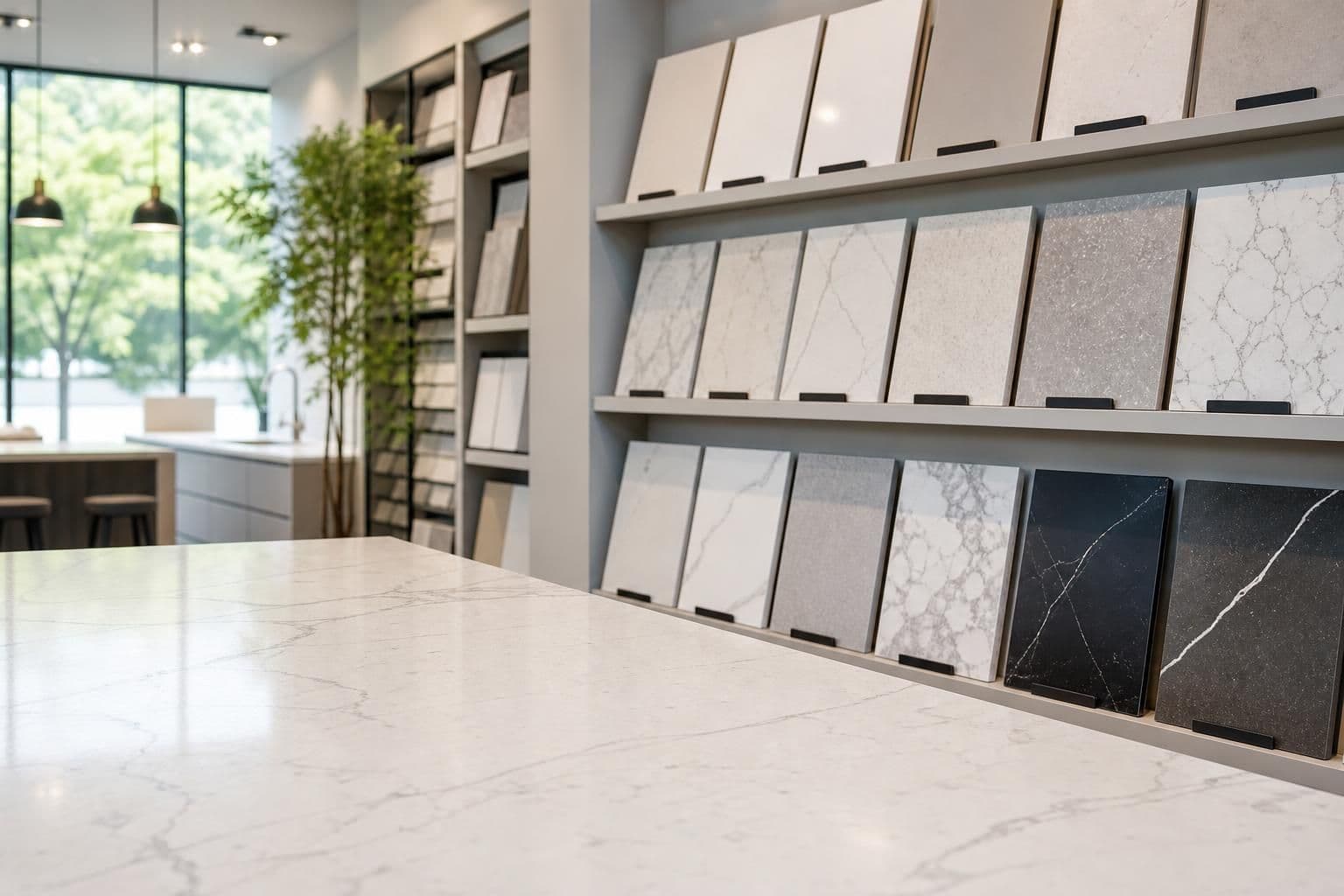
Photos and brand websites only tell part of the story, since slab veining, sheen, and color can shift meaningfully in person and under different lighting. Requesting physical samples of two or three finalist brands and holding them against your actual cabinet doors and flooring sample is the most reliable way to compare, and it also confirms which brands your local fabricator can source without long freight delays. A full walkthrough of that process, including how measurements and seams get planned before ordering, is covered in this quartz countertop buyer's guide for Honolulu homes.
Frequently Asked Questions
Q: Is one quartz brand meaningfully more durable than another?
Not in normal kitchen use — all major brands use a similar quartz-and-resin composition, so day-to-day scratch and stain resistance is comparable. Differences show up mostly in warranty length, slab consistency, and how a specific color performs under prolonged UV exposure.
Q: Do I need to seal quartz countertops like I would granite?
No. Quartz is engineered to be non-porous, so it doesn't require periodic sealing the way natural stone does; regular cleaning with mild soap and water is sufficient across all major brands.
Q: Can quartz fade or discolor over time in a bright Hawaii kitchen?
Some resin-based quartz colors can shift slightly with years of intense, direct UV exposure, which is why fabricators often recommend mid-tone or darker patterns for lanai-facing counters. Ask your fabricator about a specific brand's UV performance if your kitchen gets strong daily sun.
Q: Are cheaper quartz brands lower quality?
Not necessarily — value-tier lines like MSI Q Quartz use the same basic manufacturing process as premium brands, though catalogs may update less frequently and slab consistency can vary batch to batch. Comparing physical samples is more reliable than assuming price reflects quality.
Q: How do I know which quartz brands are actually available in Honolulu?
Availability depends on what your local fabricator stocks or can order, since not every national brand ships every color to Hawaii on a fast timeline. Confirming in-stock slabs before finalizing a design avoids delays tied to inter-island or mainland freight.