How to Protect Quartz Countertops From Heat
Key takeaway
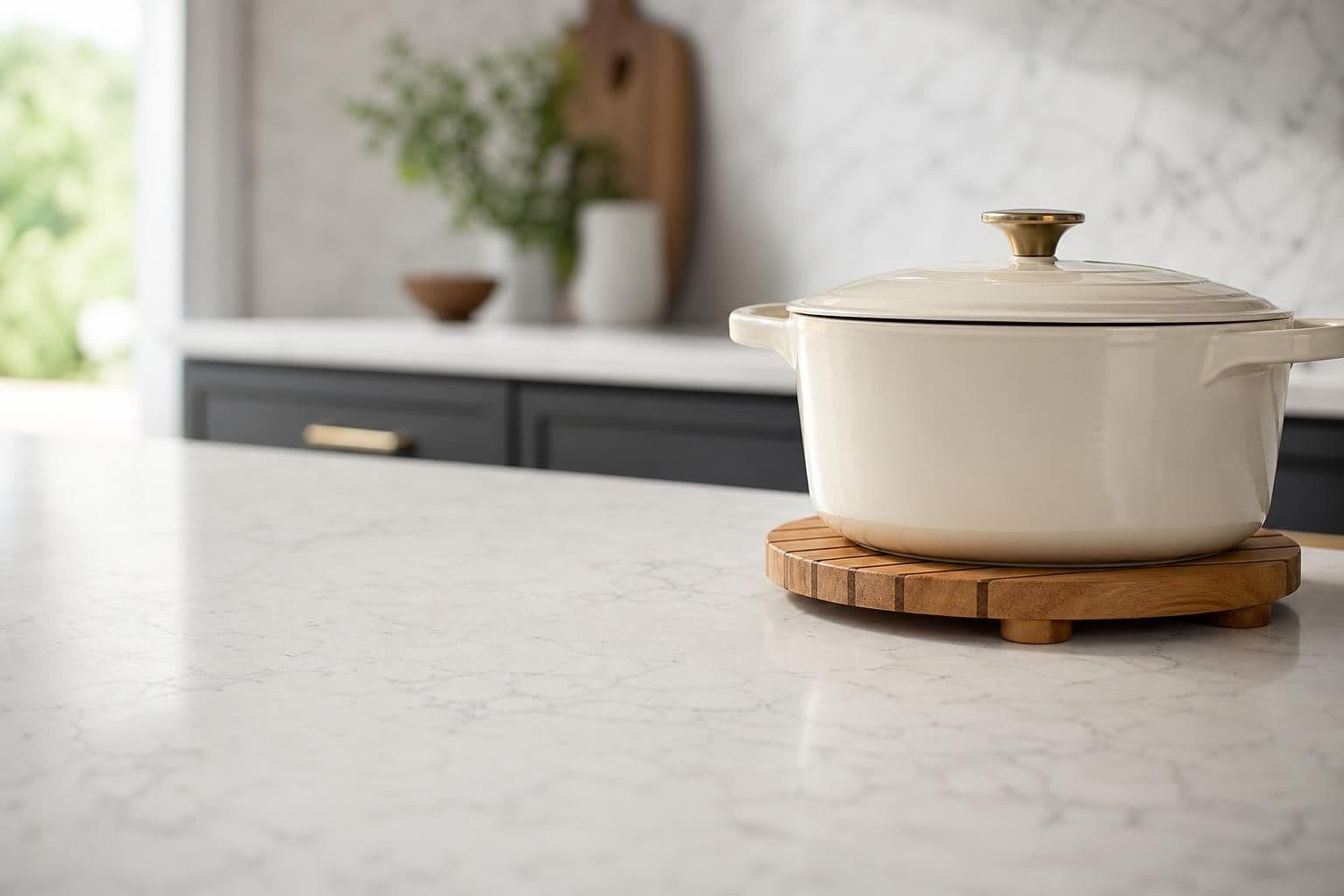
Quartz countertops can be permanently damaged by direct heat above roughly 150°F, because the polymer resin that binds the crushed stone together can scorch, discolor, or crack under sudden or sustained heat exposure. Always use trivets, hot pads, or cooling racks under pots, pans, slow cookers, and hair styling tools — never set them directly on the surface. Thermal shock (a sudden temperature swing, like moving a pan from a hot stove straight onto cool quartz) is actually more damaging than steady heat, so let cookware cool for a minute before it touches the counter.
Key takeaways
- Keep anything above about 150°F off bare quartz — use a trivet, cutting board, or cooling rack every time.
- Sudden temperature changes (thermal shock) crack quartz faster than steady, low heat does.
- Scorch marks and hairline cracks from heat usually can't be fully buffed out, so prevention matters more than cleanup.
Why Quartz Reacts to Heat the Way It Does
Quartz countertops are engineered, not solid stone. They're made from crushed natural quartz mixed with pigments and a polymer resin binder, then compressed under heat and pressure into slabs. The stone portion itself can tolerate high heat, but the resin — which typically makes up a meaningful share of the material — is a plastic-based compound, and plastics soften, discolor, or scorch well before natural granite would show any effect. That's the key difference between quartz and granite: granite is 100% natural stone with no resin, so it generally handles direct heat better, though it's not heatproof either. If you're weighing the two for a Hawaii kitchen, it helps to understand how granite is sealed and maintained in a humid climate before deciding which surface fits your cooking habits.
Manufacturers and industry groups like the Natural Stone Institute consistently note that engineered surfaces should be treated with more heat caution than solid granite or quartzite specifically because of this resin content.
Everyday Habits That Prevent Heat Damage
Most heat damage happens from routine kitchen moments, not dramatic accidents. A few habits eliminate almost all of the risk:
- Always use a trivet or hot pad for pots, pans, baking sheets, and cast iron straight off the stove or oven.
- Let cookware cool slightly before it touches the counter — even 60–90 seconds off the burner reduces the temperature swing significantly.
- Keep small appliances off bare quartz when running, including slow cookers, electric skillets, curling irons, and flat irons; these hold steady high heat for long stretches, which is worse than a quick touch.
- Avoid setting hot cookware near the same spot repeatedly — repeated heat exposure in one area weakens the resin over time even if no single incident looks damaging.
- Skip placing quartz directly next to a range without a heat-deflecting strip or buffer zone, since radiant heat from an open flame or hot burner can affect the edge closest to the cooktop.
If your kitchen sees heavy daily cooking — common in multi-generational Oahu households — a low-maintenance quartz color and finish can also make small heat marks less noticeable if they ever occur. Our guide to low-maintenance quartz options for Hawaii homes covers finishes that hide daily wear better than others.
Recognizing Heat Damage Before It Gets Worse
Heat damage on quartz doesn't always look dramatic at first. Watch for:
- Dull or hazy patches where the surface used to be glossy — this is often the resin clouding from heat exposure.
- Faint discoloration or a yellowish tint in one spot, especially near the stove or under a spot where appliances regularly sit.
- Fine surface cracks (crazing) radiating out from a single point, which usually signals thermal shock rather than gradual wear.
- A slightly rough or "melted plastic" texture when you run a hand over the area, different from the smooth polish everywhere else.
None of these are usually repairable with standard cleaning or polishing — the resin itself has changed at that spot, not just the surface film. That's different from a stain, which sits on top of the surface and can often be lifted with the right cleaner.
Heat and Hawaii's Climate: What's Different Here
Island kitchens face a couple of heat factors that mainland guidance doesn't always cover. Large west- and south-facing kitchen windows common in Oahu homes can heat a section of countertop through direct sun for hours in the afternoon, which is generally mild but worth factoring in if your quartz is near a sunny window and you also set hot cookware in that same spot — the combined heat load is higher than either alone. Vacation rental and condo kitchens see another version of this: multiple guests unfamiliar with quartz care may set pans or curling irons directly on the counter without thinking twice. For owners managing turnover units, building trivets and hot pads into the kitchen setup — and choosing a countertop material rated for heavy, high-turnover use — reduces the odds of a guest causing damage that shows up before your next cleaning check.
Humidity itself doesn't directly affect quartz's heat tolerance, but Hawaii's year-round warm, humid air does mean surfaces near stoves and ovens run a bit warmer ambient temperature overall, so the margin between "normal kitchen heat" and "damage threshold" is slightly smaller than in a drier, cooler climate. The U.S. Consumer Product Safety Commission tracks kitchen-related burn and fire incidents broadly and consistently points to unattended hot cookware as a leading contributor — a reminder that trivets protect people as well as countertops.
What to Do If You Already Have Heat Damage
Light haze or dullness can sometimes be improved by a professional quartz-safe polish, though this won't reverse deeper resin discoloration. Cracks from thermal shock typically require a professional assessment to determine whether the section can be patched or needs a partial slab replacement, since quartz doesn't take repairs the same way solid stone does. If you're already renovating a kitchen and heat damage is part of the reason, it's worth looking at the full picture — from countertop material to layout — in a kitchen remodel timeline for Oahu so the fix happens alongside other planned work rather than as a rushed patch job.
Frequently Asked Questions
Q: Can you put a hot pan directly on quartz countertops?
No. Quartz's resin binder can scorch or discolor at temperatures a hot pan easily reaches, so a trivet or hot pad should be used every time, even briefly.
Q: What temperature will damage a quartz countertop?
Damage typically starts around 150°F, and sudden temperature swings (thermal shock) cause more visible cracking than steady heat at a similar temperature.
Q: Is granite more heat-resistant than quartz?
Generally yes, because granite is a solid natural stone with no resin binder, while quartz contains a polymer resin that softens and discolors at lower temperatures than the stone itself would tolerate.
Q: Can heat damage on quartz be repaired?
Minor haze can sometimes be improved with professional polishing, but scorch discoloration and cracks from thermal shock usually can't be fully removed and may require a section replacement.
Q: Are quartz countertops safe near a stove?
Yes, with a buffer — most installations keep quartz a short distance from the cooktop or use a heat-deflecting strip, since ongoing radiant heat from burners can affect the closest edge over time.