Quartz vs Marble Countertops: Which Wins for Hawaii Homes?
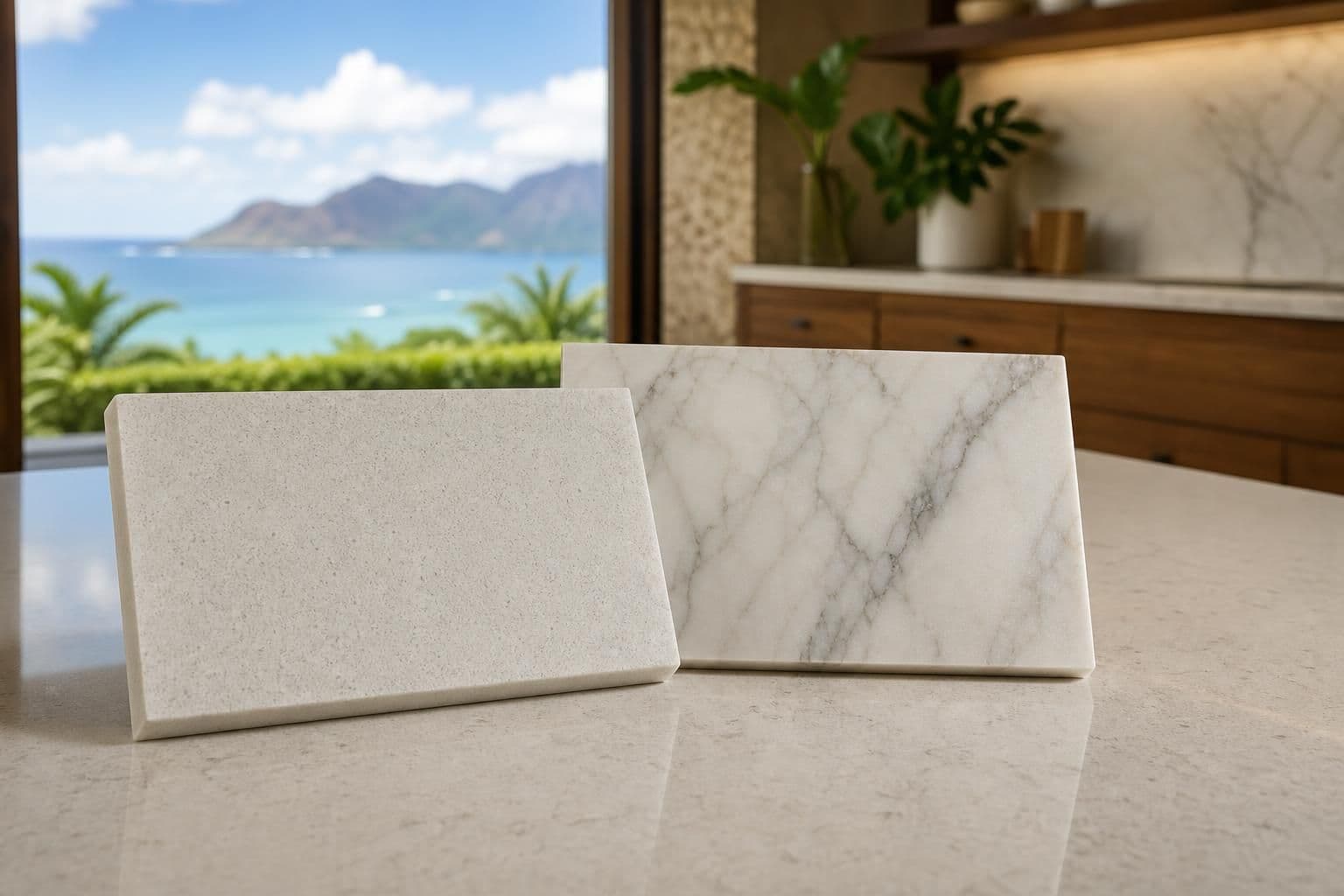
Key takeaway
For most Oahu kitchens and bathrooms, quartz is the more practical choice because it's non-porous, doesn't need sealing, and resists the humidity, salt air, and daily acidic spills common in island homes. Marble delivers a softer, more classic veined look and stays cool underfoot, but it's a natural stone that etches with lemon juice or vinegar and needs regular sealing to hold up in a humid climate. The right pick depends on whether you're prioritizing low maintenance or a specific natural-stone aesthetic.
Key takeaways
- Quartz is engineered and non-porous, so it resists staining and doesn't require sealing — a real advantage in Hawaii's humidity.
- Marble is a natural stone that etches from acidic foods and needs periodic resealing to stay stain-resistant.
- For high-use kitchens, rentals, and bathrooms exposed to salt air, quartz generally holds up with less upkeep; marble suits lower-traffic areas where a natural stone look matters most.
What Quartz and Marble Actually Are
Quartz countertops are engineered from roughly 90-95% crushed natural quartz mineral bound with polymer resins and pigments, which is why the surface has no pores for water or bacteria to penetrate. Marble is a metamorphic rock formed from recrystallized limestone, quarried in solid slabs and valued for its veining, which means every slab is genuinely one of a kind. If you want a deeper look at the manufacturing side, this guide to what quartz is made of breaks down the material composition in more detail.
Durability in Hawaii's Climate
Quartz's non-porous structure is its biggest advantage on Oahu, where humidity, occasional heavy rain, and salt-laden air can accelerate wear on more porous materials. Marble, by contrast, is soft on the Mohs hardness scale — generally in the 3-4 range, compared to quartz's engineered surface hardness in the 6-7 range — which means it scratches and etches more easily from everyday kitchen acids like citrus, wine, and vinegar. The USGS mineral hardness reference is a useful benchmark if you want to understand how these hardness numbers translate to real-world wear.
Neither material is indestructible. Quartz can discolor or crack under sustained high heat, which is why protecting quartz from heat sources matters even though the surface is otherwise low-maintenance. Marble handles heat slightly better in short bursts but shows scratches and dulling faster in a busy kitchen.
Maintenance and Long-Term Upkeep
Quartz needs nothing more than routine cleaning with mild soap and water — no sealing, ever, because there are no pores to protect. Marble requires sealing at installation and periodic resealing afterward (frequency depends on the sealer product and how much the counter is used), plus more careful cleaning habits since acidic spills need to be wiped up quickly to avoid dull etch marks.
For rental units and condos on Oahu where cleaning schedules and turnover are frequent, that maintenance gap matters. Owners managing vacation rentals often lean toward quartz specifically because it tolerates inconsistent cleaning habits from guests without long-term damage. If you're weighing how a quartz surface actually performs over the years in local conditions, this look at how long quartz countertops last in Hawaii homes covers realistic lifespan expectations.
Look and Feel
Marble's veining is genuinely unique slab to slab, which is why it remains popular for statement islands, bathroom vanities, and spaces where a natural, high-end look is the priority. Quartz manufacturers have closed much of that visual gap with veined patterns that mimic marble, but a trained eye can usually spot the difference up close, and purists often still prefer the real thing for specific design moments.
Marble also stays noticeably cooler to the touch, which some homeowners like for baking prep, though it offers no real advantage in a warm, humid island climate the way it might in a drier or colder region.
Side-by-Side Comparison
| Factor | Quartz | Marble |
|---|---|---|
| Material type | Engineered (crushed quartz + resin) | Natural metamorphic stone |
| Porosity | Non-porous, no sealing needed | Porous, requires sealing |
| Hardness | Harder, more scratch-resistant | Softer, scratches and etches more easily |
| Humidity/salt-air resistance | Strong, well-suited to island climate | Fair, needs consistent sealing upkeep |
| Heat tolerance | Good, but avoid direct hot pans | Good for brief heat, but scratches show more |
| Look | Consistent pattern, marble-look options available | Unique natural veining, one-of-a-kind slabs |
Which Makes Sense for Your Project
Kitchens with heavy daily use, rental properties, and bathrooms exposed to humidity generally do better with quartz because it forgives spills, doesn't need resealing, and holds its finish over years of use. Marble is worth considering for lower-traffic spaces — a powder room vanity, a bar top, or an island used mostly for display — where its natural veining is the main draw and the extra care is manageable.
If you're still deciding between materials, it helps to get specific about your space, water exposure, and daily habits before choosing. A buyer's guide to quartz countertops in Honolulu walks through color and pattern options if quartz is looking like the stronger fit for your project. And if scratches or dullness already show up on an existing surface, removing scratches from quartz is usually a simpler fix than most homeowners expect.
Pricing for both materials in Hawaii typically runs above mainland averages because slabs and engineered stone are shipped in and skilled fabrication labor costs more locally — it's worth requesting a local quote rather than relying on national price guides.
Frequently Asked Questions
Q: Is quartz or marble better for a humid climate like Hawaii?
Quartz is generally the better fit for humid, salt-air environments because it's non-porous and doesn't require sealing. Marble can still work but needs more diligent sealing and cleaning to avoid moisture absorption and staining.
Q: Does marble stain more easily than quartz?
Yes. Marble is porous and reacts to acidic substances like citrus juice, wine, and vinegar, which can cause etching or dull spots even when sealed. Quartz's non-porous surface resists staining without any sealing at all.
Q: Can quartz look like real marble?
Many quartz lines now include veined patterns designed to resemble marble, and the visual gap has narrowed considerably. Up close, natural marble still shows more organic, irregular veining that engineered stone doesn't fully replicate.
Q: Which countertop material lasts longer?
Quartz typically holds its finish longer with less maintenance because it doesn't scratch, etch, or require resealing. Marble can last decades too, but it shows wear — scratches, dullness, minor staining — more visibly over time without consistent care.
Q: Is marble a good choice for a kitchen island?
Marble can work well for an island used mainly for light prep or as a design feature, but heavy daily use with acidic foods will show wear faster than quartz. Many homeowners pair marble in a low-use area with quartz on the primary work surfaces.