How to Acclimate Vinyl Plank Flooring Before Installation
Key takeaway
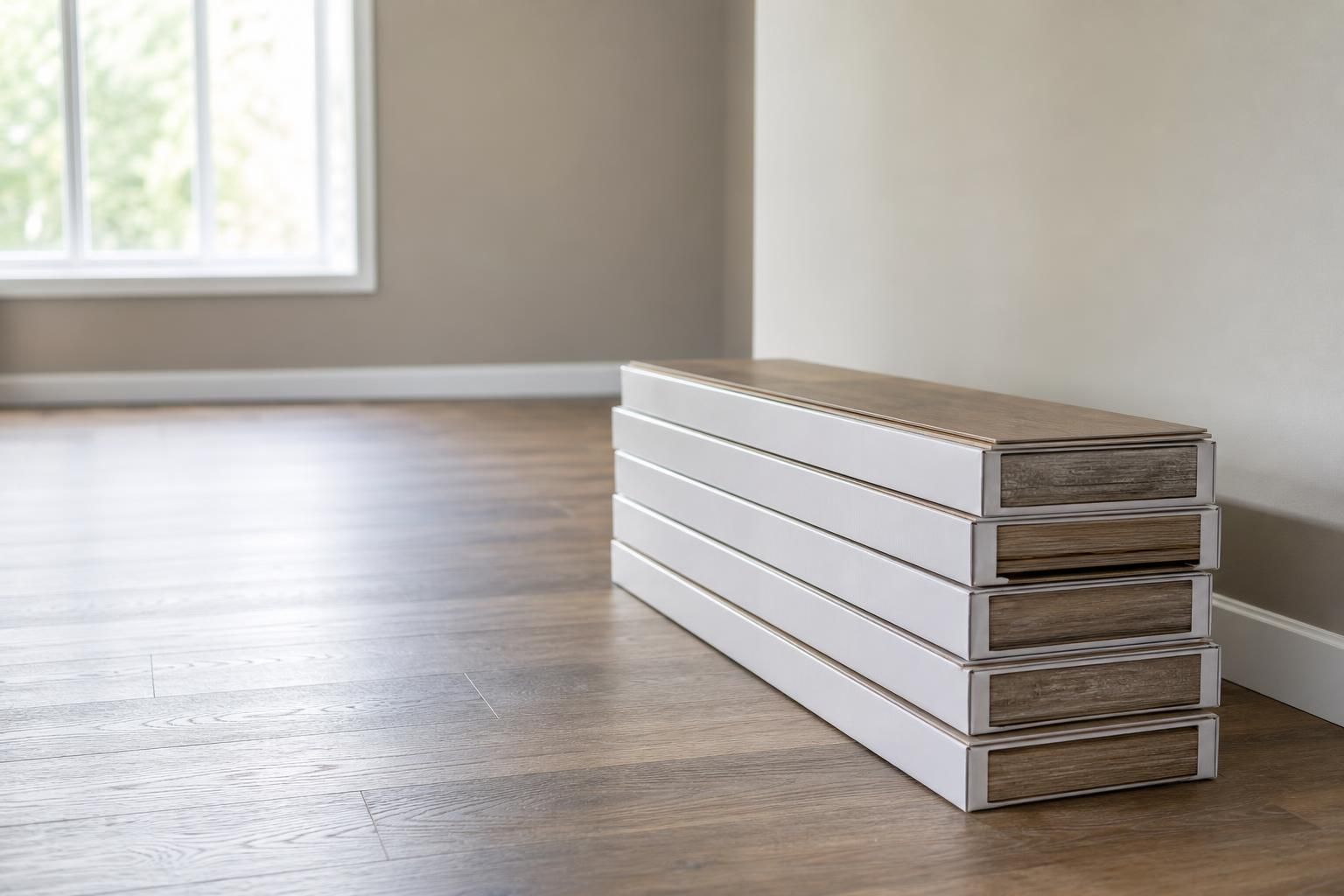
To acclimate vinyl plank flooring, leave the unopened boxes flat in the room where they'll be installed for at least 48 hours, with the home's air conditioning or normal living conditions running, so the planks adjust to the space's actual temperature and humidity. This step lets the material expand or contract slightly before it's locked into place, which prevents gaps, buckling, or peaking after installation. In Hawaii, where ambient humidity runs high year-round, skipping this step is one of the most common reasons vinyl floors fail early.
Key takeaways
- Leave unopened flooring cartons in the install room for 48 hours minimum, longer if the home was recently closed up, unconditioned, or newly built.
- Keep the room between roughly 65–85°F with the AC running normally during acclimation, not with windows open to outdoor humidity.
- Test the subfloor moisture, not just the air, before installing over a concrete slab — a common condition in Oahu condos.
Why Acclimation Matters for Vinyl Plank in Hawaii's Climate
Vinyl plank is dimensionally stable compared to wood, but it isn't immune to temperature and moisture movement. Honolulu's average relative humidity typically sits in the 60–75% range depending on season and trade wind patterns, according to NOAA climate data for Hawaii. Planks shipped from the mainland or stored in a warehouse often arrive at a different moisture equilibrium than your living room, especially if that room runs air conditioning most of the day. Installing cold, contracted planks into a warm, humid room can cause them to expand afterward and push against walls or each other, creating visible ridging along seams.
Step-by-Step: How to Acclimate Vinyl Plank Flooring
- Deliver the boxes to the actual install room, not a garage, lanai, or storage closet — the goal is matching the exact environment the floor will live in.
- Keep boxes sealed and stacked flat, no more than a few cartons high, with small gaps between stacks so air can move around them.
- Run the home's normal air conditioning or ventilation for the full acclimation period instead of leaving windows open to outside humidity.
- Wait a minimum of 48 hours before opening boxes and starting layout; some manufacturers call for up to 72 hours for thicker SPC planks or homes that have been vacant.
- Check the subfloor separately. Acclimating the planks doesn't replace testing the slab or underlayment for excess moisture before installation begins.
If you're coordinating a remodel timeline, it helps to build this waiting period into your schedule the same way you'd plan for preventing water damage in vinyl plank flooring once the floor is down — both are about managing moisture before it becomes a problem instead of after.
Ideal Temperature and Humidity Range During Acclimation
Most vinyl plank manufacturers specify an install environment between about 65°F and 85°F, with the room at normal living humidity rather than a construction-site extreme. The U.S. Environmental Protection Agency recommends keeping indoor relative humidity between 30% and 60% to limit mold and moisture problems in general, a target worth aiming for during acclimation too, per EPA indoor air quality guidance. In a home without air conditioning running consistently, or in a unit that's been closed up during a vacation-rental turnover gap, humidity can climb well above that range, which is exactly when acclimation time should be extended rather than shortened.
SPC vs. Traditional Vinyl: Does Acclimation Time Differ?
SPC (stone plastic composite) core flooring is more rigid and dimensionally stable than older flexible vinyl or WPC products, because the limestone-based core resists expansion better than a purely polymer core. That stability is one reason SPC has become the standard choice for Oahu condos and rentals that see heavy foot traffic and humidity swings. Even so, manufacturers still specify an acclimation period for SPC — the rigid core resists movement but isn't immune to it, and skipping acclimation can still produce slightly uneven seams or a floor that feels different underfoot in a few spots within the first weeks.
Common Acclimation Mistakes in Condos and Vacation-Rentals
Oahu's condo towers add a few wrinkles that mainland guides don't cover:
- Installing directly on a concrete slab without a moisture test. High-rise slabs can hold residual moisture long after construction, and that moisture migrates upward regardless of how well the planks themselves were acclimated. A calcium chloride or in-situ relative humidity test, following ASTM International standard test methods, gives a real reading instead of a guess.
- Acclimating in an unconditioned unit. A vacant condo with the AC off can sit at much higher humidity than it will once occupied, so planks acclimated that way may still shift once the unit is lived in and cooled.
- Treating the lanai transition as an afterthought. Flooring that runs from an air-conditioned living room toward an open-air lanai experiences a bigger humidity and temperature swing at that threshold; it's worth reviewing flooring options built for a lanai separately if your layout includes that transition.
- Short-cycling the timeline to meet a rental turnover date. A rushed 24-hour acclimation to make a guest check-in deadline is a common source of callbacks in vacation-rental remodels.
Signs Your Flooring Is Ready to Install
Rather than guessing, look for a few practical indicators. The cartons should feel close to room temperature to the touch, not noticeably cooler than the surrounding air. If you have a few planks from an opened test box, they should snap together without unusual resistance or gaps at the seams. And the subfloor reading — whether from a moisture meter or a professional slab test — should fall within the range the flooring manufacturer specifies for that product, which installers at a company like VC Flooring & Stone can confirm during a job walkthrough before planks ever go down.
Frequently Asked Questions
Q: How long does vinyl plank flooring need to acclimate before installation?
A minimum of 48 hours is standard, with 72 hours recommended for homes that have been vacant, unconditioned, or recently built. Longer acclimation is better than shorter if the room's humidity has been inconsistent.
Q: Can vinyl plank flooring be installed the same day it arrives?
It's not recommended. Installing planks before they've adjusted to the room's temperature and humidity increases the risk of gaps or buckling appearing in the weeks after installation.
Q: Does SPC flooring need less acclimation time than regular vinyl plank?
SPC's rigid core is more dimensionally stable than flexible vinyl, but manufacturers still specify an acclimation period for it. Skipping that step can still cause minor seam or fit issues even with a stable core.
Q: Should windows be open or closed during acclimation?
Closed, with normal air conditioning running. Open windows expose the planks to outdoor humidity swings instead of the actual conditions they'll live in once installed.
Q: Is a moisture test on the subfloor still necessary if the planks were acclimated correctly?
Yes. Acclimating the planks addresses the material itself, not the slab or underlayment, so a separate moisture check on the subfloor is a distinct and necessary step, especially over concrete.