How to Seal Tile Grout: A Step-by-Step Hawaii Guide
Key takeaway
To seal tile grout, clean the joints thoroughly, let them dry completely for 24-72 hours, then apply a penetrating (impregnating) or membrane-forming sealer with a small brush or applicator bottle, wiping excess off the tile face before it cures. Most sealers need a second coat and 24-48 hours of cure time before the floor gets wet again. In Hawaii's humid, rain-prone climate, grout should be resealed roughly once a year rather than the two-to-three-year interval common on the mainland.
Key takeaways
- Grout must be bone-dry before sealing — trapped moisture is common in Hawaii and causes hazy or peeling sealer.
- A penetrating sealer is the safer default for cement grout in bathrooms, showers, and lanai-adjacent floors.
- Reseal cement grout annually in Oahu's climate; epoxy grout generally doesn't need sealing at all.
What You Need Before You Start
Grout sealing is a simple job, but the wrong prep undoes it. Gather a grout brush or old toothbrush, pH-neutral tile cleaner, a fan or dehumidifier, painter's tape, a foam applicator or small artist's brush, microfiber cloths, and the sealer itself. Cement-based grout (the sanded or unsanded type used in most tile floors) is porous and needs sealing; epoxy grout is already non-porous and doesn't require it. If you're not sure which type is installed, scratch a small hidden area — epoxy grout feels harder and slightly glossy, while cement grout looks matte and chalky when dry.
Step-by-Step: How to Seal Tile Grout
- Deep clean the grout lines. Scrub with a pH-neutral cleaner and a stiff brush, rinse thoroughly, and remove any soap film. Sealer applied over residue or old sealer just traps grime underneath.
- Dry completely. This is the step most people rush. Grout can look dry on the surface while still holding moisture below, especially in humid rooms. Run a fan or dehumidifier and wait a full 24-72 hours depending on humidity and ventilation — closer to 72 hours in an unvented island bathroom.
- Tape off edges if needed to protect cabinet toe-kicks or baseboards from drips.
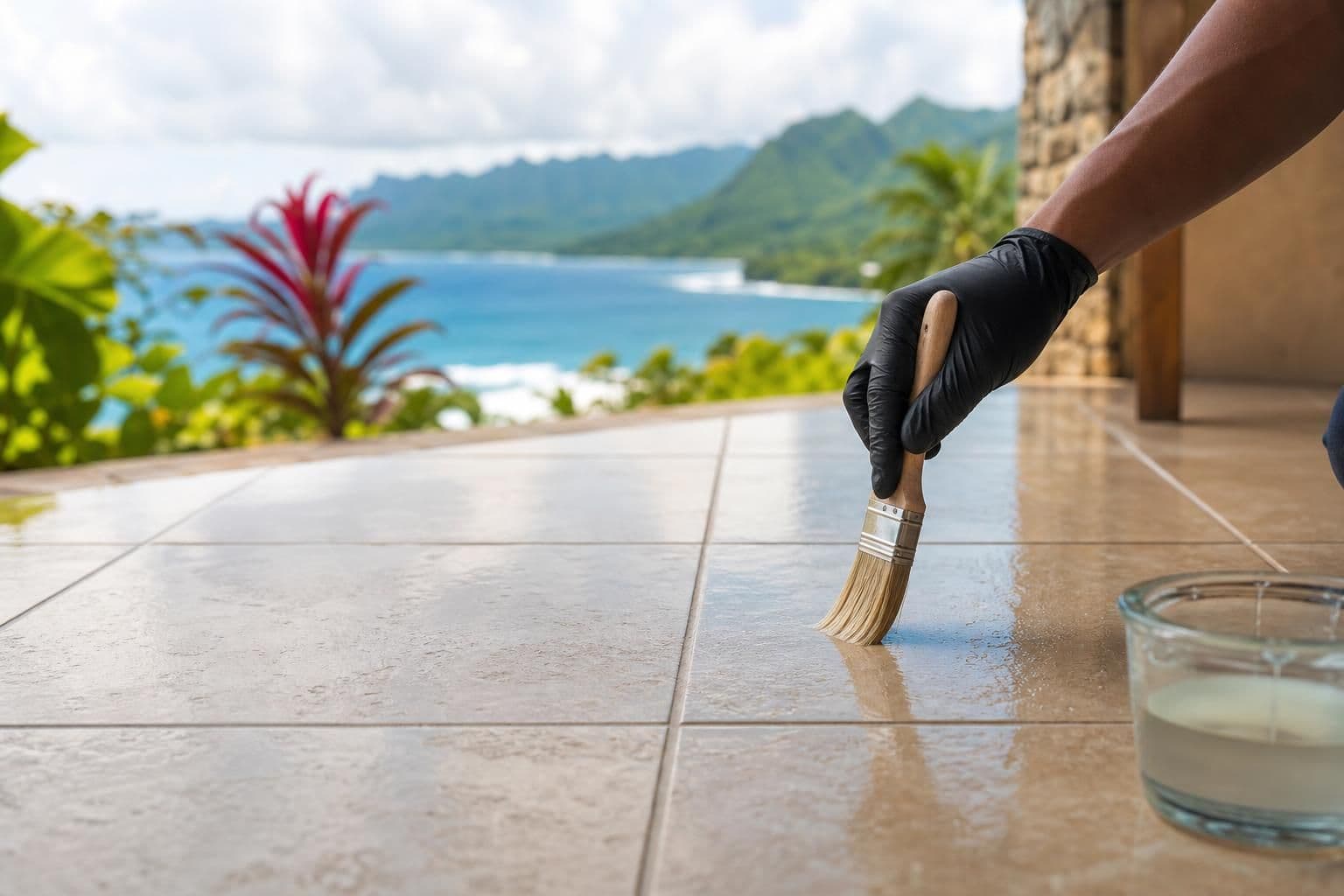
- Apply the sealer along the grout lines using a small brush, foam applicator, or the sealer's built-in applicator tip. Work in small sections so you can wipe excess before it dries on the tile surface.
- Wipe off excess from the tile face within the time window the product label specifies — usually 5-15 minutes — using a clean microfiber cloth.
- Apply a second coat once the first has absorbed (check the label; many penetrating sealers recommend two coats for full coverage).
- Let it cure for the full period listed on the product — commonly 24 hours before foot traffic and up to 48-72 hours before the area gets wet.
Penetrating vs. Membrane-Forming Sealers
Penetrating (impregnating) sealers soak into the pores of the grout and repel water and oil from within, without changing the grout's appearance. Membrane-forming sealers sit on top and create a topical barrier, which can add a slight sheen but wears faster in high-traffic or wet areas and needs more frequent reapplication. For kitchen floors, bathroom floors, and shower walls in a Hawaii home, a penetrating sealer is generally the better fit because it holds up under repeated moisture exposure without peeling or yellowing the way some topical products can. If you're still deciding on grout itself for a new install, it's worth reading about choosing grout suited to Hawaii's humid climate before you get to the sealing stage.
Why Sealing Matters More in Hawaii
Unsealed cement grout is porous enough to absorb water, and in a climate with high ambient humidity and heavy seasonal rain, that moisture has fewer chances to fully evaporate between uses. The EPA notes that mold needs moisture to grow, and porous, damp grout lines are a common spot for it to take hold in bathrooms and kitchens. Salt-laden air near the coast can also accelerate the breakdown of some sealers, which is one reason local installers lean toward annual resealing rather than stretching it out. If your home is near the ocean or in a rental unit with heavy shower use, that yearly check is worth putting on a calendar.
Signs Your Grout Needs Resealing
- Water no longer beads on the surface and instead soaks in within a few seconds — the simplest test.
- Grout looks noticeably darker or stained in high-traffic areas or near shower drains.
- You can see a chalky or crumbly texture when you run a fingernail along the joint.
- Musty odor near tile joints in bathrooms, which often signals moisture getting trapped below the surface.
Grout Sealing in Condos and Vacation Rentals
Vacation rentals and condo bathrooms see more water exposure per square foot than an average single-family home, thanks to frequent guest turnover and shorter drying windows between showers. That makes a consistent resealing schedule — closer to once a year — a low-cost way to protect the investment and avoid grout discoloration between guest stays. Owners managing a renovation under an association's rules may also want to review condo renovation requirements before starting tile work, since some buildings have restrictions on wet work and material types. For a broader remodel that includes new tile alongside cabinets or counters, it also helps to map out a realistic kitchen remodel timeline so sealing and curing time don't get squeezed at the end of a project.
A Note on Cost
Grout sealer itself is inexpensive, and DIY application mainly costs time rather than money. Hiring it out — or bundling it into a larger tile or bathroom project — tends to run higher in Hawaii than mainland averages, since sealers, tools, and skilled labor all carry the added cost of shipping and higher local labor rates. For an accurate number based on your square footage and tile condition, a local consultation is more useful than any online estimate.
Frequently Asked Questions
Q: How often should grout be resealed in Hawaii?
Cement-based grout in Hawaii generally benefits from resealing about once a year, compared to every two to three years in drier mainland climates, because of consistently higher humidity and seasonal rain.
Q: How long does grout need to dry before sealing?
New or freshly cleaned grout typically needs 24-72 hours to dry fully before sealing, with longer dry times needed in poorly ventilated bathrooms or during Hawaii's rainy season.
Q: Does epoxy grout need to be sealed?
No. Epoxy grout is non-porous by nature and does not require sealing, unlike traditional cement-based grout.
Q: Can I seal grout myself, or should I hire a professional?
Sealing grout is a manageable DIY task for most homeowners with basic tools and patience for the drying and cure times; professional help is more useful for large areas, deep staining, or when sealing is bundled into a full tile installation.
Q: What happens if grout isn't sealed?
Unsealed grout stays porous and readily absorbs water, oils, and dirt, which leads to staining, discoloration, and a higher chance of mold or mildew developing in humid bathrooms and kitchens.