How Often Should You Wash Dog Bedding?
Key takeaway
Most dog bedding should be washed once a week, and sooner if your dog has had an accident, rolled in something outside, or is shedding heavily. Bedding used by puppies, senior dogs, or dogs with allergies or skin conditions often needs washing every 3-4 days. A simple rule: if it smells, looks dingy, or you can see embedded hair, it's already overdue.
Key takeaways
- Wash standard dog bedding weekly; wash more often for puppies, seniors, allergy-prone dogs, or heavy shedders.
- Vacuum or shake out bedding between washes to cut down on dander, dirt, and odor buildup.
- Choose beds with removable, machine-washable covers so cleaning takes minutes, not a wrestling match.
Why Washing Frequency Matters More Than You Think
Dog bedding collects saliva, skin oils, dander, dirt tracked in from outside, and microscopic mites — all of it builds up fast in fabric fibers. The Centers for Disease Control and Prevention notes that pets can carry germs on their fur and skin that transfer to shared surfaces like bedding, which is one reason regular washing matters for household hygiene, not just smell control. For dogs with allergies or sensitive skin, a dirty bed can also reintroduce irritants every time they lie down, undoing any progress from grooming or vet treatment.
A Practical Washing Schedule by Dog Type
Not every dog needs the same laundry routine. Use this as a starting point and adjust based on what you actually see and smell.
- Average healthy adult dog: once a week
- Puppies (not yet fully housetrained): every 3-4 days, or immediately after accidents
- Senior dogs or dogs with incontinence: every 2-3 days
- Dogs with allergies, fleas, or skin conditions: every 3-4 days, using a fragrance-free detergent
- Heavy shedders or dogs that go outside often: twice a week, with a quick shake-out or vacuum in between
If you're also working through housetraining setbacks, our guide on why a dog refuses to sleep in his crate covers how bedding smell and comfort can affect whether a dog settles in at all.
Signs the Bed Needs Washing Right Now
Don't wait for the calendar if you notice any of the following:
- A musty or sour smell that lingers even in a ventilated room
- Visible hair matting into the fabric weave
- Damp patches from drool, urine, or a wet dog that air-dried on the bed
- Your dog scratching more than usual after lying down
- Fleas, flea dirt (small dark specks), or other debris in the seams
Fleas and their eggs can survive in soft bedding for weeks, so if you spot any signs of an infestation, wash on the hottest setting the fabric allows and repeat after a few days to catch newly hatched eggs.
How to Wash Dog Bedding Properly
Washing technique matters as much as frequency. A few basics:
- Shake it out first. Removing loose hair and debris outside keeps your washing machine's filter and drain clearer.
- Use hot water when the fabric allows. Heat helps break down oils and kill some bacteria and flea eggs; always check the care label first since some foam or memory-foam inserts can't handle high heat.
- Skip fabric softener. It can leave a residue that attracts dirt and irritates sensitive skin.
- Dry thoroughly. A damp bed left even slightly wet is an invitation for mildew and odor to come right back.
- Wash covers and inserts separately when possible. Covers can usually go in the machine, while foam inserts often need spot cleaning or air drying only — check the specific product's instructions.
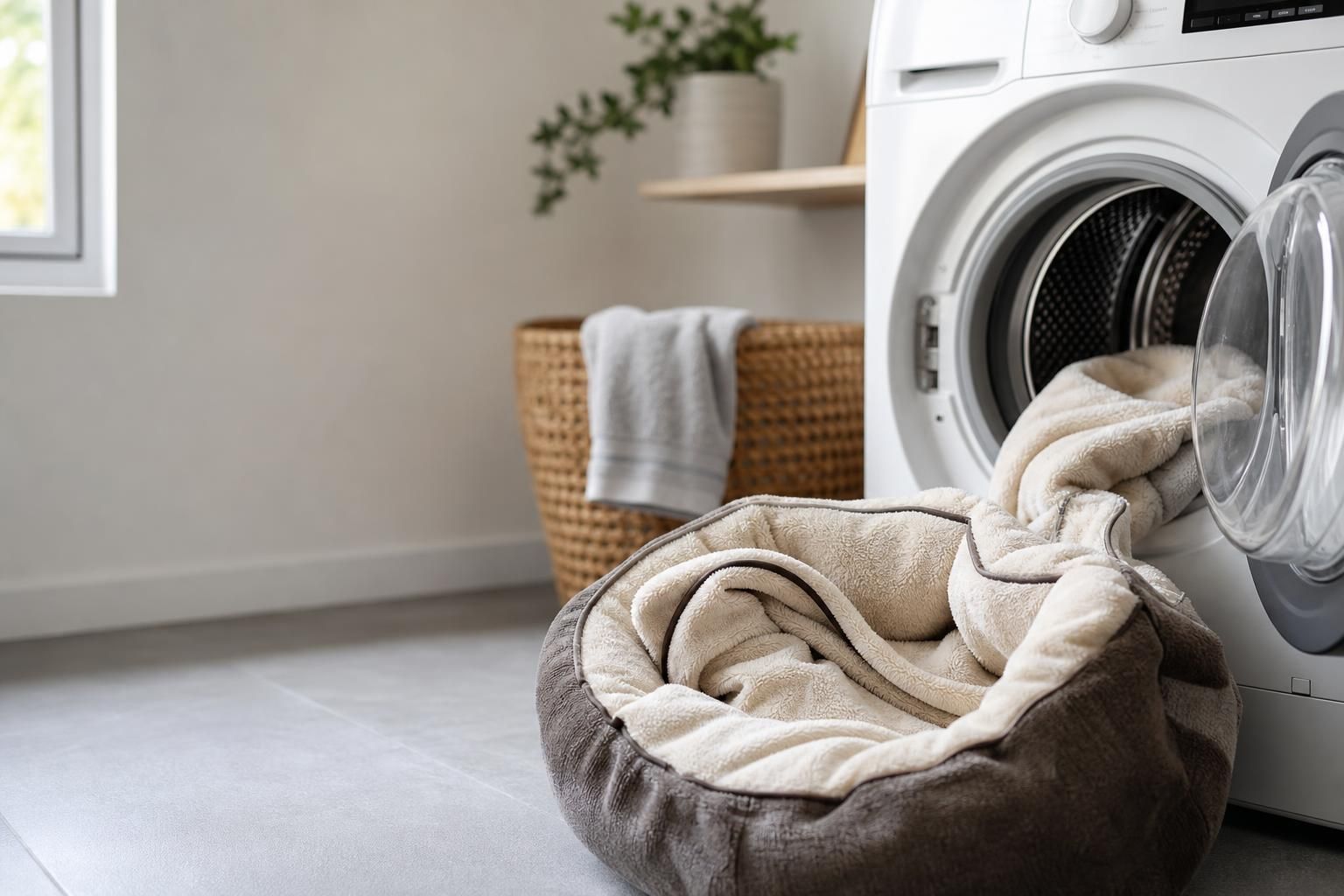
If the bed is small enough, a washing machine handles it easily. For bulky orthopedic beds or nests, many owners use a bathtub or a laundromat's large-capacity machine instead.
Choosing Bedding That's Actually Easy to Keep Clean
Washing frequency is only half the equation — bed design determines how painless that washing actually is. Removable, zippered covers mean you're not stuffing an entire bulky cushion into the machine every week. Water-resistant liners under the cover help protect the inner foam from accidents soaking all the way through. When our own cats, Ai and Dudu, test bedding before it goes up for sale, one of the first things they check (by napping on it repeatedly, naturally) is whether the cover comes off cleanly without snagging on seams or zippers.
If you're shopping for a new bed with easier maintenance in mind, our guide to choosing the right dog nest bed walks through what to look for in materials and construction. You can also browse washable options directly in the beds and home bedding collection.
Don't Forget What's Near the Bed
Bedding doesn't exist in isolation. Dog clothing — sweaters, pajamas, and anything worn to sleep — collects the same oils and hair and should be washed on a similar rotation, especially for dogs who nap in their outfits. Because sizing affects how fabric sits and how much it traps against the skin, it helps to use real measurements (chest, neck, back length in inches) rather than vague S/M/L labels when picking sleepwear or house clothing, which is the approach used throughout the clothing collection.
Frequently Asked Questions
Q: How often should you wash dog bedding if the dog sleeps indoors only?
Once a week is a reasonable baseline for an indoor dog with no skin issues. Wash sooner if you notice odor, visible dirt, or if the dog has been sick or had an accident.
Q: Can washing dog bedding too often damage it?
Washing weekly on a gentle or normal cycle generally won't harm quality bedding, but excessive heat-drying or frequent use of bleach-based products can break down foam and fabric faster. Always follow the manufacturer's care label for cycle type and drying temperature.
Q: What temperature should I use to wash dog bedding?
Hot water (around 130°F/54°C or the hottest setting the fabric label allows) is best for cutting through oils and reducing bacteria and flea eggs. Always check the care tag first, since some materials like certain foams or blends require cooler water.
Q: Does washing dog bedding help with allergies?
Yes — regular washing removes dander, saliva residue, and dust mites that can trigger allergic reactions in both dogs and sensitive household members. The American College of Allergy, Asthma & Immunology notes that reducing exposure to pet dander in frequently used fabrics is a practical step for allergy management.
Q: Should I wash a brand-new dog bed before using it?
Washing a new bed first is a good habit, since manufacturing residue, packaging dust, or storage odors can linger in the fabric. A quick wash and full dry before first use also lets you confirm the cover comes off and goes back on easily.