How to Wash a Dog Sweater Without Shrinking
Key takeaway
To wash a dog sweater without shrinking it, hand-wash or use a cold, gentle machine cycle with mild detergent, then reshape the sweater and air-dry it flat instead of using a dryer. Heat is the main cause of shrinkage in wool, acrylic, and blended knits, so avoiding hot water and machine heat at every step matters more than which detergent you use. Always check the care tag first, since fiber content changes the exact method.
Key takeaways
- Use cold or lukewarm water and a mild, dye-free detergent — never hot water or bleach-based cleaners.
- Skip the dryer entirely; reshape the wet sweater to its original measurements and let it air-dry flat.
- If a sweater already shrank, a lukewarm water-and-conditioner soak can sometimes relax the fibers back into shape.
Why Dog Sweaters Shrink in the First Place
Shrinkage happens when heat and agitation cause fibers to contract and tangle tighter together. Wool and other animal-hair fibers are especially prone to this because heat and friction cause the microscopic scales on each fiber to lock into each other, a process called felting. Acrylic and cotton blends shrink less dramatically but can still tighten by a noticeable amount if washed on a hot cycle and then tumble-dried on high heat. The Woolmark Company, which sets wool care standards, notes that wool garments are best cleaned with cool water and minimal agitation to preserve fiber structure.
Knowing the fiber matters because a 100% acrylic sweater tolerates gentle machine washing fine, while a wool-blend piece is safer hand-washed every time.
Step-by-Step: Hand-Washing a Dog Sweater
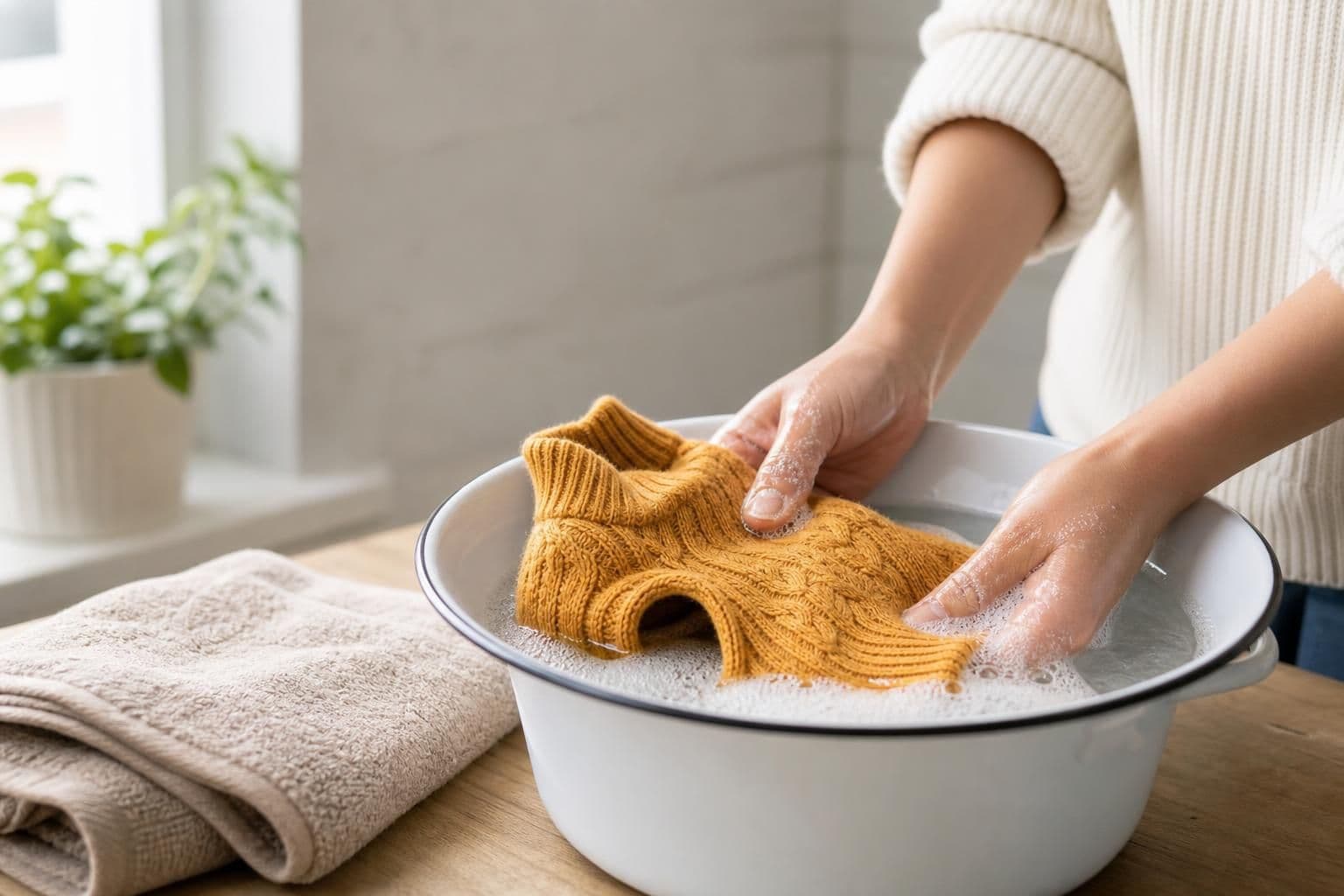
Hand-washing gives you the most control and is the lowest-risk method for any knit.
- Fill a basin with cold or lukewarm water — never hot.
- Add a small amount of mild, fragrance-free detergent (baby shampoo or a wool-safe wash also works).
- Submerge the sweater and gently press the suds through the fabric; do not scrub, twist, or wring.
- Let it soak 5–10 minutes for light soiling, longer if it's visibly dirty.
- Rinse in water the same temperature as the wash water — a sudden temperature change is another trigger for shrinkage.
- Press out excess water by rolling the sweater in a towel; don't wring it.
Machine Washing: When It's Safe
If the care tag allows machine washing, use the coldest setting available and a delicate or hand-wash cycle, which reduces spin speed and agitation time. Placing the sweater inside a mesh laundry bag prevents it from stretching against the drum or snagging on hook-and-loop closures from other items. Skip the "extra rinse" or high-spin options — the goal is minimal mechanical stress, not maximum water removal.
Products with buttons, zippers, or hardware — trench coats and overalls in particular — do better hand-washed, since machine agitation can pull at seams and closures over repeated washes.
Drying Without Losing Shape
Heat from a dryer is the single fastest way to shrink a sweater, so air-drying is non-negotiable for anything wool, cashmere, or wool-blend. Lay the damp sweater on a clean towel, gently stretch it back to its original length and width (measuring against the tag or a pre-wash photo helps), and let it dry away from direct sun or a heating vent. A second dry towel underneath, swapped once it's saturated, speeds up drying without adding heat. This flat-dry method is also the standard advice from the American Kennel Club for keeping dog apparel in wearable condition between seasons.
Because sizing accuracy is central to getting a sweater to fit correctly in the first place, it's worth measuring your dog's chest, neck, and back length before you shop rather than relying on generic S/M/L labels — a point we take seriously enough that every clothing item at Ziva Paws lists exact inch measurements. If you're not sure how to take those measurements accurately, this guide on getting accurate sizing for a small dog's winter coat walks through the same measuring points that apply to sweaters.
What to Do If It Already Shrank
A shrunk sweater isn't always a lost cause, especially for wool and wool blends. Soak the sweater in lukewarm water with a capful of hair conditioner or baby shampoo for about 15–20 minutes — this temporarily relaxes the fiber's scales. While still wet, lay it flat and gently stretch it in small increments toward its original size, pinning the edges if needed, then let it air-dry completely before removing the pins. This won't fully reverse severe felting, but it can recover an inch or two on a mildly shrunk piece.
Reading the Care Tag Correctly
Care symbols on pet apparel mirror human clothing standards, so a tag showing a bucket with an "X" through it means no machine washing, and a hand symbol means hand-wash only. A single dot inside the iron symbol (if drying with heat is ever suggested) indicates the lowest heat setting — but for shrink-prone knits, skipping heat-drying altogether is the safer default. Keep tags on garments if possible, or photograph them before removal, so the care instructions aren't lost after the first wash.
Preventing Shrinkage Before It Starts
- Wash similar fabrics together and separately from rougher items like leashes or grooming towels that can cause friction.
- Turn sweaters inside out before washing to reduce pilling and surface abrasion.
- Wash less frequently — spot-clean small stains with a damp cloth instead of a full wash when possible.
- Store off-season sweaters folded flat rather than hung, since hanging can stretch knit fibers over time.
For dogs who go in and out of sweaters daily through fall and winter, having a spare on rotation cuts down on wash frequency and wear. Our two resident testers, Ai and Dudu, aren't dogs, but they've put plenty of knitwear and soft fabrics through repeated wash cycles while product-testing at Ziva Paws, and the same rule holds across species: less heat and less agitation always means a longer-lasting garment. If you're building out a seasonal wardrobe, this buyer's guide to winter coats with a hood covers fit and layering alongside sweaters.
Frequently Asked Questions
Q: Can I put a dog sweater in the dryer on low heat?
Low heat is safer than high heat but still risky for wool or wool-blend sweaters, since even gentle heat can cause some fiber tightening. Air-drying flat is the more reliable way to preserve the original size.
Q: Does hand-washing always prevent shrinkage?
Hand-washing removes the risks of high heat and hard agitation from a machine, but using hot water or wringing the sweater vigorously can still cause shrinkage even by hand. Water temperature and handling matter more than the washing method itself.
Q: How often should a dog sweater be washed?
Washing after every few wears, or sooner if visibly soiled, is enough for most dog sweaters — over-washing accelerates fiber wear and increases shrinkage risk over time. Spot-cleaning light dirt between washes helps stretch the interval.
Q: Are acrylic dog sweaters less likely to shrink than wool ones?
Yes, acrylic and synthetic-blend sweaters generally resist shrinking better than wool because they lack the scaled fiber structure that causes felting. They can still tighten slightly if washed hot and dried on high heat, so cold water and air-drying remain the safest approach.
Q: What's the best way to measure a dog sweater before buying a replacement?
Measure your dog's neck, chest (widest point behind the front legs), and back length from the base of the neck to the base of the tail, then compare those numbers to the retailer's inch-based size chart rather than a generic S/M/L label. This is the same approach detailed in how to trim dog nails safely at home's companion grooming guides, where accurate at-home measuring reduces guesswork for pet owners.