Winter Coat for Small Dogs: How to Get Accurate Sizing
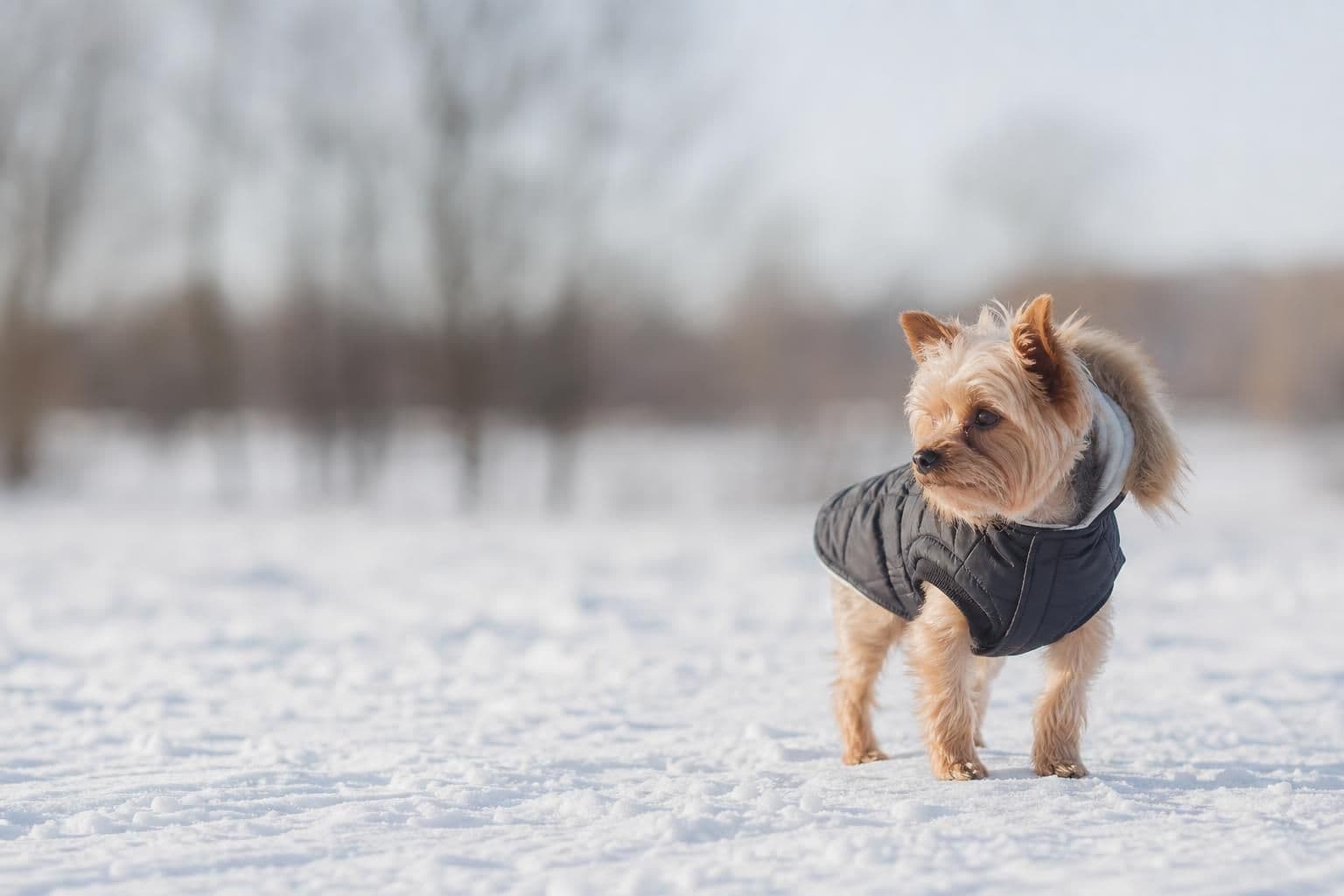
Key takeaway
A winter coat for small dogs fits correctly when it matches three measurements — neck, chest girth, and back length — rather than a generic size label like S or M. Small and toy breeds vary so much in body shape that two "medium" coats from different brands can differ by two or more inches in chest girth, which is why measuring your dog with a soft tape before buying prevents rubbing, gaps, and coats that slip sideways during walks.
Key takeaways
- Measure neck, chest girth, and back length in inches; don't rely on S/M/L alone.
- Small breeds lose heat faster because of higher surface-area-to-body-mass ratio, so fit matters more, not less.
- A coat that restricts shoulder movement or rubs the armpits will get shrugged off within a block or two.
Why generic sizing fails small dogs
Toy and small breeds — chihuahuas, dachshunds, min pins, papillons — have wildly different torso proportions even at similar weights. A 9-pound dachshund is long and low with a deep chest, while a 9-pound chihuahua is compact and short-backed. Both might fall into a brand's "small" category on a weight chart, yet need coats built on completely different templates.
This is the exact problem how to measure a dog for clothes size chart accuracy walks through step by step: chest girth (the widest point behind the front legs), neck circumference, and back length from base of neck to base of tail. Ziva Paws' clothing line, including winter coats, is sized against these three inch-based measurements rather than a single weight number, which is the main reason for checking a chart before ordering.
What measurements actually matter for a winter coat
When you're comparing coats, focus on:
- Chest girth — the largest circumference, usually just behind the front legs. This is where ill-fitting coats pinch or gap.
- Neck circumference — measured where a collar sits. Too tight and it restricts breathing; too loose and the coat rotates around the body.
- Back length — base of neck to base of tail. Too long drags in snow and slush; too short leaves the belly and lower back exposed.
A coat that's off by even half an inch at the chest can cause visible bunching at the shoulders, which is the most common reason dogs refuse to walk in a new coat.
Cold tolerance differs by breed and coat type
Small dogs, short-haired breeds, puppies, and senior dogs typically tolerate cold less well than larger or double-coated breeds, according to the American Veterinary Medical Association, which recommends limiting outdoor time in freezing temperatures and watching for shivering, whining, or reluctance to walk as signs a dog is too cold. The American Kennel Club also notes that breeds developed in warm climates — chihuahuas, Italian greyhounds, and other toy breeds among them — generally need extra layers below freezing, while northern breeds with dense double coats often don't need a coat at all.
Wind chill matters as much as the thermometer reading: a dry, still 30°F day is far easier on a small dog than a windy, wet 35°F day, since wet fur loses insulating value quickly.
Features worth checking before you buy
- Belly coverage — a coat that only covers the back leaves the underside exposed to snow and cold pavement.
- Leg openings — should allow a full stride without pulling at the armpits.
- Closures — hook-and-loop or snap closures along the back and belly are easier to adjust for a growing puppy or a dog carrying extra winter weight than a pullover-only design.
- Water resistance — a coat and a raincoat solve different problems; for wet, above-freezing conditions, see what to look for in a small dog raincoat instead of a fully insulated coat.
- Reflective trim — useful for dark winter evening walks, though it's a bonus feature rather than a fit requirement.
Fitting a coat on a puppy or a senior dog
Puppies grow quickly, and a coat bought in October may not fit by January. If you're outfitting a young dog for its first winter, it helps to review when puppies are ready to wear clothes safely before sizing a coat, since very young puppies have different comfort and safety considerations than adult dogs.
Senior dogs often lose muscle mass along the back and hindquarters, which can make a coat sized correctly a year ago fit loosely now. Re-measuring chest girth and back length once a season is a simple habit that avoids buying the wrong size out of assumption.
A quick sizing checklist
- Measure chest girth, neck, and back length in inches, standing your dog naturally (not stretched).
- Compare all three numbers against the brand's actual chart, not just the weight range.
- Check that the coat covers from base of neck to base of tail without dragging.
- Confirm leg openings don't pinch when the dog walks a few steps.
- Re-check fit each season, especially for puppies and seniors.
Coats in the clothing collection at Ziva Paws are listed with these three inch measurements on every product page instead of a single S/M/L tag, which is meant to make this checklist faster to run through before you order.
Frequently Asked Questions
Q: How do I know if a winter coat is too tight on my small dog?
Signs include visible pinching at the armpits, labored or shallow breathing, the dog refusing to move, or red marks on the skin after the coat is removed. If the neck opening leaves less than roughly a finger's width of slack, size up.
Q: What temperature actually requires a coat for a small dog?
There's no single universal number, but many small and short-haired breeds start showing cold discomfort below 40–45°F, especially with wind or wet ground. Watch behavior — shivering, tucked tail, or reluctance to walk — rather than relying only on the thermometer.
Q: Can I use my dog's weight instead of measuring for a coat?
Weight alone is unreliable because dogs of the same weight can have very different chest girths and back lengths depending on breed and build. Measuring in inches gives a far more accurate fit than a weight-based size chart.
Q: Do short-haired small dogs need a warmer coat than double-coated breeds?
Generally yes — short-haired and toy breeds have less natural insulation and often need a coat at temperatures where a husky or similar double-coated breed would be comfortable without one, per general guidance from veterinary and breed organizations.
Q: How often should I re-measure my dog for a new coat?
Once per season is a reasonable habit, and more often for puppies still growing or senior dogs whose muscle mass or weight has changed. A coat that fit well last winter isn't guaranteed to fit the same way this year.