What Age Can Puppies Wear Clothes? A Safe Timing Guide
Key takeaway
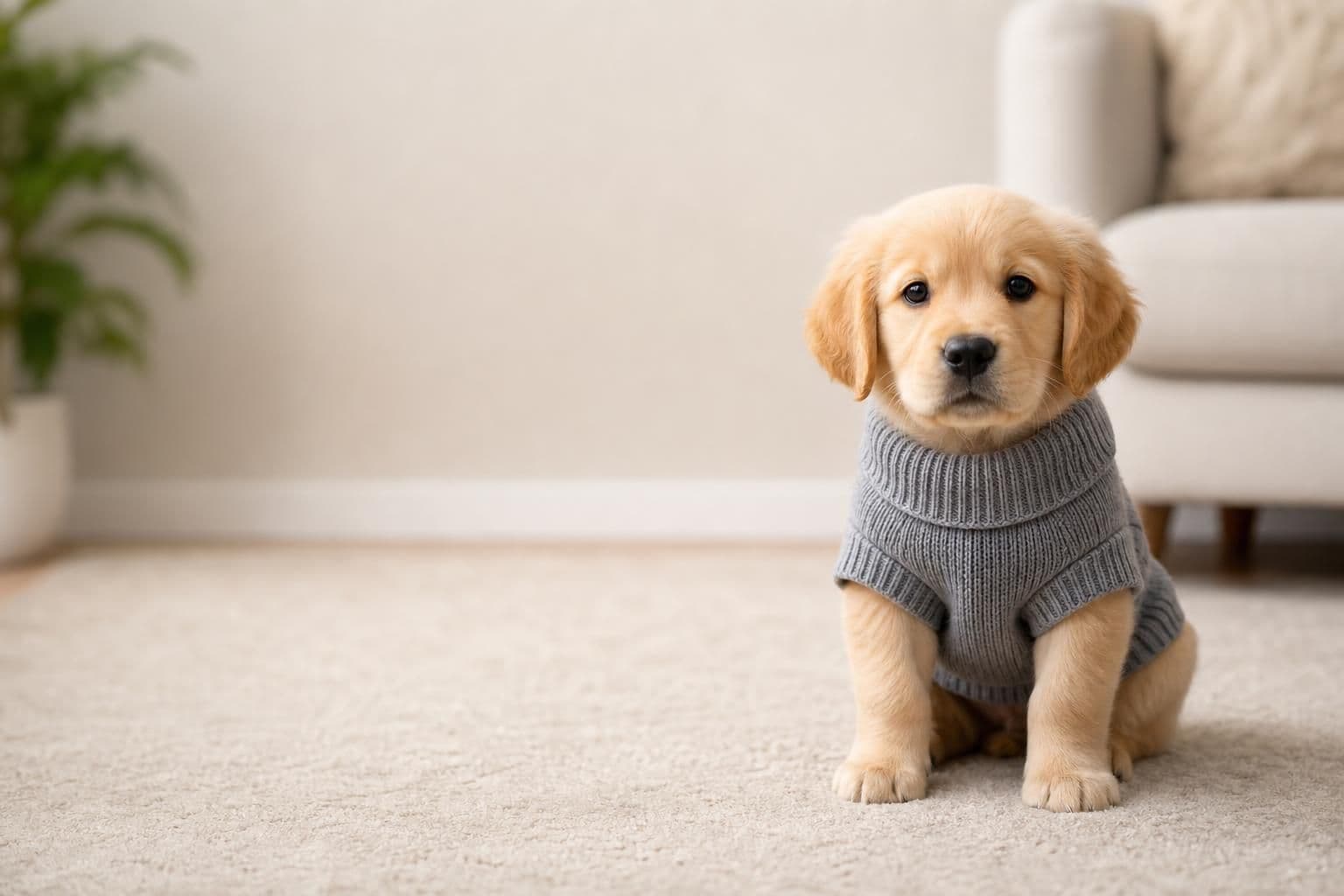
Most puppies can start wearing simple, well-fitted clothing around 8 to 12 weeks old, once they've left their littermates and are steady on their feet, though very lightweight items can sometimes go on a bit sooner for short, supervised stretches. The right timing depends more on the puppy's size, coat, and comfort with new sensations than on a strict number on the calendar. Short, positive first sessions matter more than the exact week you begin.
Key takeaways
- Start around 8-12 weeks with soft, breathable fabric for 5-10 minute sessions.
- Watch behavior, not just age — freezing, biting at fabric, or falling over signals "not yet."
- Measure chest, neck, and back length in inches rather than trusting generic S/M/L labels.
Why Age Alone Isn't the Full Answer
A puppy's readiness for clothing depends on physical coordination as much as birthdate. Puppies are still developing balance and depth perception through roughly 12-16 weeks, a period the American Veterinary Medical Association associates with active motor skill development and socialization. A wobbly 9-week-old toy breed puppy may need more time than a sturdier 8-week-old of a larger breed. Judge readiness by how the puppy stands, walks, and reacts to fabric touching its skin, not just by weeks since birth.
Signs a Puppy Is Ready for Clothes
Look for these behavioral cues before introducing any garment:
- Walks confidently on all four paws without frequent stumbling
- Tolerates being handled, brushed, or touched around the neck and belly
- Shows curiosity rather than panic toward a new object placed nearby
- Has finished the bulk of littermate weaning and basic house adjustment
If a puppy tenses, tries to bite the fabric aggressively, or freezes in place the moment a sleeve touches a leg, pause and try again in a few days with a lighter, smaller piece instead of pushing through.
Starting Small: The First Sessions
Begin with something minimal — a thin, stretchy shirt rather than a bulky harness-style outfit or anything with buckles. Keep the first sessions to 5-10 minutes, indoors, in a calm room without other pets or loud noise. Offer a treat immediately after the garment goes on, then remove it before the puppy has a chance to get frustrated. Repeat daily, gradually extending the time by a few minutes as the puppy relaxes.
Getting an accurate fit matters just as much as timing. A garment that's too tight around the chest can restrict breathing and movement, while one that's too loose can catch on furniture or the puppy's own paws. Because puppies grow unevenly — often widening at the chest before lengthening at the back — a chart based on actual inches, not a single "small" or "medium" tag, gives a much more reliable starting point. If you're unsure where to measure, this guide to measuring a dog for accurate clothing sizing walks through the same chest, neck, and back-length points that matter for puppies too, just at smaller numbers.
Which Situations Actually Call for Clothing
Not every puppy needs clothes, and that's fine. Clothing tends to be genuinely useful in a few specific situations:
- Short-haired or toy breeds in cold weather — breeds like Chihuahuas or Italian Greyhounds have limited natural insulation and can lose body heat quickly on winter walks.
- Post-grooming or post-vet-visit sensitivity — a light layer can protect a freshly clipped coat or a small incision site from friction.
- Anxious puppies during travel or vet visits — some snug-fitting wraps are marketed for a calming, swaddle-like effect, though individual response varies.
- Rash or skin protection — a thin layer can help discourage licking or scratching at a spot while it heals, under a veterinarian's guidance.
A healthy, double-coated puppy breed sitting in a warm home rarely needs clothing at all — comfort and function should drive the decision, not just style.
Fabrics and Features to Avoid Early On
Young puppies have delicate skin and are still mouthing everything, so certain design choices create unnecessary risk:
- Small buttons, snaps, or decorative pieces that can be chewed off and swallowed
- Rough seams or tags that rub against the belly or armpits
- Tight elastic cuffs around legs that can cut off circulation as the puppy grows
- Non-breathable synthetic fabric that traps heat, especially on longer-haired breeds
Choose soft cotton-blend materials with minimal hardware for the first several fittings, and check the fit weekly, since puppies can outgrow a garment within a matter of weeks during rapid growth phases.
When to Involve a Veterinarian
If a puppy shows persistent skin irritation, hair loss, or scratching after wearing clothing, that's a sign to stop and check for an allergic reaction or irritation from friction. The ASPCA notes that monitoring a puppy's skin and coat condition regularly is a useful part of general at-home care, and clothing-related irritation is something worth mentioning at a routine wellness visit. A vet can also advise on timing for puppies recovering from surgery or dealing with a chronic skin condition, since those situations don't follow the general age guideline.
Frequently Asked Questions
Q: Can an 8-week-old puppy wear a sweater?
Yes, as long as the puppy is steady on its feet and the sweater is lightweight, seam-free, and free of small chewable attachments. Keep the first sessions short and watch for signs of discomfort like freezing or excessive biting at the fabric.
Q: Do all puppies need clothes in cold weather?
No. Short-haired, toy, and senior breeds often benefit from a layer in cold conditions, but thick double-coated breeds usually have enough natural insulation and may overheat in clothing.
Q: How do I know if a puppy's outfit is too tight?
You should be able to slide two fingers comfortably under any strap or cuff. If the fabric leaves marks on the skin, restricts leg movement, or the puppy struggles to walk normally, size up or remove it.
Q: Should I size puppy clothes by age or by measurement?
Measurement is far more reliable than age or breed name alone, since puppies of the same age can vary widely in chest and back-length size. Measuring in inches around the neck, chest, and back gives a much more accurate fit than a generic small/medium/large label.
Q: Is it safe to leave clothes on a puppy overnight?
Generally no — clothing should come off during unsupervised time or sleep, since tags, seams, or loose threads can become a chewing or entanglement risk when no one is watching. Reserve clothing for supervised walks, photos, or short indoor periods.