Non-Toxic Chew Toys for Puppies That Are Teething
Key takeaway
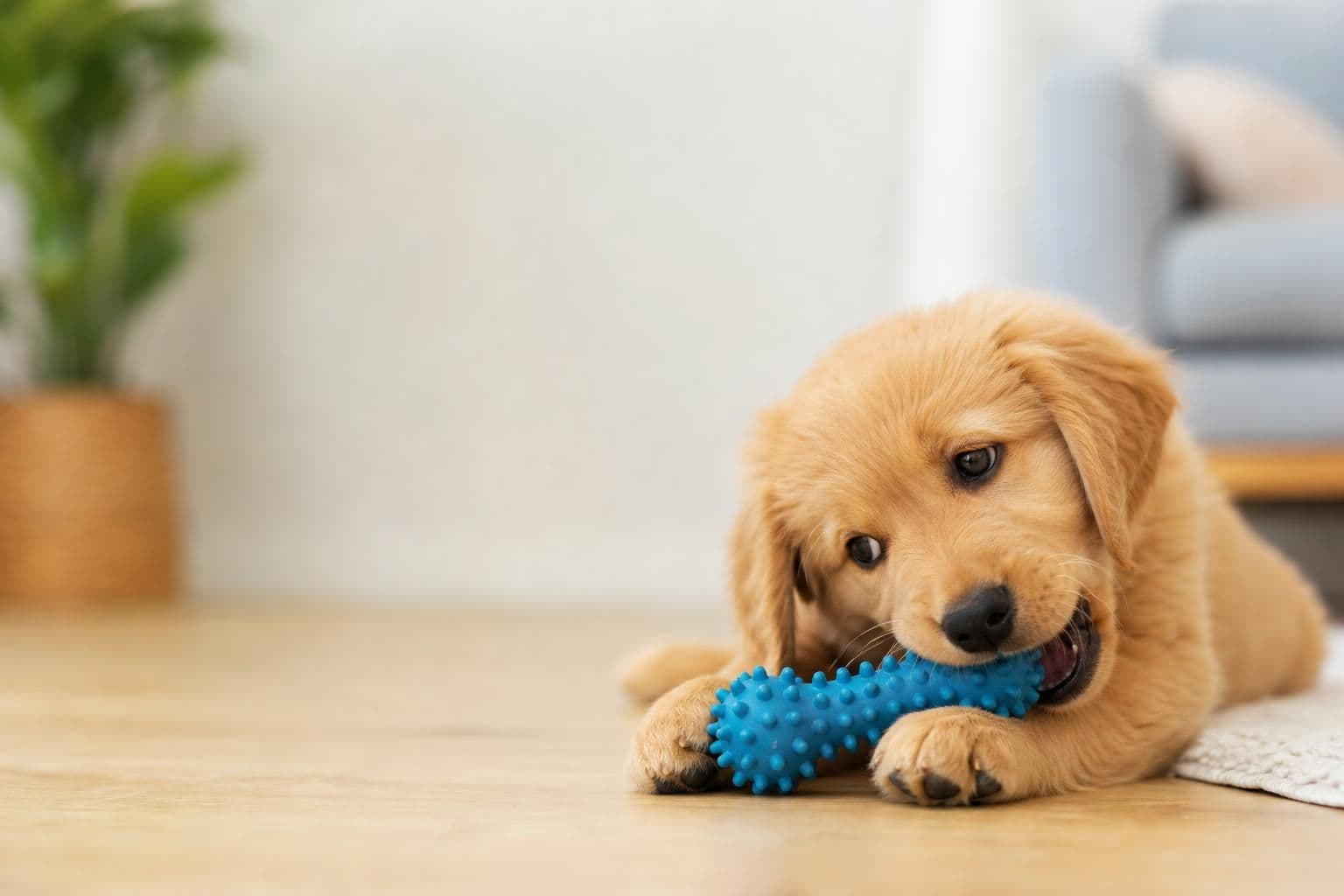
The safest non-toxic chew toys for teething puppies are made from single-material natural rubber, untreated wood alternatives like coffee wood, or food-grade nylon, with no added dyes, glues, or glitter. Look for products labeled BPA-free and phthalate-free, sized for your puppy's current mouth (not the adult breed size), and swap them out once they get worn, splintered, or small enough to swallow whole. Puppies typically start teething around 3-4 months and finish losing baby teeth by about 6-7 months, so chew toys need to hold up to months of steady gnawing.
Key takeaways
- Choose single-material rubber, nylon, or coffee-wood chews labeled BPA-free and phthalate-free — avoid mixed-material toys with glued-on parts that can come loose.
- Match toy size to your puppy's current jaw, not their adult breed size, and replace anything cracked, flattened, or small enough to swallow.
- Rotate textures (soft rubber, ridged nylon, cold/frozen options) to cover different teething stages instead of relying on one toy type.
What "non-toxic" actually means on a chew toy label
"Non-toxic" isn't a regulated claim the way it is on children's toys, so it helps to know what to check for yourself. The U.S. Consumer Product Safety Commission and FDA regulate materials like phthalates and BPA in consumer products generally, and reputable pet chew manufacturers now advertise compliance with similar limits even though pet toys aren't directly covered by the same law. Practically, that means looking for:
- Material transparency: the listing names the exact material (natural rubber, nylon, coffee wood) instead of just "durable plastic."
- No loose parts: bells, squeakers, or fabric add-ons that a teething puppy could chew off and swallow.
- Country-neutral labeling red flags: vague terms like "pet-safe materials" with no specifics are worth skipping in favor of a listing that states what the toy is actually made of.
If you're also outfitting a heavy chewer beyond the puppy stage, the guidance in safe chew toys for aggressive chewers covers durability testing that applies once those baby teeth are gone.
Why teething puppies need different chews than adult dogs
A puppy's mouth changes fast. Deciduous (baby) teeth start erupting around 2-4 weeks, and the switch to 42 permanent adult teeth is typically finished by 6-7 months, according to veterinary dental references from groups like the American Veterinary Dental College. During the peak teething window, gums are inflamed and puppies chew instinctively to relieve pressure — which means toys need to be softer and more forgiving on tender gums early on, then firmer as adult teeth come in.
This is also why a single "one size fits all" chew toy rarely works for the whole teething period. A toy that's gentle enough for 10-week-old gums may not hold up to the stronger bite of a 5-month-old puppy testing its new adult teeth.
Materials to look for — and what to avoid
Good choices:
- Natural rubber: flexible enough for sore gums, generally holds up to repeated chewing without splintering.
- Nylon (food-grade, puppy-specific): firmer texture, better suited to older teething puppies with more adult teeth in.
- Coffee wood or similar compressed natural fiber: rigid but not sharp when it wears down, unlike real sticks.
- Frozen or cooled rubber toys: cold temperature can numb sore gums temporarily, similar to how a cold washcloth is often recommended.
Avoid:
- Real bones (cooked bones splinter; raw bones carry bacterial risk and can crack teeth)
- Toys with dye-heavy coloring or glued-on decorative pieces
- Soft plastic that can crack into sharp shards
- Rawhide, which can swell if swallowed and poses a choking hazard for small mouths
The FDA's guidance on pet treats and chews has flagged concerns over certain imported chew products in the past, which is a good reminder to buy from listings that specify country of manufacture and material sourcing rather than generic bulk listings.
Sizing a chew toy to your puppy's actual mouth
Bigger isn't automatically safer. A chew toy that's too large for a small-breed puppy can be just as frustrating (and useless for gum relief) as one that's dangerously small for a large-breed puppy to swallow. As a general rule:
- The toy should be too big to fit fully inside the puppy's mouth in one bite.
- It should still be light enough for the puppy to hold or mouth without straining their jaw.
- Re-check sizing every 6-8 weeks during rapid growth phases, especially for large-breed puppies.
This same logic — measuring the actual animal rather than guessing off a breed chart — is why Ziva Paws builds its clothing sizing around real inch measurements (chest, neck, back length) instead of generic S/M/L labels. The same "measure, don't assume" habit applies well beyond apparel, including how to measure a dog for an accurate clothes size chart, which is useful if you're also shopping for a teething puppy's first sweater or harness.
How many chew toys a teething puppy actually needs
It's tempting to buy one of everything, but rotation matters more than volume. Having 3-4 different textures on hand — one soft rubber, one firmer nylon, one that can go in the freezer — covers most of the teething window without cluttering the house. If you're unsure how many toys is reasonable overall (chew toys plus regular play toys), how many toys does a dog need walks through a simple way to think about it by activity type rather than a fixed number.
Signs a chew toy has stopped being safe
Check chews regularly, not just when they look obviously broken:
- Surface cracking or flattening: rubber that's gone soft and thin in one spot is more likely to tear off a chunk.
- Small pieces missing: even a bite-sized chunk gone means the rest of the toy is compromised.
- Sharp edges from wear: nylon and coffee-wood chews can wear into points rather than crumbling evenly.
- Odor or discoloration: a sign of bacterial buildup, especially on porous materials.
When in doubt, retire the toy. A new chew is a lot cheaper than an emergency vet visit for a swallowed fragment or a cracked tooth.
Frequently Asked Questions
Q: What age do puppies stop needing teething-specific chew toys?
Most puppies finish teething and have their full set of adult teeth by around 6-7 months, at which point firmer, more durable chews designed for adult dogs are usually a better fit.
Q: Are rope toys safe for teething puppies?
Rope toys can help with gum relief but the fibers can fray and be swallowed, so they work best supervised and should be replaced as soon as strands start coming loose.
Q: Can teething puppies chew on ice cubes?
Small ice chips or frozen wet washcloths are commonly used for gum relief, but whole ice cubes can be hard enough to risk tooth damage, so a frozen rubber chew toy is generally the safer option.
Q: How do I know if a chew toy is too hard for my puppy's teeth?
A simple test many owners use is the fingernail check: if you can't dent the material with a fingernail, it may be too hard for developing teeth and better suited for an adult dog.
Q: Is nylon safe for very young puppies who just started teething?
Nylon is generally firmer and better suited to older teething puppies with more adult teeth already in; very young puppies with sore gums often do better with softer natural rubber first.