How to Measure a Dog for Clothes Size Chart Accuracy
Key takeaway
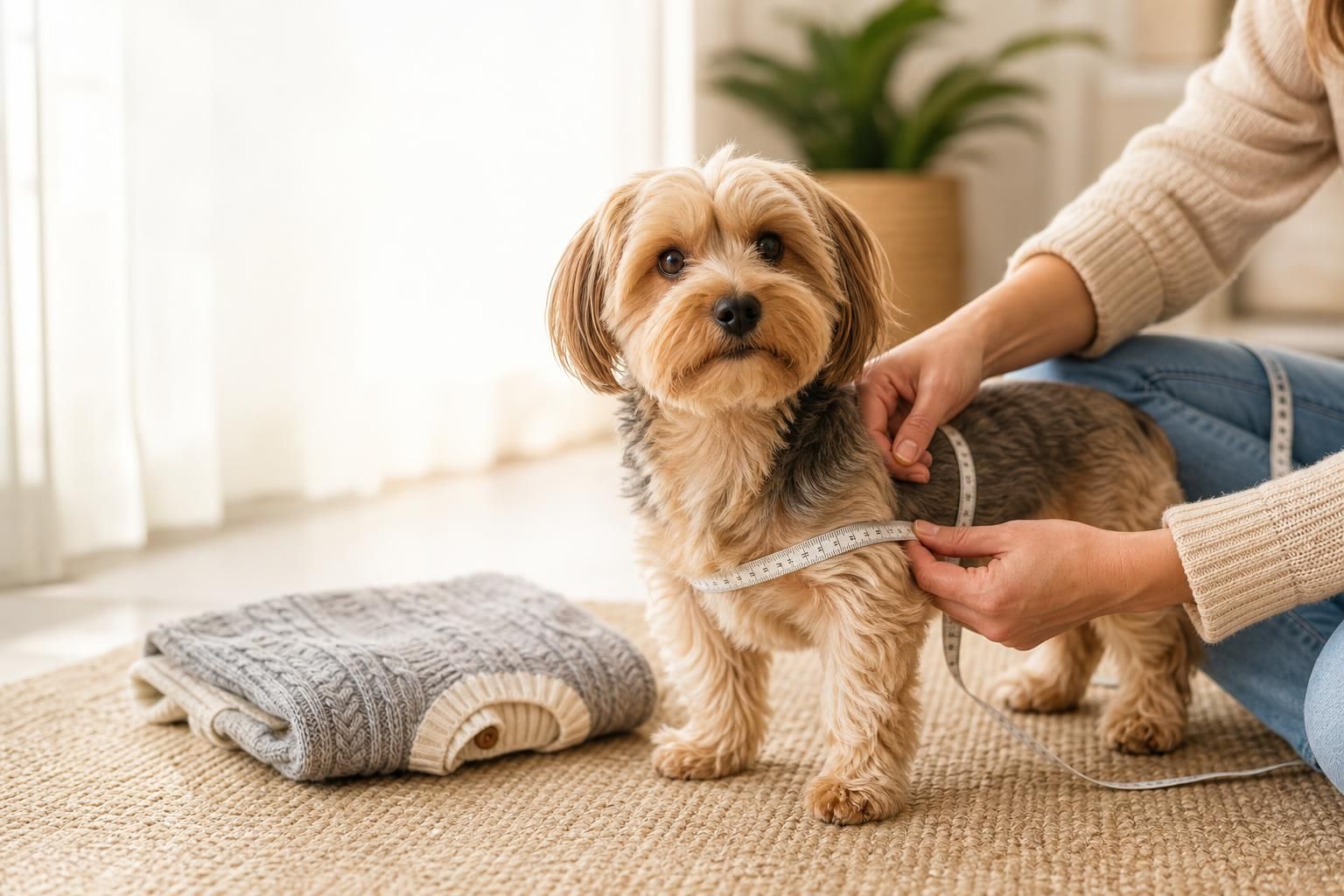
To measure a dog for clothes, you need three numbers: neck circumference, chest (girth) circumference, and back length from the base of the neck to the base of the tail. Take these measurements in inches with a flexible tape measure while your dog is standing naturally, then compare them against a brand's inch-based size chart rather than relying on generic S/M/L labels. This method works for almost any garment, from a basic t-shirt to a winter coat or harness-compatible vest.
Generic labels like "small" or "medium" vary wildly between brands because there's no industry standard behind them. A "medium" sweater from one company might fit a 15-pound dog, while another brand's "medium" fits a 25-pounder. Real measurements in inches are the only reliable way to predict fit before you buy.
The 3 Measurements You Actually Need
1. Neck Circumference
Wrap the tape measure around the base of your dog's neck, where a collar would normally sit. Keep it snug but not tight — you should be able to slide two fingers underneath. Round to the nearest half inch.
2. Chest (Girth) Circumference
This is the widest part of your dog's ribcage, typically just behind the front legs. It's the single most important measurement for clothing fit, since a too-tight chest measurement is the most common reason clothes get returned. Measure with the tape snug but not compressing the fur, and again allow room for two fingers to fit underneath.
3. Back Length
Measure from the base of the neck (where a collar sits) to the base of the tail, following the natural curve of the spine. This determines whether a garment will cover your dog's belly properly or ride up uncomfortably short.
How to Take the Measurements Correctly
- Use a soft fabric or vinyl tape measure, not a rigid metal one.
- Measure your dog standing on all four legs in a relaxed, natural posture — not sitting or stretching.
- Take each measurement twice to confirm consistency.
- Record all three numbers in inches, not just one "size" guess.
- If your dog is between two sizes on a chart, size up for comfort, especially for dogs with deep chests or thick coats.
- Re-measure every 6–12 months for growing puppies or dogs with fluctuating weight.
Why Inches Matter More Than S/M/L
A size chart based on actual inches removes the guesswork that comes with generic labels. When you know your dog's chest measures 18 inches, you can match that number directly to a chart's stated range — for example, "16–19 inches: Medium" — instead of hoping your dog fits the label a brand assigned somewhat arbitrarily. This is exactly why Ziva Paws builds its clothing charts around real inch measurements: it takes the ambiguity out of buying pet apparel online, where you can't try before you buy.
Breed Body Types That Complicate Sizing
Not every dog fits a standard chart shape, and this is where relying only on weight or breed name backfires:
- Deep-chested breeds (Greyhounds, Dobermans) often need a smaller neck size paired with a larger chest size.
- Long-backed breeds (Dachshunds, Corgis) need extra attention to back length so coats don't leave the lower belly exposed.
- Barrel-chested breeds (Bulldogs, Pugs) frequently need wider chest allowances than their neck or length measurements suggest.
- Fluffy or double-coated breeds may need a slightly looser fit to avoid matting the fur under snug seams.
If your dog falls into one of these categories, prioritize the chest measurement and check the specific product's fit notes, since a single "breed size" recommendation rarely accounts for these variations.
Measuring for Different Garment Types
- T-shirts and light layers: Neck and chest are the priority; back length matters less since these are meant to be snug.
- Coats and sweaters: All three measurements matter, especially back length, so the garment covers the belly in cold weather without restricting leg movement.
- Harness-compatible vests: Measure the chest slightly looser than usual to leave room for a harness underneath.
Common Sizing Mistakes to Avoid
- Measuring over thick fur without accounting for compression, which can shrink your number by half an inch or more.
- Measuring a dog that's sitting or hunched, which shortens the back length reading.
- Trusting a weight-only size chart without a corresponding inch range, since two dogs of the same weight can have very different chest sizes.
- Assuming all brands use the same size labels — always check the specific inch chart for the product you're buying, not a general breed size guide.
Frequently Asked Questions
Q: What three measurements do I need to size a dog for clothes?
You need neck circumference, chest (girth) circumference, and back length from the base of the neck to the base of the tail, all measured in inches with a flexible tape.
Q: Should I measure my dog's weight or use inches to find the right size?
Inches are more reliable than weight because two dogs of the same weight can have very different body shapes. Always match your dog's chest and neck measurements to a brand's inch-based size chart rather than relying on weight alone.
Q: How loose should a dog's clothing measurement be?
Leave enough room to slide two fingers comfortably under the tape at the neck and chest. This ensures the garment isn't too tight while still fitting securely enough to stay in place.
Q: How often should I re-measure my dog for clothing?
Re-measure every 6 to 12 months, especially for growing puppies or dogs whose weight fluctuates seasonally. Adult dogs with stable weight can typically use the same measurements year to year.
Q: Why do S/M/L labels vary so much between pet clothing brands?
There's no industry standard for pet clothing sizes, so each brand sets its own definition of small, medium, or large. This is why measuring in actual inches and checking a specific product's size chart is far more accurate than trusting a generic label.