Why Dog Coat Sizing Should Use Inches, Not S/M/L
Key takeaway
Dog coat sizing works better in inches than in S/M/L because breed body shapes vary too much for a single label to mean the same thing across brands. A "medium" from one company might fit a stocky French Bulldog but swim on a lean Whippet of the same weight. Measuring chest girth, neck, and back length in inches removes that guesswork and lets you match a coat to your dog's actual shape, not just a category.
Key takeaways
- Chest girth, neck circumference, and back length (in inches) predict fit far better than weight-based S/M/L labels.
- A coat that's too loose can rub or slip; one that's too tight can restrict shoulder movement and breathing.
- Always compare your dog's inch measurements against a brand's actual size chart, not the label name alone.
Why S/M/L Labels Break Down for Dogs
Clothing sizes on humans roughly track height and build, but dogs come in far more extreme proportions. A Dachshund and a Pug can weigh the same yet have completely different chest-to-length ratios. Because there's no industry standard defining what "medium" means for pet apparel, every brand sets its own cutoffs — so a medium at one store can be a small at another. That inconsistency is the main reason generic labels frustrate owners who order online and get a coat that won't zip or one that drags on the ground. Inch-based charts sidestep the problem entirely because a chest girth of 18 inches means the same thing no matter who made the coat.
The Three Measurements That Actually Matter
Most well-designed size charts ask for three numbers, and each one protects against a different fit problem:
- Neck circumference — measured around the base of the neck where a collar would sit. Too tight here can chafe; too loose lets the coat rotate or slip off one shoulder.
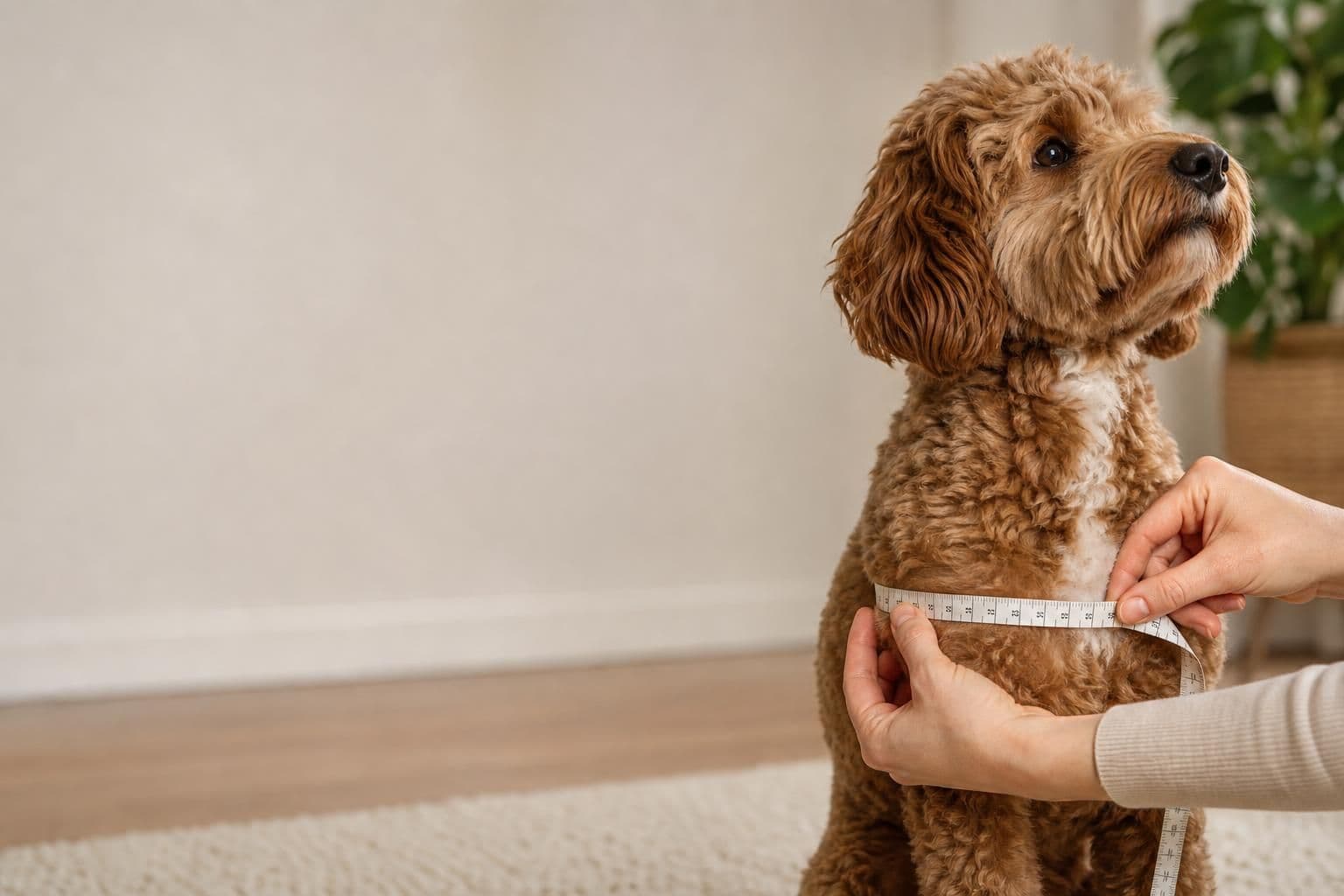
- Chest girth — measured around the widest part of the ribcage, just behind the front legs. This is the single most important number for coats and sweaters, since it determines whether the garment can close comfortably without pinching.
- Back length — measured from the base of the neck to the base of the tail. This controls whether the coat covers the torso properly or leaves the belly and lower back exposed in cold or wet weather.
A detailed walkthrough of how to take each measurement correctly is covered in this guide to measuring a dog for accurate clothing sizes, which is worth doing before ordering anything, especially for breeds with unusual proportions like deep chests or long backs.
How to Read an Inch-Based Chart Correctly
When a size chart lists ranges like "chest 16–18 in," treat your dog's actual measurement as the deciding factor, not the range midpoint. If your dog measures right at the top of one range and the bottom of the next, sizing up usually gives more comfortable movement, especially for dogs that will wear the coat over long walks. Fabric with a little stretch — knit sweaters, for example — has more forgiveness than structured coats with zippers or Velcro closures, which fit closer to the exact number. Breed-specific reference points can also help you sanity-check a measurement before you buy; a breed-by-breed chart with inch ranges is a useful cross-check if you're unsure your tape measure reading is realistic for your dog's build.
Signs a Coat Doesn't Fit — Even If the Label Says It Should
A label matching your dog's weight doesn't guarantee comfort. Watch for these fit problems once the coat is on:
- Rubbing behind the front legs — usually means the chest girth is too small or the armholes are cut too tight.
- Coat rotating or slipping sideways — points to a neck opening that's too loose relative to the chest.
- Restricted leg movement — the dog stands stiffly or refuses to walk normally, often from a back length that's too short and pulls at the shoulders.
- Gapping at the belly — chest girth measurement was too generous for the dog's actual frame.
According to the American Kennel Club, any garment should allow a dog to move, sit, and lie down without restriction, which is a good practical test to run in-store or within a few minutes of putting a new coat on at home.
Weather, Breed Build, and When Sizing Gets Trickier
Sizing challenges increase with certain coat styles. Trench coats and overalls that wrap fully around the torso need accurate back length or they'll bunch at the shoulders. Breeds with barrel chests, like Bulldogs, often need a chest measurement disproportionately larger than their neck size, which is exactly the kind of mismatch a single S/M/L label can't capture. For dogs going out in wet conditions, a coat that fits snugly at the chest also does a better job keeping water off the belly; if rain gear is the goal, this guide to picking a raincoat for small dogs covers fit considerations specific to waterproof fabrics. Cold-weather guidance from the American Veterinary Medical Association also notes that short-coated and small breeds lose body heat faster, which is one more reason a properly fitted coat — not just a warm one — matters for comfort outdoors.
At Ziva Paws, every clothing listing uses chest, neck, and back-length measurements in inches instead of S/M/L, specifically because customers kept running into the label-mismatch problem described above. You can browse the current lineup in the clothing collection and compare your dog's measurements directly against each product's chart before ordering.
Puppies and Growing Dogs Need Re-Measuring
A coat sized correctly today may not fit in a few months if your dog is still growing. Puppies can gain inches in chest girth and back length quickly, especially in larger breeds, so it's worth re-measuring every few weeks rather than assuming last season's size still applies. If you're unsure whether your puppy is even ready for clothing yet, this guide on safe timing for puppy clothes walks through what to watch for before introducing coats or sweaters.
Frequently Asked Questions
Q: How do I measure my dog's chest for a coat?
Wrap a soft measuring tape around the widest part of the ribcage, just behind the front legs, keeping the tape snug but not tight. Record the number in inches and compare it directly to the brand's chest girth range rather than to a generic size label.
Q: Why do S/M/L dog coat sizes vary so much between brands?
There's no universal standard defining what counts as small, medium, or large for pet apparel, so each brand sets its own cutoffs based on internal testing. That's why the same label can produce noticeably different fits depending on which company made the coat.
Q: What happens if a dog coat is too tight?
A too-tight coat can chafe at the neck or armpits, restrict shoulder movement, and in some cases make it harder for the dog to breathe comfortably during activity. If you notice rubbing, stiff movement, or reluctance to walk, size up or loosen any adjustable straps.
Q: Should I size up if my dog is between two measurements?
Generally yes, especially for structured coats with zippers or fixed closures, since a slightly looser fit is more comfortable than one that pinches. Stretchy knit sweaters have a bit more built-in forgiveness than rigid, fully enclosed coats.
Q: Do inch measurements matter for cats too, or just dogs?
Inch-based sizing matters for cats as well, since cat body shapes vary between breeds just as dog breeds do. The same chest, neck, and back-length approach applies whether you're fitting a sweater on a cat or a coat on a dog.