Best Cat Pajamas: How to Pick the Right Fit and Fabric
Key takeaway
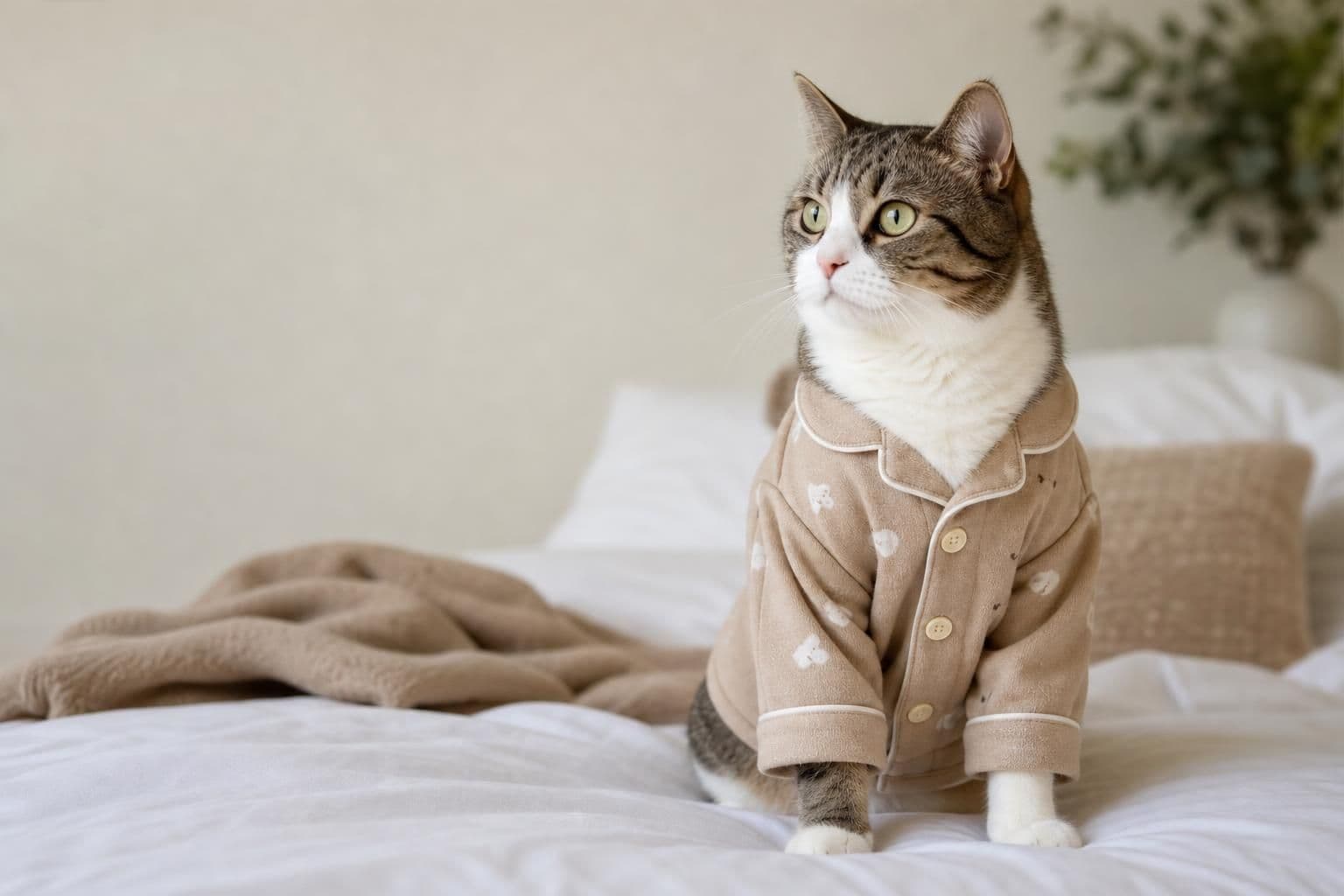
The best cat pajamas are made from soft, breathable knit fabric (like cotton jersey or fleece-lined cotton), fasten with snaps or hook-and-loop rather than tight elastic, and are sized by actual chest and back-length measurements instead of generic small/medium/large labels. The right pair should let your cat walk, jump, and groom normally without bunching around the legs or restricting the shoulders. For cats recovering from surgery, shedding heavily, or living in a cold apartment, pajamas serve a real purpose beyond looks.
Key takeaways
- Measure your cat's chest girth and back length in inches before buying — fabric stretch varies too much between brands for S/M/L to be reliable.
- Choose soft, seam-light knits for everyday wear and lightweight fleece for cold rooms; avoid anything with zippers or hard snaps near the belly.
- Post-surgery pajamas should cover the incision fully but leave the neck and legs completely unrestricted for normal movement.
Why cats wear pajamas at all
Cat pajamas aren't just a novelty. Vets commonly recommend a snug body garment after spay/neuter surgery or minor procedures to keep cats from licking or scratching an incision, functioning similarly to a soft alternative to the traditional plastic cone. The American Veterinary Medical Association notes that preventing self-trauma to a healing wound is one of the most important parts of post-operative home care, and a well-fitted body suit can reduce the stress some cats show when forced to wear a rigid collar.
Outside of recovery, pajamas help short-haired or senior cats retain body heat in cooler rooms, and they can cut down on loose fur landing on furniture during heavy shedding seasons — useful if you've already read about why your cat might be losing hair and are trying every angle to manage it.
What actually makes a pair "the best"
Look past the pattern and check these three things first:
- Fabric weight and stretch. A four-way stretch cotton or cotton-poly blend moves with the cat's body during jumping and grooming. Stiff or non-stretch fabric will ride up or restrict the front legs.
- Closure type. Snap closures along the belly or back make bathroom breaks and quick removal easier than a garment with no opening at all. Avoid metal zippers near the skin.
- Hem design. Leg openings should sit above the elbow and stifle joints, not around them, so the cat retains a full, unrestricted stride.
At Ai and Dudu's house — the two resident cats who test products before Ziva Paws lists them — the easiest tell for a bad fit has always been the same: if a cat immediately sits down and refuses to move after you put something on, the garment is too tight somewhere around the shoulders or hips.
Sizing by inches, not letters
Generic S/M/L sizing fails cats constantly because a "medium" from one brand can be a "large" from another, and cat body shapes vary more than their weight alone suggests. A reliable size chart asks for three numbers:
- Chest girth — measured around the widest part of the ribcage, just behind the front legs.
- Neck circumference — if the garment has a collar or turtleneck opening.
- Back length — from the base of the neck to the base of the tail.
Ziva Paws' clothing collection uses these three inch-based measurements on every listing instead of S/M/L, specifically because a slightly-off chest measurement is the most common reason a cat pajama set gets returned. If you're sizing a kitten rather than an adult cat, the proportions are different enough that it's worth checking a kitten-specific guide — see this sizing-first guide to kitten clothing for how fast chest girth changes in the first year.
Comparing common cat pajama types
| Type | Best for | Fabric | Watch out for |
|---|---|---|---|
| Lightweight cotton onesie | Everyday wear, warm climates | Thin cotton jersey | Can ride up if too loose |
| Fleece-lined pajama suit | Cold apartments, senior cats | Cotton outer, fleece lining | Can overheat indoor cats if room is warm |
| Post-surgery recovery suit | After spay/neuter or skin procedures | Soft stretch knit, minimal seams | Must fully clear the incision site |
| Printed flannel set | Photos, mild cold | Flannel or brushed cotton | Less stretch, can restrict shoulders |
| Sleeveless belly wrap | Shedding control, light coverage | Stretch knit | Doesn't cover legs, limited warmth benefit |
Fit-check steps before you commit
A pajama set can look right on the hanger and still fail on the cat. Run this quick check in the first few minutes of wear:
- Slip the garment on and fasten it at the loosest comfortable setting.
- Watch the cat walk a few steps — the front legs should swing freely with no fabric pulling at the armpit.
- Check that you can slide two fingers flat under the chest band; tighter than that risks restricting breathing or movement.
- Let the cat attempt to groom its back and hind leg. If it can't reach past the garment to groom normally, size up or choose a shorter cut.
If the cat spends more than a few minutes trying to pull the garment off with its teeth, that's a fit or fabric problem, not a behavior one.
Seasonal and indoor temperature considerations
Indoor cats generally don't need heavy insulation the way dogs left outdoors do, but short-haired breeds, senior cats, and recovering cats often benefit from a light layer when household temperatures drop below the mid-60s°F. The ASPCA advises monitoring pets for signs of cold sensitivity such as shivering or seeking out heat sources, which is a reasonable cue to add a layer rather than guessing. If your household also has a dog that needs cold-weather gear, the sizing logic is the same — measure chest and back length rather than relying on breed-based size guesses, something covered in more depth in guides to coats for specific breeds.
Pairing pajamas with a warm sleeping setup
Pajamas help retain body heat while a cat is awake and moving, but they don't replace a warm place to sleep. Cats that run cold often do better with both a light garment and an insulated bed or enclosed nest for naps — something to weigh if you're also shopping winter-ready nest beds for the colder months. Ziva Paws' home and bedding collection includes enclosed nests and plush beds that pair naturally with a lightweight pajama for cats that get cold overnight.
Frequently Asked Questions
Q: How do I know what size cat pajamas to buy?
Measure your cat's chest girth just behind the front legs, their neck circumference if the garment has a collar, and their back length from neck base to tail base, then match those inch measurements to the brand's size chart rather than guessing from S/M/L.
Q: Can cat pajamas replace a cone after surgery?
A well-fitted recovery suit can prevent licking and scratching at many incision sites and is often more comfortable than a rigid cone, but always confirm with your veterinarian that a soft garment is appropriate for your cat's specific procedure.
Q: Will my cat tolerate wearing pajamas?
Most cats adjust within a few minutes if the garment fits properly and doesn't restrict normal walking or grooming; cats that repeatedly try to remove a garment are usually reacting to a poor fit rather than refusing clothing outright.
Q: What fabric is safest for cat pajamas?
Soft, breathable knits like cotton jersey or lightweight fleece are generally safest because they stretch with movement and avoid trapping heat; avoid fabrics with hard embellishments, zippers, or non-stretch seams near the legs.
Q: How often should cat pajamas be washed?
Wash after every few wears or immediately if soiled, using a gentle cycle and mild detergent to preserve stretch in the fabric and avoid skin irritation from residue.