Why Is My Cat Losing Hair? Common Causes & Fixes
Key takeaway
Cats lose hair for a handful of reasons that fall into three broad categories: medical conditions like allergies, parasites, or hormonal imbalances; behavioral issues such as stress-driven overgrooming; and normal seasonal shedding that's simply more noticeable than usual. The pattern matters most — hair loss in patches, rings, or symmetrical stripes usually points to a specific cause, while all-over thinning is more often tied to diet, stress, or an underlying illness. A vet visit is the fastest way to narrow it down if the hair loss is sudden, spreading, or paired with skin irritation.
Key takeaways
- Patchy or symmetrical hair loss often signals fleas, allergies, or overgrooming rather than normal shedding.
- Check the skin underneath bald spots — redness, scabs, or tiny black specks (flea dirt) point toward a specific fix.
- See a vet promptly if hair loss comes with open sores, sudden weight change, or appears almost overnight.
Normal Shedding vs. a Real Problem
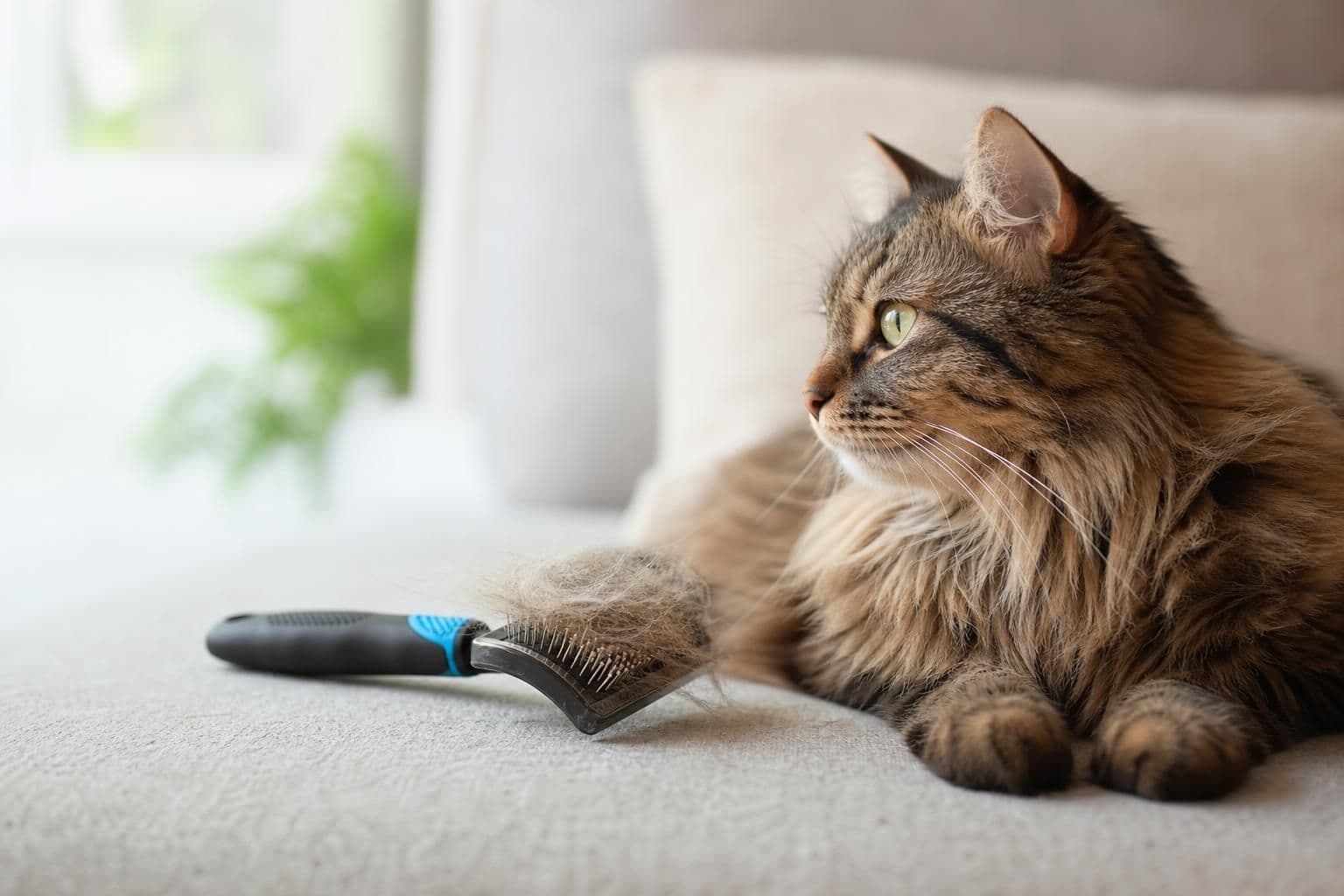
Cats shed year-round, with heavier sheds in spring and fall as daylight hours shift. This is normal and shouldn't leave visible bald patches or irritated skin — you'll mostly notice more loose fur on furniture, clothing, and in brushes.
The difference between shedding and hair loss (alopecia) is density. Shedding thins the coat evenly; true hair loss creates bald patches, thinning stripes, or skin you can see clearly through the fur. If you can part the fur anywhere on the body and see smooth, intact skin with no redness, that's usually within the range of normal.
Parasites: Fleas, Mites, and Ringworm
Fleas are one of the most common triggers for cat hair loss, especially along the lower back, tail base, and neck. Even light infestations can cause intense itching in cats with flea allergy dermatitis, leading to self-inflicted bald patches from scratching and chewing. The Centers for Disease Control and Prevention notes that flea bites can also trigger broader skin reactions beyond the bite site itself.
Mites (like those causing mange) and ringworm — a fungal infection, not a worm — are less common but produce distinctive patterns: ringworm typically causes circular, scaly bald spots, often starting on the face, ears, or paws. Both are diagnosable with a simple skin scraping or fungal culture at a vet clinic.
Allergies and Skin Sensitivities
Food allergies, environmental allergens (dust, pollen, mold), and reactions to flea saliva are among the leading causes of itchy skin in cats, according to the Cornell Feline Health Center. Allergic cats often overgroom specific areas — belly, inner thighs, or flanks — until the fur thins or disappears entirely.
Identifying the trigger usually takes a process of elimination: a vet-guided food trial, flea control, or allergy testing. In the meantime, a soft, breathable layer can reduce skin exposure to irritants during flare-ups — this is one area where properly fitted clothing helps, since Ziva Paws sizes everything by chest, neck, and back-length measurements in inches rather than generic S/M/L labels, so a protective layer doesn't rub or bunch against already-irritated skin.
Stress-Driven Overgrooming
Cats are prone to compulsive licking when anxious, bored, or living through a disruptive change — a new pet, a move, or even rearranged furniture can trigger it. Unlike parasite-related hair loss, stress alopecia tends to appear in easy-to-reach spots like the belly, inner legs, and flanks, with the skin itself looking otherwise healthy underneath. We've gone deeper into the mechanics and fixes for this pattern in our guide to why cats overgroom, including environmental changes that often resolve it without medication.
A calmer environment — a quiet, enclosed resting spot away from foot traffic — can reduce the anxiety that fuels this behavior in some cats.
Hormonal and Internal Causes
Less commonly, hair loss is a sign of an internal issue: hyperthyroidism, Cushing's-like conditions, or reactions to certain medications can all cause thinning fur, usually alongside other symptoms like weight changes, increased thirst, or appetite shifts. If your cat's hair loss is showing up alongside a change in eating habits, it's worth reading about what it means when a cat stops eating, since appetite and coat health are often connected signals of the same underlying problem.
Bloodwork is typically needed to diagnose these causes, so this category is one where a vet visit — not home troubleshooting — is the right next step.
Nutrition and Grooming Habits
A diet lacking enough essential fatty acids can leave a cat's coat dull, brittle, and more prone to breakage and shedding. The American Veterinary Medical Association points to balanced, complete nutrition as foundational to skin and coat health, alongside parasite prevention and routine veterinary care.
Regular, gentle brushing also plays a role — it removes loose undercoat before a cat ingests it during self-grooming, which can reduce hairballs and matting that sometimes masks the start of a bald patch. Our two resident testers, Ai and Dudu, go through a weekly brushing routine with the same tools we carry, and a self-cleaning slicker brush from the grooming collection tends to pull out far more loose fur per session than a standard comb, especially during seasonal sheds. If you're also unsure how often bathing fits into that routine, this guide on cat bathing frequency covers when it helps and when it's unnecessary.
When to See a Vet
Book a vet visit if you notice any of the following:
- Hair loss that appears suddenly or spreads within days
- Open sores, scabs, or oozing skin under the bald area
- Hair loss paired with weight loss, increased thirst, or vomiting
- Circular, scaly patches that could indicate ringworm (which is contagious to humans)
- No improvement after addressing fleas, diet, or stress at home
A vet can run a skin scraping, fungal culture, or bloodwork to pinpoint the cause rather than relying on guesswork, which matters because treatments for parasites, allergies, and hormonal issues don't overlap.
Frequently Asked Questions
Q: Is it normal for cats to lose hair in patches?
No — patchy hair loss is different from normal shedding and usually points to a specific cause like fleas, allergies, ringworm, or stress-driven overgrooming. Normal shedding thins the coat evenly without creating bald spots or irritated skin.
Q: Can stress really cause a cat to lose hair?
Yes, stress can lead to compulsive overgrooming, where a cat licks or chews one area so often that the fur thins or disappears, typically on the belly or inner legs. The skin underneath usually looks healthy, which helps distinguish it from parasite or infection-related hair loss.
Q: What does flea-related hair loss look like on a cat?
It often appears along the lower back, tail base, and neck, caused by scratching and biting in response to itching from flea bites or flea allergy dermatitis. You may also spot small black specks ("flea dirt") in the fur near the bald areas.
Q: Should I change my cat's food if they're losing hair?
Only after ruling out parasites, allergies, and other causes with a vet, since diet-related coat issues usually stem from a lack of essential fatty acids rather than the brand of food itself. A vet-guided food trial is the most reliable way to confirm a food allergy.
Q: How long does it take for a cat's hair to grow back after treatment?
It depends on the cause, but once the underlying issue (fleas, infection, allergy, or stress) is resolved, regrowth typically becomes visible within a few weeks as the skin heals and the hair cycle resumes. Full regrowth over a bald patch can take longer if the skin was significantly irritated or scarred.