Why Does My Cat Throw Up After Eating?
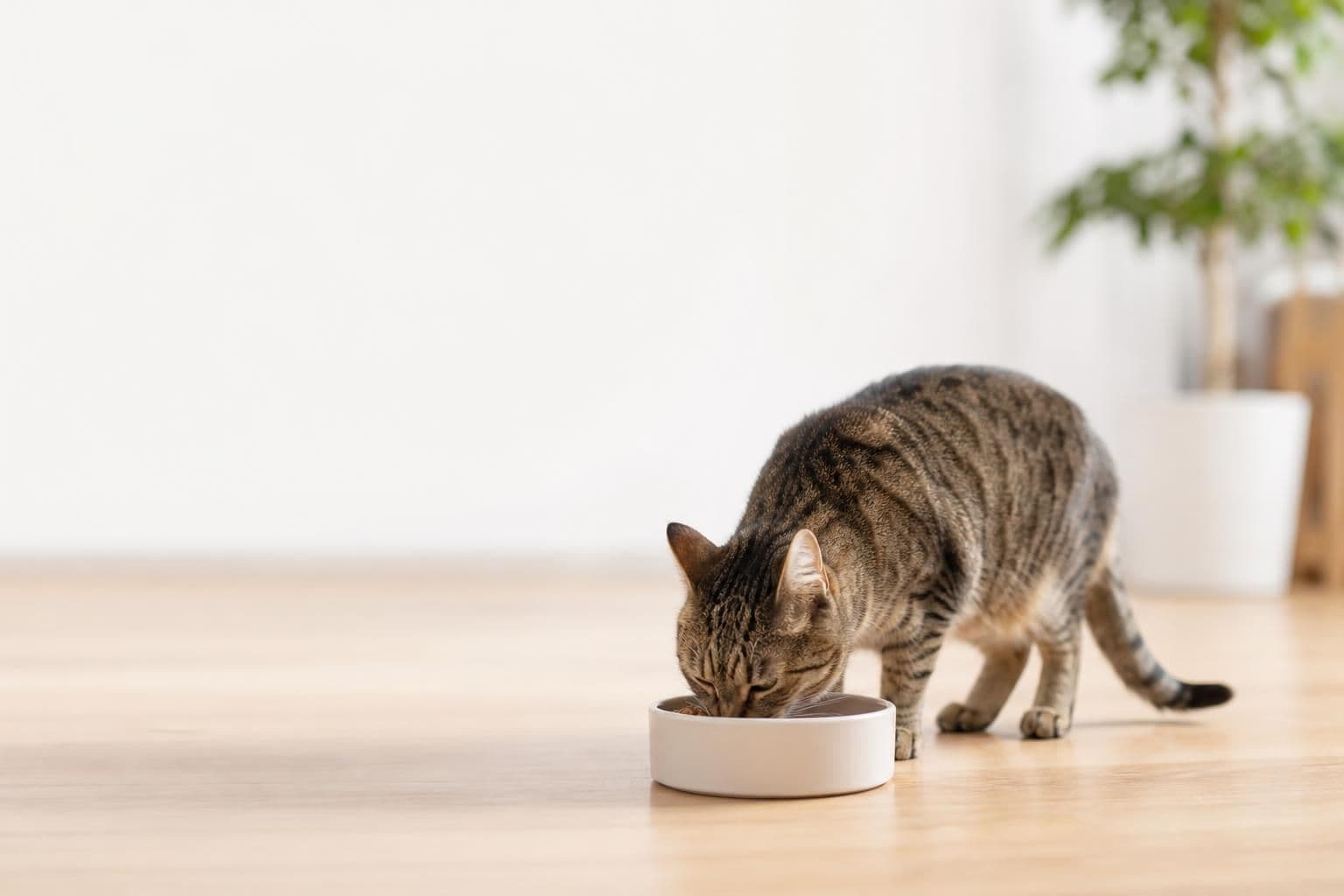
Key takeaway
Most cats throw up after eating because they ate too fast, ate too much at once, or have a mild food intolerance — all of which usually show up as undigested food brought up within minutes to an hour of a meal. Less often, vomiting right after eating points to something that needs veterinary attention, such as a gastrointestinal obstruction, inflammatory bowel disease, or a food allergy. The timing, appearance, and frequency of the vomit are the biggest clues to which category you're dealing with.
Key takeaways
- Vomiting within 10-30 minutes of a meal is usually mechanical (eating too fast, too much, or a hairball) rather than a disease process.
- Switching foods gradually over 7-10 days and using a slow feeder can resolve the majority of after-meal vomiting.
- Vomiting more than once a week, weight loss, or blood in the vomit means it's time to call the vet — this is not "just a cat thing."
The most common reason: eating too fast
Cats are built to eat small, frequent meals, not one or two large bowlfuls a day. When a cat gulps down a large portion quickly, food can sit in a stretched stomach and come back up almost undigested, often in a tube-like shape. This is sometimes mistaken for a hairball because it looks similar, but it's actually just food that never made it past the stomach.
Multi-cat households make this worse, since cats often eat faster when they feel they're competing for food. Slowing the pace of eating is one of the simplest fixes:
- Use a slow feeder bowl with ridges or a raised center.
- Split one large meal into three or four smaller ones.
- Separate cats into different rooms or feeding stations during meals.
Ai, one of the two resident cats who test products for Ziva Paws, used to vomit almost daily after her morning meal until her feeding routine moved to a slow feeder bowl and smaller portions — a simple change that's a good first thing to try before assuming something is medically wrong. Ziva Paws' feeding collection includes slow feeder bowls and automatic dispensers designed to pace out meals through the day.
Hairballs vs. food vomit
Owners often lump these together, but they look and act differently:
- Hairball vomit is usually tubular, mixed with visible fur, and may come up any time of day, not just after eating.
- Food vomit happens soon after a meal, contains recognizable kibble or chunks, and has little or no fur in it.
Long-haired cats and heavy self-groomers are more prone to hairballs. If overgrooming is part of the pattern — not just hair in vomit, but bald patches or obsessive licking — it's worth reading about why cats overgroom to rule out stress or skin irritation as an underlying cause.
Food sensitivities and sudden diet changes
Switching cat food abruptly is one of the more overlooked triggers. A cat's gut flora adjusts to whatever it's regularly eating, and a sudden new protein source or recipe can cause vomiting or loose stool for a few days. The Cornell Feline Health Center recommends transitioning cats to new food gradually, mixing increasing amounts of the new food with the old over a week or more, rather than switching overnight.
True food allergies are less common than intolerances but do exist, most often to proteins like beef, dairy, or fish. Signs beyond vomiting include itchy skin, ear infections, or loose stool that doesn't resolve with a diet change back.
When vomiting signals something more serious
Occasional vomiting (once every week or two, otherwise acting normal) is rarely an emergency. But certain patterns point to problems that need a veterinary workup:
- Vomiting more than once or twice a week
- Vomit containing blood, or that looks like coffee grounds
- Vomiting paired with lethargy, hiding, or appetite loss
- Weight loss over weeks despite normal or increased eating
- Repeated vomiting combined with the cat not eating at all afterward — if that's the pattern, it's worth reviewing reasons a cat may stop eating to narrow down whether nausea or something else is driving the refusal
Chronic vomiting in middle-aged and older cats is sometimes linked to inflammatory bowel disease, hyperthyroidism, kidney disease, or intestinal lymphoma — conditions that require bloodwork and sometimes imaging to diagnose, not something to guess at home. The American Veterinary Medical Association notes that persistent vomiting, regardless of cause, should always be evaluated rather than managed indefinitely with home remedies.
Foreign objects and obstructions
Cats that chew and swallow string, ribbon, rubber bands, or small toy parts are at risk of an intestinal obstruction, which often presents as repeated vomiting shortly after eating or drinking, plus straining or complete lack of appetite. This is a genuine emergency — obstructions don't resolve on their own and can become life-threatening within days. The ASPCA Animal Poison Control Center and most veterinary toxicology resources list linear foreign bodies (string-like items) as a particularly dangerous category because they can bunch up the intestines as they pass.
Choosing toys without small detachable parts and supervising play with anything string-like reduces this risk substantially. Ziva Paws' toy collection is tested by resident cats Ai and Dudu before listing, partly to check that pieces stay securely attached during normal rough play.
What to do if your cat throws up after every meal
Start by tracking the pattern for a week: time since eating, what the vomit looked like, and what was eaten. Then work through this order:
- Switch to smaller, more frequent meals using a slow feeder.
- Keep the current food consistent for at least a week to rule out a transition issue.
- Remove access to string, elastic, or small chewable objects.
- If vomiting continues more than twice a week, or your cat seems off in any other way, book a vet visit rather than trying another home fix.
If your cat has also stopped eating altogether rather than just vomiting after meals, it helps to understand how long a cat can safely go without food so you know how urgent the situation is.
Frequently Asked Questions
Q: Is it normal for cats to throw up after every meal?
No. Occasional vomiting after a large or fast-eaten meal can be normal, but vomiting after every single meal is not and usually means the feeding pace, portion size, or the food itself needs to change.
Q: Should I withhold food if my cat just vomited?
A brief pause of a few hours is reasonable to let the stomach settle, then offer a small, bland portion. Don't withhold food for more than 12-24 hours without veterinary guidance, since prolonged fasting carries its own risks for cats.
Q: Can stress cause a cat to vomit after eating?
Yes, stress and anxiety can affect digestion and appetite, sometimes leading to eating too fast or vomiting. If stress-related eating issues continue, it's worth looking at the cat's overall routine and environment alongside any diet changes.
Q: What color or texture of vomit should worry me most?
Vomit that's red, dark brown like coffee grounds, or black should prompt an immediate vet call, as these can indicate bleeding in the digestive tract. Clear or yellow foamy vomit on an empty stomach is usually less urgent but still worth mentioning at the next visit if it recurs.
Q: Does the type of cat food bowl matter for vomiting?
Yes — flat, fast-access bowls encourage gulping, while slow feeder designs with ridges or raised sections force a cat to eat in smaller bites, which reduces the chance of post-meal vomiting.