Why Does My Cat Overgroom? Causes & Fixes
Key takeaway
Cats overgroom mainly for two reasons: an underlying medical issue like fleas, allergies, or pain is making the skin itch or hurt, or stress and anxiety are driving a repetitive, self-soothing licking habit. Overgrooming shows up as bald patches, thinning fur, or raw skin, usually on the belly, inner legs, or lower back. Figuring out which category it falls into — medical or behavioral — is the first step, and often requires a vet visit to rule out physical causes before treating it as stress.
Key takeaways
- Bald patches with visible skin irritation usually point to a medical cause (fleas, allergies, pain); stress-driven licking often leaves skin looking normal underneath thinned fur.
- A vet visit should come before trying calming products, since skin conditions and licking from pain can look identical to anxiety-driven grooming.
- Reducing stress triggers, keeping a consistent routine, and giving cats a den-like resting spot can lower compulsive licking over time.
What counts as overgrooming versus normal grooming
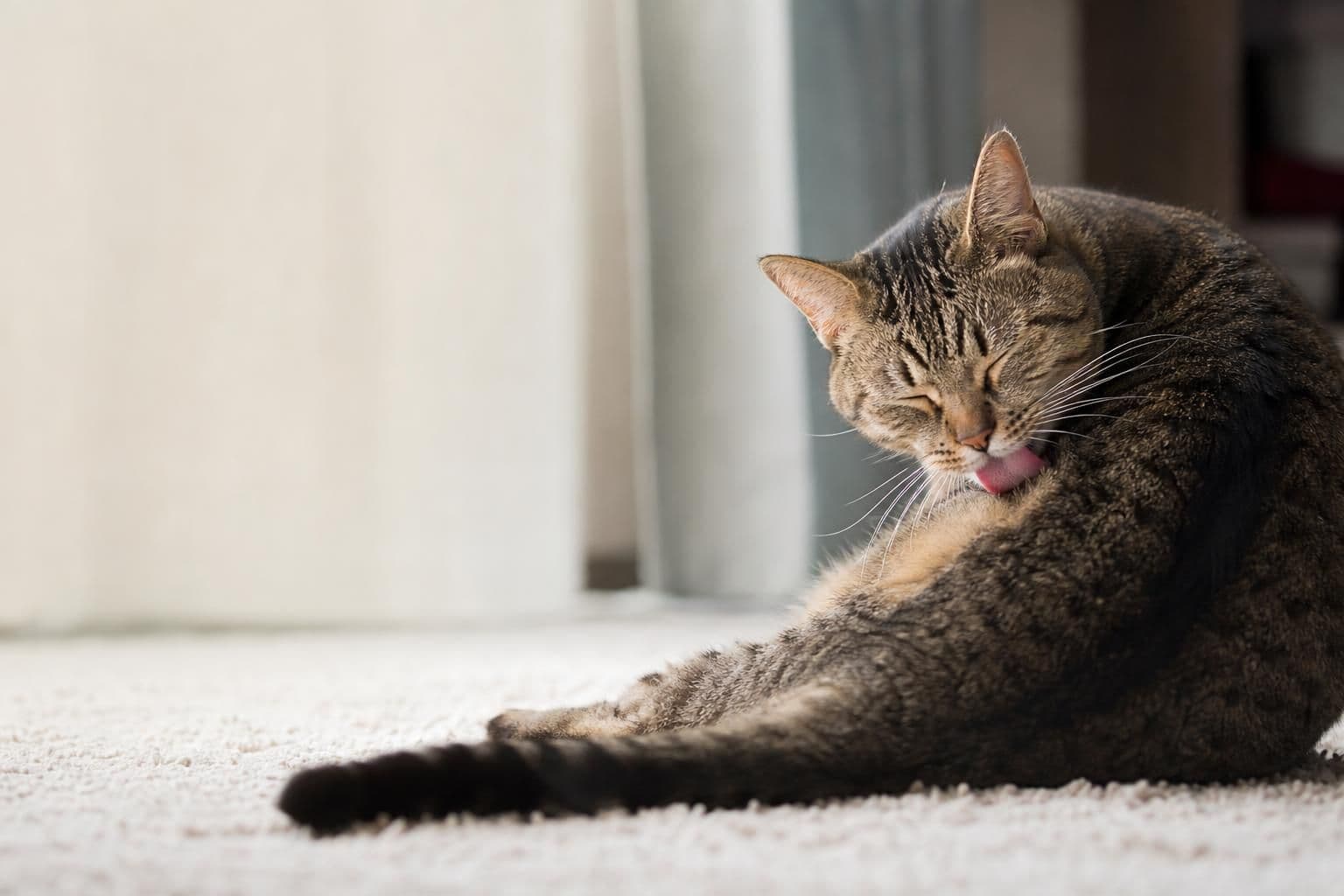
Cats naturally spend a large part of their day grooming — some estimates put it at around 30-50% of their waking hours, according to behavior resources from the ASPCA. Overgrooming is different: it's focused, repetitive licking or chewing on one or two spots until the fur thins or disappears, sometimes leaving the skin pink, scabbed, or damp. If you notice a cat returning to the same patch of belly or leg over and over within a single sitting, that's a signal worth tracking rather than ignoring.
Medical causes to rule out first
A vet exam is the recommended starting point because several physical conditions cause itching or pain that looks exactly like a grooming habit:
- Fleas and parasites — even a few bites can trigger intense itching, especially along the lower back and tail base.
- Food or environmental allergies — allergic skin reactions often concentrate on the belly, paws, and face.
- Pain referral — a cat with arthritis or bladder discomfort may lick the area near the joint or abdomen repeatedly.
- Skin infections — bacterial or fungal infections can make skin feel hot or irritated, prompting licking.
Veterinary dermatology guidance from the American Veterinary Medical Association notes that overgrooming is one of the more common reasons cats are brought in for skin evaluations, precisely because owners often assume it's "just a habit" when it's actually a treatable condition.
Stress and anxiety as a trigger
Once medical causes are ruled out, stress-related overgrooming (sometimes called psychogenic alopecia) becomes the likely explanation. Cats are sensitive to changes in their environment — a new pet, a move, rearranged furniture, or even a shift in a owner's schedule can unsettle them. Licking releases endorphins, so it becomes a self-soothing behavior that can turn compulsive if the underlying stress isn't addressed. This is similar in mechanism to how some cats develop other anxiety-linked habits; for instance, the same unsettled feelings that drive a cat to meow more at night can also show up as excessive licking during the day.
Where overgrooming typically shows up
- Belly and inner thighs — the most common spot, often linked to stress or allergies.
- Lower back near the tail — frequently tied to flea sensitivity.
- Front legs or paws — can indicate joint discomfort or localized irritation.
- Flanks — sometimes seen with both medical and behavioral causes combined.
Our own cats, Ai and Dudu, go through ordinary grooming sessions daily while testing bedding and fabric products for Ziva Paws, which makes it easy to spot the difference between routine cleaning and a fixated, repetitive lick at one small patch — the latter is a cue to check in with a vet.
What helps reduce overgrooming at home
- Keep flea prevention current year-round, even for indoor-only cats.
- Offer a quiet, enclosed resting space — a covered bed or hideaway can lower baseline stress for cats prone to anxiety.
- Add enrichment through interactive toys that give cats a physical outlet for pent-up energy; puzzle feeders and chase-style toys work well for this.
- Keep feeding, play, and sleep routines predictable, since unpredictability is a common stress driver in cats.
- Avoid punishing the licking — it typically increases anxiety and makes the behavior worse.
For cats that overgroom in part because they feel exposed or unsettled, a den-style bed or a hammock they can retreat into can make a noticeable difference in comfort. It's one reason cozy, enclosed bedding is worth considering if stress seems to be a factor — see the bedding and furniture collection for enclosed options cats tend to settle into. If play-based enrichment seems like the missing piece, the toys collection includes interactive options that give restless cats something productive to focus on.
When to see a vet
Schedule a vet visit if you notice any of the following:
- Bald patches larger than a coin or spreading over days
- Broken skin, scabs, or signs of infection
- Overgrooming paired with other symptoms like vomiting, appetite changes, or lethargy (which can also point to issues covered in why some cats stop eating)
- No improvement after a few weeks of reducing obvious stressors at home
A vet can run allergy tests, check for parasites, and assess pain, which narrows down the cause far more reliably than guessing from home.
Frequently Asked Questions
Q: Why does my cat overgroom one specific spot?
Localized overgrooming often points to irritation or pain in that exact area, such as a flea bite near the tail base or joint discomfort in a leg. A vet can pinpoint whether it's a skin issue or referred pain.
Q: Can stress alone cause a cat to go bald from licking?
Yes, stress-driven overgrooming, sometimes called psychogenic alopecia, can cause visible thinning or bald patches even when the skin underneath looks otherwise normal. It usually develops gradually as licking becomes a repeated coping behavior.
Q: Is overgrooming more common in certain cats?
Cats with anxious temperaments or those going through environmental changes tend to be more prone to stress-related overgrooming. Short-haired and lighter-coated breeds often make the resulting bald patches more visible sooner.
Q: How long does it take for overgrooming to resolve?
It depends on the cause — flea-related licking can improve within days of proper treatment, while stress-related habits may take several weeks of routine changes and reduced triggers to fully settle. Fur regrowth typically lags behind the behavior stopping.
Q: Should I use a cone or deterrent spray to stop the licking?
These can prevent further damage short-term, but they don't address the underlying cause, so a vet visit to identify the trigger is still the more reliable long-term step.