Why Does My Cat Meow at Night? Causes & Fixes
Key takeaway
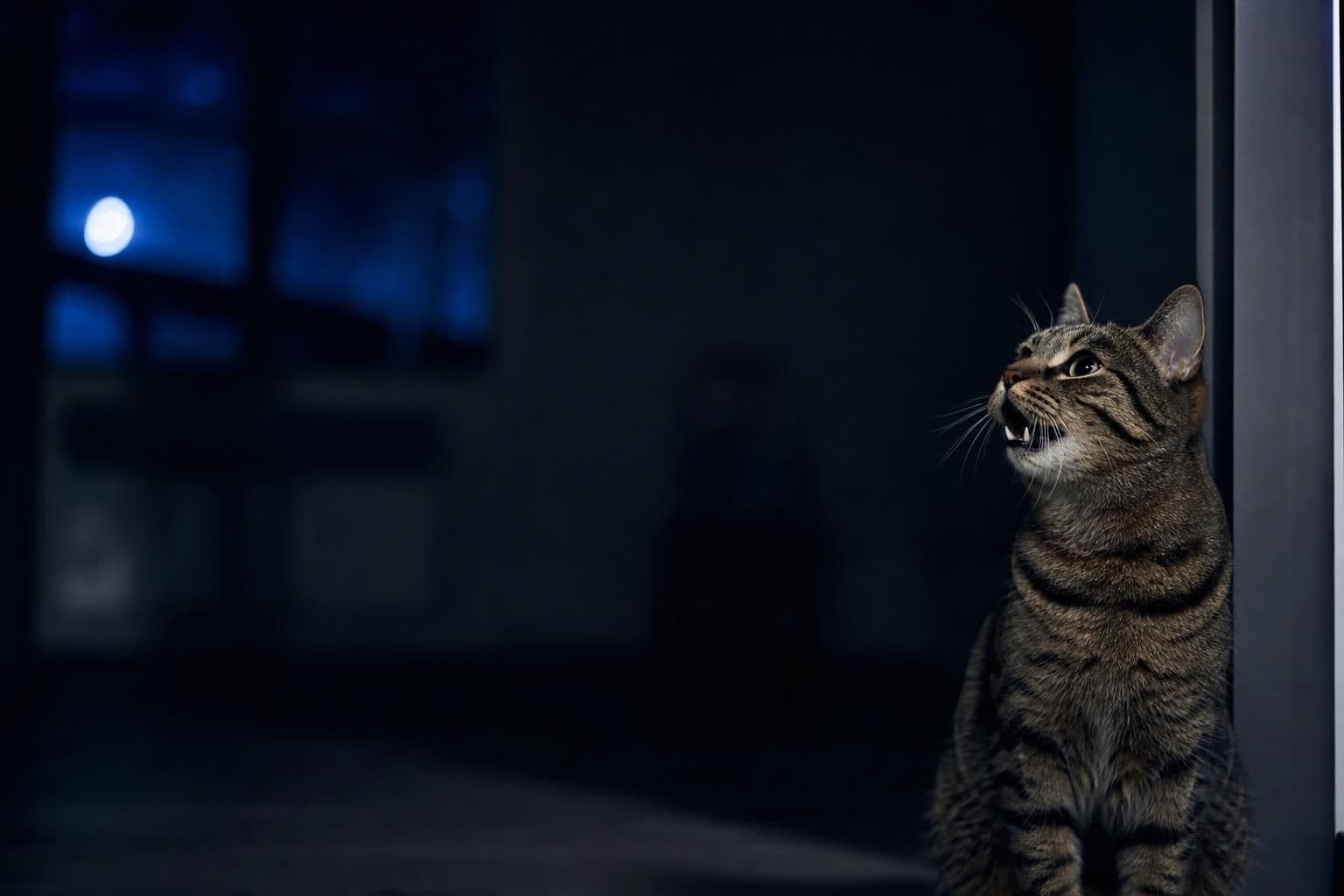
Cats meow at night most often because their natural activity peaks at dawn and dusk, so an under-stimulated or hungry cat wakes up and vocalizes to get your attention. Less commonly, persistent nighttime meowing signals a medical issue — pain, hyperthyroidism, or age-related cognitive decline — especially in cats over age 10. The fix depends on which cause fits your cat, but most healthy adult cats respond well to a few changes in feeding timing and evening play.
Key takeaways
- Crepuscular activity patterns mean many cats are naturally more alert and vocal around dusk and dawn, not a sign anything is wrong.
- Sudden or new nighttime meowing in a cat over 10 years old warrants a vet visit to rule out hyperthyroidism, kidney disease, or cognitive dysfunction.
- A 10-15 minute active play session plus a late feeding before bed resolves night-waking in many younger, healthy cats within a week or two.
Cats are wired to be active at dawn and dusk
Domestic cats retain a hunting schedule inherited from their wild ancestors: they're crepuscular, meaning their energy naturally spikes in the low-light hours around sunrise and sunset rather than staying flat across the day. The Cornell Feline Health Center notes that this activity rhythm is normal feline biology, not a behavior problem to train out. If your cat sleeps most of the afternoon and then gets restless and vocal once the house goes quiet, that's the pattern showing up on schedule.
This is also why the same cat that's happy to nap on your chest during the day can turn into a vocal alarm clock at 4 a.m. — the internal clock, not boredom alone, is driving the timing. If you've also noticed your cat gravitating to your chest or lap specifically at bedtime, why cats sleep on your chest covers the comfort and bonding side of that habit.
Hunger and feeding schedule gaps
A long overnight gap between the last meal and breakfast is one of the most common reasons for pre-dawn meowing. Cats fed on a strict twice-a-day schedule, especially if dinner is early in the evening, often wake up hungry several hours before anyone else in the house does.
Practical adjustments that help:
- Move the final meal of the day later, closer to your own bedtime, so the overnight gap shrinks.
- Split the same daily food amount into three or four smaller meals instead of two.
- Use an automatic feeder set for a very early or middle-of-the-night dispense, so the cat associates the sound of the feeder — not your alarm — with food arriving.
A timed feeder from the feeding collection can take over that early-hours dispensing job so the cat stops linking your movement with mealtime.
Attention-seeking and under-stimulation
Cats that don't get enough physical and mental activity during the day frequently make up for it at night, meowing at bedroom doors or pawing at owners who are trying to sleep. This is especially common in single-cat households and indoor-only cats with limited environmental enrichment.
A short, intense play session in the hour before bed — mimicking a hunt, chase, and "catch" — followed by a small meal can mimic the natural eat-then-sleep cycle and reduce overnight restlessness. Rotating a few interactive toys, like a wand teaser or a puzzle feeder from the toys collection, keeps the activity novel enough to actually tire a cat out rather than becoming background noise they ignore.
Medical causes that get worse at night
Vocalization that's new, loud, or paired with other changes deserves a veterinary check before it's chalked up to behavior. Three conditions commonly show up or worsen overnight in older cats:
- Hyperthyroidism — an overactive thyroid gland that increases metabolism, appetite, and restlessness; it's one of the most frequently diagnosed hormonal conditions in cats over 10, according to the American Veterinary Medical Association.
- Chronic kidney disease — common in senior cats and can cause increased thirst, nighttime restlessness, and disorientation.
- Feline cognitive dysfunction — an age-related decline similar to dementia, which often causes confused, excessive meowing specifically at night because the cat's sleep-wake cycle breaks down.
Pain from arthritis can also drive nighttime vocalizing, since stiff joints make it harder for a cat to get comfortable and settle. If your older cat's meowing started suddenly, a vet visit to check thyroid levels, kidney function, and joint health is the right first step before trying behavioral fixes.
Anxiety, environment changes, and a quiet house
Some cats meow at night because the house feels different once the lights go off and the household noise stops — a new pet, a recent move, or a change in routine can all trigger separation-related vocalizing after dark. A cat that's also started avoiding open rooms or spending more time under furniture may be dealing with broader stress, which is worth reading about in why cats hide more than usual.
A secure, enclosed sleeping spot can take the edge off this kind of nighttime anxiety. Covered beds, cat hammocks, or an enclosed nest from the beds & furniture collection give an anxious cat a den-like space to retreat to instead of pacing and calling out. Ai and Dudu, the two cats who test products for Ziva Paws, settle fastest in enclosed nest-style beds placed somewhere quiet rather than in the middle of a busy hallway — a small environmental change that often matters more than it seems.
When the meow itself is the clue
The tone and context of the meow can help narrow down the cause. A short, repeated meow near the food bowl usually means hunger. A long, drawn-out yowl in the middle of the night, especially from an older cat wandering the house, is more consistent with cognitive dysfunction or disorientation. A meow paired with pacing at a closed door is more likely attention-seeking or anxiety.
Understanding your cat's normal vocal range during the day — covered in what a cat's purring and other sounds mean — makes it easier to notice when a nighttime meow sounds different from their usual communication.
When to call the vet
Book a vet visit if nighttime meowing:
- Started suddenly in a cat over 10 years old
- Comes with weight loss, increased thirst, or vomiting
- Sounds distressed rather than simply demanding
- Doesn't improve after two to three weeks of feeding and play adjustments
A veterinary exam, including bloodwork, is the only reliable way to rule out thyroid or kidney disease as the underlying driver.
Frequently Asked Questions
Q: Is it normal for a cat to meow every night?
Occasional nighttime meowing is common and often tied to a cat's natural dawn/dusk activity pattern. Nightly, persistent, or escalating meowing is less typical and worth investigating, especially in senior cats.
Q: Why has my older cat suddenly started meowing at night?
Sudden nighttime meowing in a senior cat is frequently linked to hyperthyroidism, kidney disease, or feline cognitive dysfunction. A veterinary exam with bloodwork can identify or rule out these conditions.
Q: Will feeding my cat later at night stop the meowing?
For many cats, shifting the last meal closer to bedtime or adding a small late feeding reduces pre-dawn hunger meowing within a week or two. It works best for younger, healthy cats whose meowing is hunger-driven rather than medical.
Q: Does ignoring a meowing cat at night work?
Ignoring attention-seeking meowing can work over time, but only if the cat's physical needs (food, play, a comfortable place to sleep) are already met. Ignoring meowing caused by pain or illness delays needed treatment, so ruling out medical causes first matters.
Q: Can a cat's sleeping spot affect nighttime meowing?
Yes — an exposed or drafty sleeping area can leave an anxious cat unsettled, while an enclosed, den-like bed often helps them stay asleep longer. Placement matters too; a quiet, low-traffic spot tends to work better than a busy hallway.