Why Does My Cat Sleep on My Chest?
Key takeaway
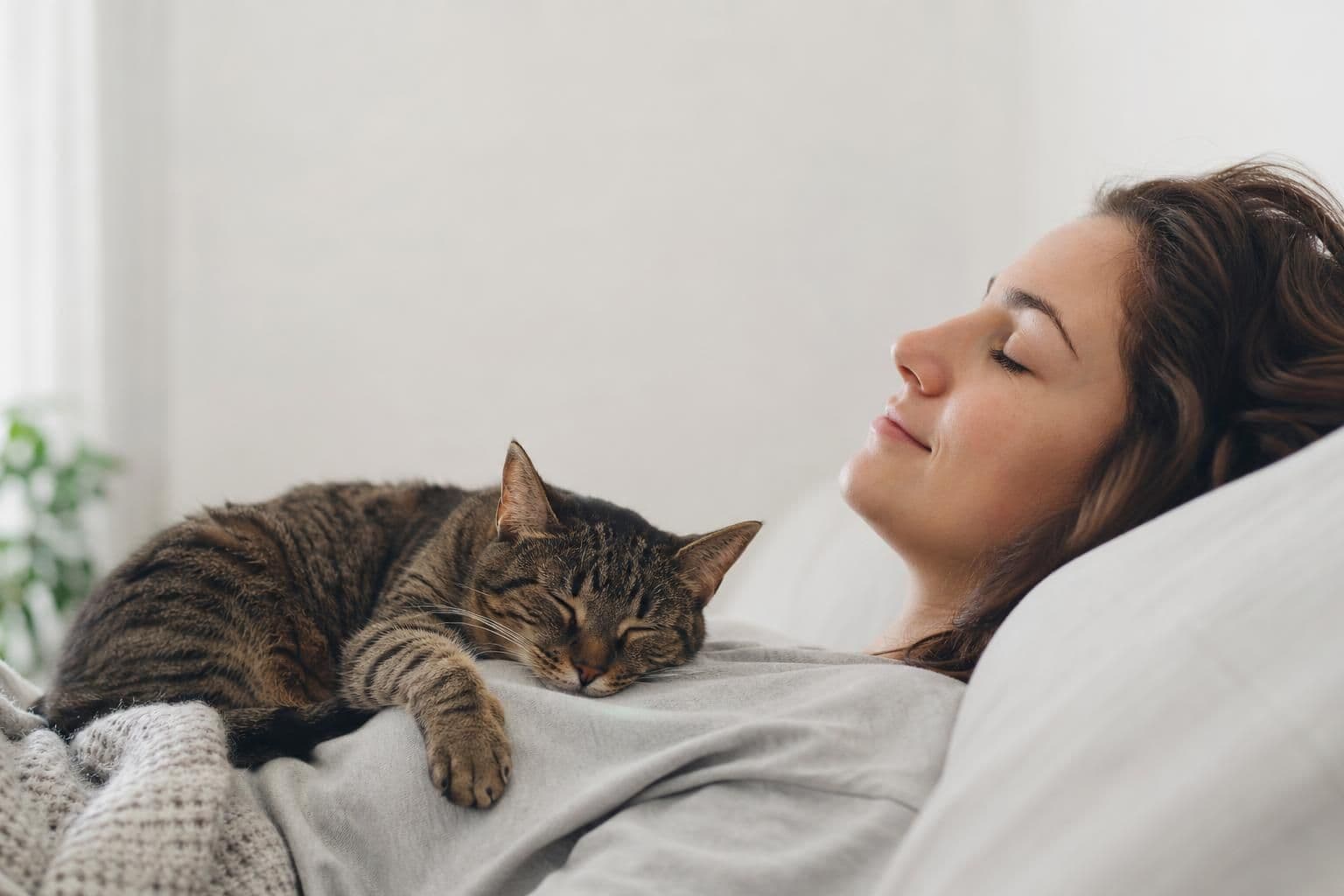
A cat sleeps on your chest mainly for warmth, safety, and closeness to your heartbeat and breathing rhythm, which cats find soothing once they trust someone. Your chest is also one of the warmest, most elevated, and most protected spots in the bed, which lines up with a cat's natural preference for a secure, cozy sleep site. It's a sign of comfort and attachment, not dominance or manipulation.
Key takeaways
- Chest-sleeping is driven by body heat, a steady heartbeat, and a felt sense of safety — it's a trust behavior, not neediness.
- Cats regulate sleep around your schedule partly because indoor cats often sync activity to their owner's routine.
- If the habit disrupts sleep or triggers allergies, gradual redirection to a nearby warm bed works better than shutting the door.
The Main Reasons Cats Curl Up on Your Chest
Cats seek out the warmest available surface when they sleep, and a resting adult human radiates noticeably more heat than a couch cushion or empty blanket. A human chest sits close to body-core temperature, making it one of the coziest surfaces in the whole room from a cat's point of view.
Beyond warmth, there's rhythm. Your heartbeat and breathing create a steady, predictable pattern, and predictability reads as safety to an animal whose wild ancestors needed to sleep in spots where danger was easy to detect. A cat that chooses your chest over the floor is picking the option that feels least exposed.
Height matters too. Cats generally prefer elevated resting spots because height gives a wider view of the room and an easier escape route if something startles them — the same instinct that makes them favor the backs of couches or the top of a cat tree. Your chest, especially when you're reclined, functions as a small, warm, moving perch.
Is It About Bonding or Something Else?
Cats that sleep on a specific person's chest are usually signaling comfort with that person specifically, not generic affection toward "humans." Scent plays a role here: cats have scent glands on their cheeks and paws, and sleeping pressed against you lets them mix their scent with yours, which many behaviorists interpret as a bonding and territory-marking behavior rolled into one.
This is a different instinct from the one behind headbutting, though the two often show up in the same affectionate cat — if you want the fuller picture of nose-to-forehead bumps, the reasons behind cat headbutting cover the scent-marking side in more detail.
Cats that are anxious or under-socialized rarely choose a person's chest voluntarily; the behavior tends to appear after a cat has already decided a person is safe, which is why kittens and newly adopted cats often start on the floor or in a box before working up to your bed.
When It's a Habit Worth Changing
Chest-sleeping isn't a health risk for most people, but it can become a problem in three specific situations:
- Allergies or asthma. The American College of Allergy, Asthma & Immunology notes that cat allergens are carried on dander, saliva, and skin cells, and close, prolonged contact like chest-sleeping maximizes exposure during the exact hours you're trying to rest.
- Disrupted sleep. A cat shifting position, kneading, or leaving and returning multiple times a night can fragment a light sleeper's rest even if the cat itself sleeps soundly.
- Pregnancy or immune concerns. If a household member is pregnant or immunocompromised, a healthcare provider may recommend limiting close contact with litter boxes and, in some cases, close sleep contact — this is a conversation for a doctor, not a behavior fix.
If none of those apply, there's no medical reason to discourage the habit. Most vets treat it as a normal, even healthy, sign of a well-bonded cat.
How to Redirect the Habit Without Punishing Your Cat
Cats don't respond well to being physically removed from a sleep spot night after night — it tends to create anxiety rather than solve anything. A gradual substitution approach works better:
- Place a warm, enclosed bed (a plush nest or cave-style bed) at the foot of the bed or on a nearby chair, ideally somewhere that already gets some ambient body heat from a radiator or sunny window during the day.
- Add something that smells like you — an old t-shirt or pillowcase — to the new bed for the first week or two, since scent familiarity speeds up adoption of a new spot.
- Reward calm settling in the new bed with a treat or calm praise, rather than only paying attention to the cat when it's on your chest.
- Keep the new bed in place permanently; cats generalize faster to a fixed location than to one that moves around the room.
This mirrors the logic behind a cat choosing a cardboard box over an expensive bed — enclosure and warmth usually beat open, exposed surfaces, which is also why a cat favoring a plain box over its own bed is such a common complaint from owners who bought something plush and got ignored. A snug, walled bed tends to compete with your chest far better than a flat cushion does.
What a Good Substitute Bed Actually Needs
Not every bed works as a chest replacement. The ones that succeed usually share a few features: raised or enclosed sides that mimic the feeling of being tucked in, a surface that holds warmth rather than wicking it away, and a size that lets the cat curl into a tight ball, since curling conserves body heat the same way it would in the wild. At Ziva Paws, Ai and Dudu — the two resident cats who test items before they're listed — consistently gravitate toward enclosed nest-style beds and hammocks over flat mats, which tracks with the warmth-and-security pattern described above. The beds and furniture collection includes nest-style and hammock options built around that same preference.
Grooming also plays a quiet role here. A cat with a clean, well-brushed coat is more pleasant to sleep near and less likely to transfer loose fur onto your pillow overnight; a regular brushing routine with a slicker brush or grooming tool cuts down on shedding before it ends up on your sheets.
Related Sleep and Comfort Behaviors
Chest-sleeping is one piece of a bigger pattern around how cats choose rest spots. Cats that seek out small, enclosed, elevated places at night are often the same ones who hide during the day when stressed — if hiding has become frequent rather than occasional, it's worth reading about why a cat might be hiding more than usual to rule out anxiety or illness as a separate issue.
Indoor cats are also naturally crepuscular, most active at dawn and dusk, but many shift toward a more human-aligned schedule when they share a bed with an owner — part of why a cat settles onto your chest right as you're falling asleep rather than at 3 a.m.
Frequently Asked Questions
Q: Is it unhealthy to let my cat sleep on my chest?
For most healthy adults it isn't unhealthy, just a personal comfort and hygiene choice. People with cat allergies, asthma, or a compromised immune system should talk to a doctor about close sleep contact specifically.
Q: Why does my cat only sleep on my chest and not my partner's?
Cats often form a stronger scent and routine bond with one household member, usually whoever handles feeding, play, or calm handling most consistently. It reflects familiarity, not a judgment about either person.
Q: Will getting my cat its own bed stop it from sleeping on me?
A warm, enclosed bed placed close to you can gradually compete with your chest, especially if it smells like you at first. It rarely works overnight — expect a week or two of gradual preference shifting.
Q: Do kittens sleep on their owner's chest for the same reasons as adult cats?
Largely yes — warmth and a felt sense of security — but kittens also seek body heat because they have less body fat and a higher metabolic need for warmth than adult cats, per general veterinary guidance from sources like the ASPCA. This drive usually moderates somewhat as they mature.
Q: Is chest-sleeping different from a cat sleeping on my stomach or legs?
The underlying motivation — warmth and safety — is the same, but the chest is often chosen specifically because it's closer to your heartbeat and breathing, which some cats appear to find particularly calming compared to other parts of your body.