Why Does My Cat Prefer a Box Over Its Bed?
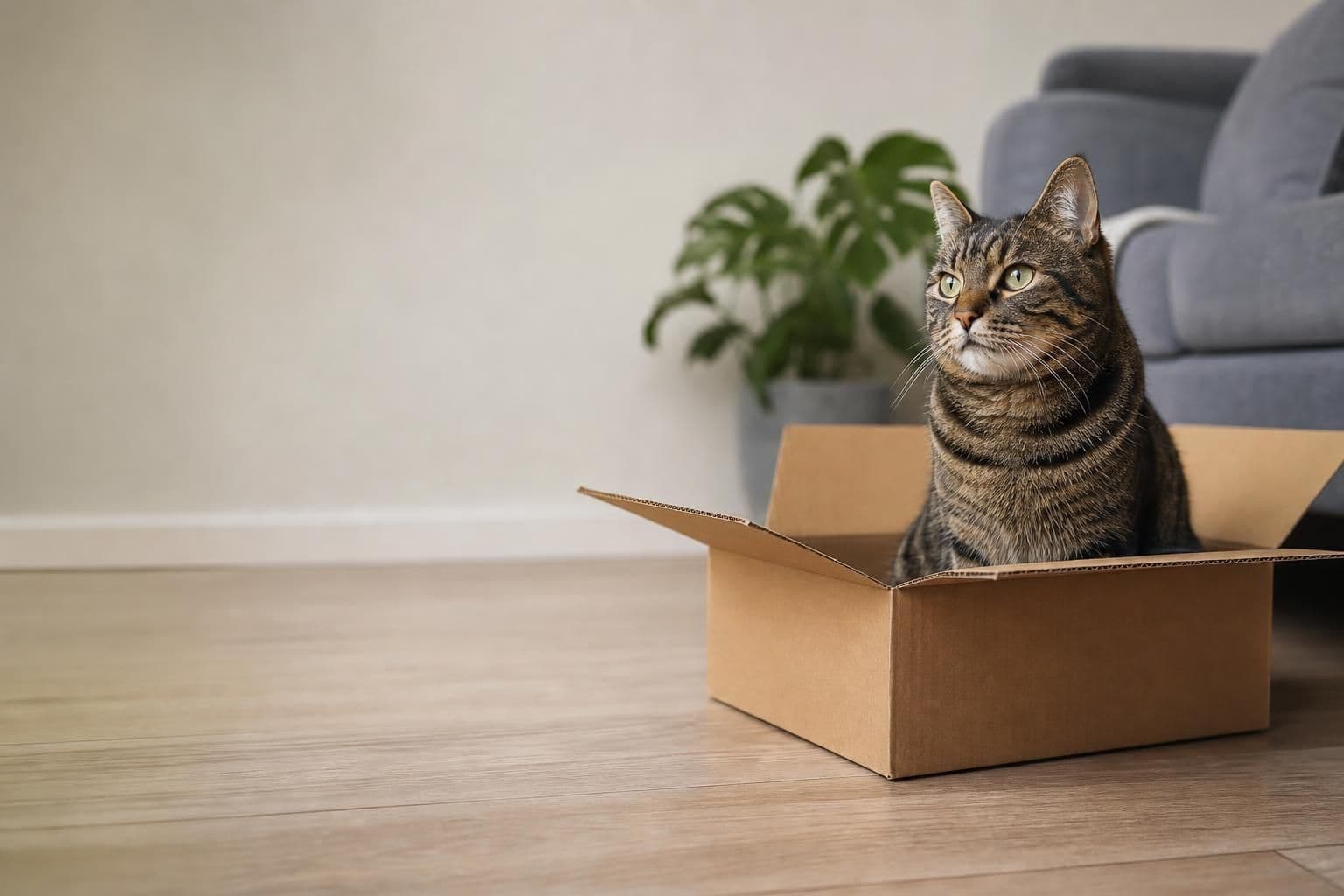
Key takeaway
Cats prefer boxes over beds mainly because a box's four walls provide full-body contact and a sense of enclosure that most open beds don't, which lowers stress hormones and makes a cat feel hidden from threats. Cardboard also traps body heat better than an open cushion, and the tight space itself triggers a hiding instinct left over from when cats were both small predators and prey. A bed can win this competition, but usually only if it copies the box's shape rather than just its softness.
Key takeaways
- Enclosed, wall-hugging shapes (hooded beds, nests, tunnels) satisfy the same instinct as a box — flat, open cushions often don't.
- Cardboard insulates better than most bedding fabric, so a box can simply feel warmer, especially in a cool room.
- Swapping in a high-walled or covered bed near the box's original spot, without removing the box outright, gets faster buy-in than forcing a choice.
The instinct behind the box obsession
Domestic cats are a mid-sized species that is simultaneously a predator and a target for larger animals, and that dual role shapes a lot of resting behavior. Tight, enclosed spaces limit the directions a threat can approach from, which is why a cardboard box — walls on four sides, one entry point — reads as safer than an open cushion sitting in the middle of a room. The Cornell Feline Health Center notes that environmental stress in cats is closely tied to a lack of hiding options, and that adding secure hiding spots is a standard recommendation for reducing anxiety in multi-cat or high-traffic homes. A box is essentially a free, perfectly-sized hiding spot that showed up on its own.
We've watched this play out with our own cats, Ai and Dudu, who will ignore a plush bed for days and then claim a delivery box the moment it's flattened out on the floor. The pattern breaks the second we swap in something with high sides or a hood — proof that it's the shape doing the work, not the cardboard material itself.
Temperature, texture, and the physics of cardboard
Cardboard is a decent insulator: its corrugated air pockets slow heat loss, so a curled-up cat retains more of its own body warmth inside a box than on an open cushion, especially over hardwood or tile floors. Cats' preferred ambient comfort zone runs warmer than most homes are kept, which is one reason they gravitate toward sunbeams, laptop tops, and boxes alike. A bed made of thin, flat fabric over a hard floor simply loses that competition on cold days, even if it's objectively softer to the touch.
Texture matters too. Many open beds use fabric slick enough that a cat can't dig its claws in to feel anchored, while a box's cardboard grips and gives just enough resistance for kneading and settling.
Security over softness: what cats are actually choosing
Given a choice, most cats will pick "walls I can feel against my back" over "cushioning under my paws." This is consistent with published behavior research: a well-known 2014 study summarized by veterinary behavior sources found that shelter cats provided with a hiding box showed lower stress scores and adapted to new environments faster than cats without one. The takeaway for home use is the same — enclosure reduces perceived vulnerability, and that reduction matters more to a cat than mattress-level comfort.
This is also why cats often reject beds that look objectively luxurious but are shaped like a flat pillow. If you've already noticed this at home, it lines up with what we cover in more depth in our piece on why cats gravitate to boxes — the appeal isn't the box specifically, it's everything the box shape represents.
How to make a bed compete with a box
A bed doesn't need to beat cardboard on price or novelty — it needs to copy the features that make a box work.
- Choose high walls or a hood. Nest-style or covered beds recreate the enclosed feel; flat round or oval cushions usually don't.
- Put it where the box already sits. Cats bond to locations as much as objects, so placing a new bed exactly where the current favorite box lives shortcuts the adjustment period.
- Size it to the cat, not the room. A bed that's too large leaves too much open space around the cat's body, undercutting the snug feeling that draws them to boxes in the first place. If you're shopping, check listed inches for the bed's interior length and width rather than a generic size label — Ziva Paws' beds and cat furniture are sized this way, which makes it easier to match the cat's actual curled-up length.
- Leave the box in place at first. Removing it cold-turkey often just pushes the cat to a drawer, closet corner, or laundry basket instead of the new bed. Let both options coexist and let preference shift naturally.
- Warm the material. A washable insert or blanket inside the bed adds the insulation cardboard provides naturally, closing the temperature gap.
For cats that seem drawn to height and enclosure together rather than just enclosure alone, a window-mounted or elevated hammock-style option can scratch a similar itch; we go through what to look for in our guide to cat hammocks for windows.
When box preference signals something else
Occasionally a cat suddenly favoring a box (or any hiding spot) over its usual bed is a signal worth watching rather than a style preference. Sudden increased hiding, especially paired with reduced appetite, grooming changes, or reluctance to move, can indicate pain or illness — cats instinctively hide when they don't feel well, since visible weakness is a liability in the wild. The ASPCA recommends a veterinary check if hiding behavior appears abruptly and persists beyond a couple of days, rather than assuming it's simple preference. Long-standing, casual box use with normal eating, play, and litter habits is almost always just comfort-seeking, not a health flag.
Frequently Asked Questions
Q: Why does my cat sleep in a box instead of the bed I bought?
The box's enclosed shape and insulating cardboard walls make a cat feel more secure and physically warmer than most open, flat beds. It's rarely about the bed being uncomfortable — it's about the box matching an instinct for enclosed, defensible resting spots.
Q: Will my cat ever use a bed if it already loves a box?
Yes, if the bed mimics the box's shape with high walls or a hood and is placed in the same location the cat already favors. Removing the box too early often backfires, so let both sit out together during the transition.
Q: Is it bad for cats to sleep in cardboard boxes long-term?
Plain cardboard is generally safe as long as it's dry, free of sharp staples or tape edges, and not treated with strong chemical coatings. Replace boxes that get chewed, soiled, or structurally weak rather than letting a cat sleep on damp or crumbling cardboard.
Q: What size bed should I buy if my cat likes tight spaces?
Measure your cat curled up nose-to-tail and choose a bed with interior dimensions close to that measurement rather than a size labeled "small" or "medium," since those labels vary widely between brands. Beds listed with actual inch measurements make this comparison much easier to get right the first time.
Q: Does box preference mean my cat is stressed or anxious?
Not necessarily — seeking enclosed spaces is a normal, healthy resting behavior for most cats. It's worth a vet visit only if the hiding is sudden, more intense than usual, or paired with other changes like appetite loss or lethargy.