Why Does My Cat Headbutt Me? The Real Reasons
Key takeaway
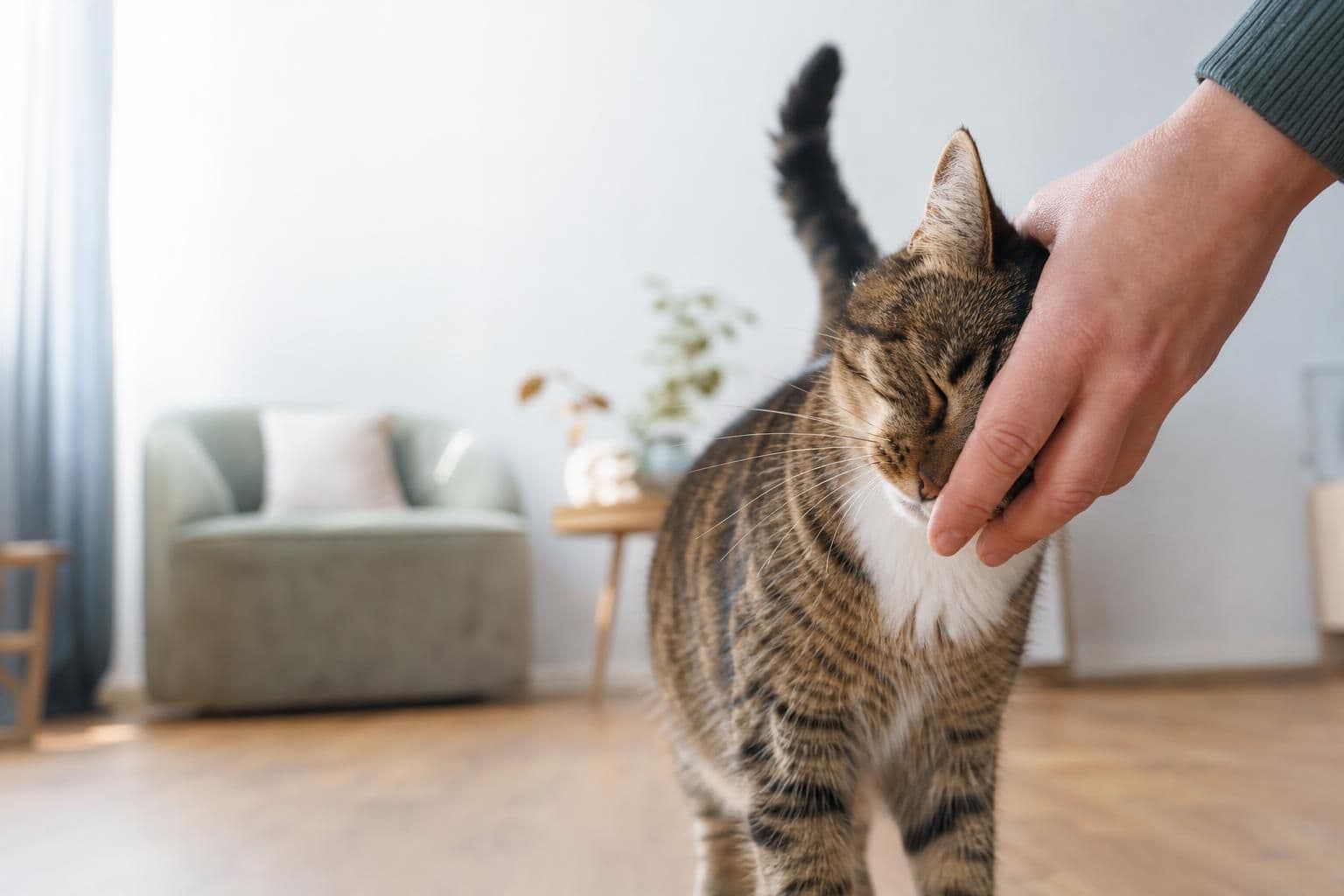
Cats headbutt people — a behavior called bunting — mainly to spread their scent from glands on their face and mark you as part of their territory and social group. It's also a straightforward way of asking for attention, showing trust, or greeting you the way cats greet other cats they like. Occasional headbutting is a strong sign of affection and security, not a problem to fix.
Key takeaways
- Headbutting (bunting) spreads facial pheromones and marks you as safe, familiar territory — it's a compliment, not a demand.
- Cats reserve this behavior for trusted people and animals; kittens learn it from head-rubbing littermates and their mother.
- Sudden, forceful, or repetitive headbutting paired with lethargy or appetite changes warrants a vet check, since it can rarely signal neurological issues.
What Bunting Actually Means
Cats have scent glands concentrated around their cheeks, chin, and the base of their ears. When a cat presses its head against you, it deposits pheromones from these glands, essentially claiming you as part of its territory and social circle. This is the same mechanism behind cheek-rubbing on furniture corners or doorframes — it's a scent-marking behavior, just aimed at a person instead of an object.
Unlike urine marking, which is a warning or spacing signal, facial pheromone marking through bunting is generally read by researchers in feline behavior as an affiliative, non-aggressive signal used between cats that already get along. The ASPCA notes that cats communicate a great deal through scent and body posture rather than vocalization alone, which is why a headbutt often carries more social meaning than a meow.
Why Your Cat Chooses to Headbutt You Specifically
Cats are selective about who they bunt. A few common triggers:
- Greeting ritual. Many cats headbutt when you come home, treating it like a hello after time apart.
- Bids for attention or petting. A headbutt aimed at your hand often means "pet me here" or "I want contact."
- Reinforcing the bond. Littermates and a mother cat headbutt each other; adult cats extend that same behavior to humans and other pets they consider family.
- Comfort-seeking. Cats that feel anxious sometimes headbutt as a self-soothing action, similar to how kneading can be a leftover comfort behavior from kittenhood.
- Curiosity about scent. If you've just come from being around another animal, your cat may bunt more insistently to re-mark you with its own scent.
Is Headbutting the Same as Head-Pressing?
It's worth separating normal bunting from head-pressing, a genuinely concerning symptom. Bunting is a soft, brief nudge, usually against your hand, leg, or face, and your cat looks relaxed before and after. Head-pressing is when a cat pushes its head against a wall, furniture, or floor and holds it there, often for no apparent reason, sometimes appearing dazed. Head-pressing can be linked to neurological conditions, toxin exposure, or metabolic issues and is considered a veterinary emergency by veterinary neurology sources such as those referenced by the American Veterinary Medical Association. If you ever see your cat pressing its head against a hard surface and staying there, rather than a quick nudge against you, contact a veterinarian promptly.
How Often Is Normal, and When to Watch Closer
There's no fixed daily "normal" number for headbutts — frequency depends on the individual cat's personality and how much interaction it wants. Some cats bunt a few times a day around feeding or greeting times; others rarely do it and show affection differently, through slow blinks or simply staying nearby. A sudden increase in headbutting, especially if it's paired with clinginess, can sometimes coincide with stress at home — new pets, moving furniture, or a change in routine — similar to the stress signals covered in why cats scratch furniture, where territory-marking behaviors increase under pressure.
Watch for a change in character rather than a change in count. If bunting becomes forceful head-pushing, or your cat seems confused, off-balance, or is avoiding food, treat it as a reason to check in with your vet rather than a quirky habit.
What Ai and Dudu Taught Us About Bunting
Ziva Paws' resident cats, Ai and Dudu, headbutt at very different intensities — Ai gives a light forehead tap before mealtimes, while Dudu leans his full weight in and will keep pushing until you scratch his cheek. Watching the two side by side is a useful reminder that bunting style is about individual personality, not a fixed rulebook. Neither behavior needed correcting; it's simply how each cat asks for connection.
Making Headbutting Time More Comfortable
If your cat headbutts you while you're relaxing together, a stable, supportive surface helps — cats often follow up a headbutt by settling in for a longer cuddle. A cushioned bed or a hammock-style perch gives them a consistent spot to land after that greeting ritual, which some owners find cuts down on headbutting-then-wandering-off behavior, since the cat has somewhere comfortable to stay. Bedding options like plush beds and cat hammocks work well for cats that like to headbutt and then curl up nearby.
Bunting is also a moment worth using for light grooming, since a relaxed, affectionate cat is more receptive to being touched around the face and ears. A soft grooming tool used gently during these calm moments can make routine care easier over time; the grooming collection includes gentle brushes suited for cats who enjoy face-and-head contact.
Frequently Asked Questions
Q: Why does my cat headbutt me and then walk away?
This is typically a quick scent-marking gesture rather than a request for prolonged attention. The cat deposits pheromones from its cheek glands and considers the interaction complete, especially if it's on its way somewhere else, like the food bowl.
Q: Is it bad if my cat headbutts me really hard?
A firm, enthusiastic headbutt is usually still affectionate and just reflects an eager or confident personality. It's only a concern if the behavior looks more like sustained pushing or pressing against a surface and holding there, which can indicate a neurological issue.
Q: Do kittens headbutt like adult cats do?
Yes — kittens headbutt their mother and littermates from an early age as part of normal social and scent-based bonding, and most carry this behavior into adulthood with people they trust.
Q: Why does my cat headbutt me but not other family members?
Cats often reserve bunting for whoever they feel safest and most bonded with, so it can simply reflect which person they interact with most or trust the most at that moment.
Q: Can headbutting mean my cat is stressed rather than happy?
Occasionally, yes — if headbutting increases suddenly alongside other stress signs like hiding or appetite changes, it may be a comfort-seeking behavior rather than pure affection, and it's worth reviewing recent changes at home.