Why Does My Dog Turn in Circles Before Lying Down?
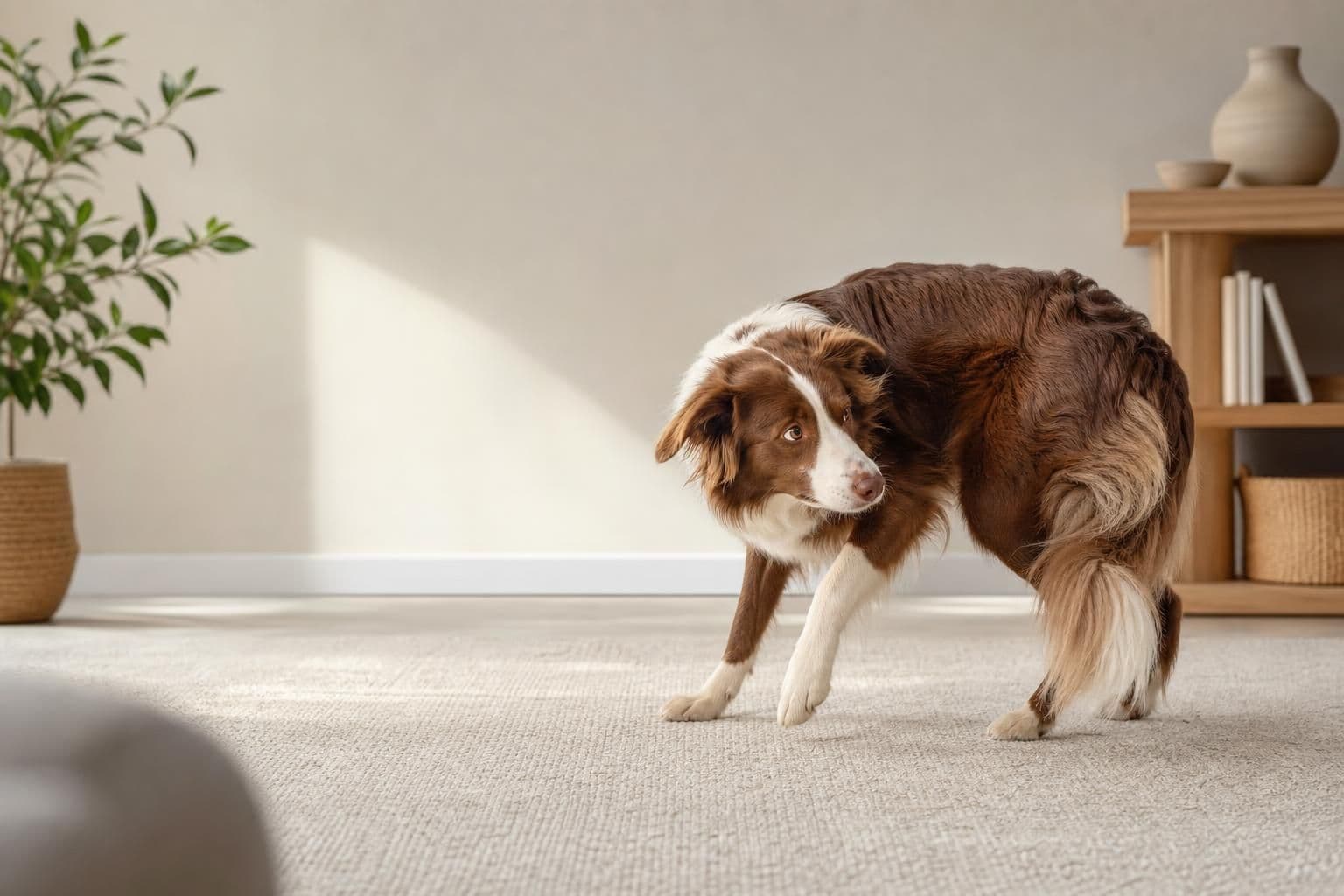
Key takeaway
Dogs turn in circles before lying down mostly out of instinct inherited from wild ancestors, who circled to flatten grass, check for hidden threats, and arrange themselves against wind or cold before settling. In most dogs this is a quick, harmless ritual lasting a few seconds. If the circling becomes repetitive, prolonged, or paired with whining or trouble settling, it can point to joint pain, anxiety, or a neurological issue worth mentioning to a vet.
Key takeaways
- Circling once or twice before lying down is normal, instinct-driven behavior seen in most healthy dogs.
- Circling many times, pacing without settling, or yelping mid-turn can signal pain, arthritis, or anxiety.
- A supportive, correctly sized bed reduces the effort needed to get comfortable, which can cut down on excessive circling in older or achy dogs.
The instinct behind the behavior
Domestic dogs share ancestry with wolves and other wild canids that needed to prepare a safe sleeping spot before resting in the open. Circling pressed down tall grass or snow, cleared away debris, and let the animal get a final look and smell of the surrounding area before becoming vulnerable in sleep. The American Kennel Club notes that this pre-sleep circling is one of several inherited behaviors, alongside digging and scratching at bedding, that persist in pet dogs even though they no longer need to build a nest from scratch.
The motion also helps a dog gauge temperature. Curling into a tight circle traps body heat, so a dog circling before lying down is often instinctively orienting itself to conserve warmth, especially in cooler months or on hard flooring.
Comfort, temperature, and scent marking
Beyond raw instinct, circling serves a few practical, present-day purposes:
- Temperature regulation — dogs circle to find a cooler patch of floor in summer or to curl tighter for warmth in winter.
- Scent marking — glands in the paws leave a faint scent as the dog turns, which may help it recognize "its" spot later.
- Physical adjustment — circling lets a dog test a surface and rearrange blankets or bedding until the pressure points feel right.
Dogs sleeping on plush or overly soft surfaces sometimes circle longer simply because the material shifts under them. A bed with defined bolsters or a firmer base can shorten the ritual because the dog finds a stable position faster. If you're shopping for a new setup, Ai and Dudu — the two resident cats who test products at Ziva Paws — have shown that pets settle fastest on surfaces with clear edges to press against, which is one reason the beds and furniture line favors bolstered and nest-style designs over flat cushions.
When circling points to a health issue
Occasional circling is not a concern, but a change in pattern is worth watching. Signs that circling may be linked to a medical issue include:
- Circling many more times than usual before every lie-down
- Whining, panting, or yelping during the motion
- Difficulty getting up afterward, or stiffness that wasn't there before
- Circling that seems disoriented, wobbly, or repeats in the same direction obsessively
Arthritis and hip dysplasia are common causes of exaggerated circling in older or larger-breed dogs, since the joints need more repositioning to find a pain-free angle. The American Veterinary Medical Association lists osteoarthritis as one of the most frequently underdiagnosed conditions in aging dogs, partly because owners mistake stiffness for "just getting old." A vet visit is reasonable if circling is new, exaggerated, or paired with any limping.
In rare cases, sudden, tight, obsessive circling — especially in one direction only, or with head tilting — can be neurological rather than behavioral, linked to inner ear problems or vestibular disease. That pattern looks different from the brief pre-nap turn most dogs do and warrants prompt veterinary attention rather than a wait-and-see approach.
Anxious dogs and restlessness
Some dogs circle repeatedly because they can't settle, not because they're preparing to sleep. This shows up as pacing, circling, lying down, then getting right back up. Anxiety, an unfamiliar environment, or an under-stimulated dog with pent-up energy can all produce this pattern. A predictable bedtime routine, consistent exercise, and a bed placed away from high-traffic areas often reduce this kind of restlessness. Dogs recovering from a stressful event, like a loud thunderstorm, sometimes show the same fidgety circling documented in why does my dog shake after a bath, where physical discomfort and mild stress overlap in similar body language.
Does bed size or shape make a difference?
A bed that's too small forces a dog to curl tighter than is comfortable, which can extend the circling ritual as it tries to find a workable position. A bed that's too large offers no edge to settle against, so some dogs will circle and paw at the extra space repeatedly. Measuring a dog nose-to-tail-base while curled, rather than guessing from breed or weight alone, gives a more reliable sense of the right bed size — the same reasoning behind using actual inch measurements for clothing rather than generic S/M/L labels, which is how sizing works across Ziva Paws' clothing collection for chest, neck, and back-length fit.
For dogs that seem to circle out of general fidgetiness rather than sleep prep, more daytime enrichment can help. A dog that's mentally tired settles faster at night. Pairing a good bed with a rotation of chew or puzzle toys addresses both sides of the restlessness equation, something worth considering alongside a good winter bed setup if your dog seems to circle more once the weather turns cold and floors get harder underfoot.
Frequently Asked Questions
Q: Is it normal for a dog to circle every single time before lying down?
Yes, many healthy dogs circle once or twice before every nap or bedtime out of habit and instinct. It only becomes a concern if the number of circles increases sharply, or if the dog seems to be in discomfort while doing it.
Q: Why does my senior dog circle more than it used to?
Older dogs often need more repositioning to find a pain-free angle due to joint stiffness or early arthritis. If circling has visibly increased alongside slower movement or reluctance to jump or climb, a vet check is a reasonable next step.
Q: Can anxiety cause a dog to circle excessively?
Yes, anxious or under-exercised dogs sometimes circle and pace repeatedly without ever settling, which is different from the brief instinctive turn before a nap. Consistent routine, exercise, and a quiet resting spot usually help.
Q: Should I worry if my dog only circles in one direction?
Occasional one-direction preference is usually not a concern, but tight, obsessive circling in only one direction, especially with a head tilt or loss of balance, can indicate a neurological or inner ear issue and should be checked by a vet promptly.
Q: Does the type of dog bed affect how much a dog circles?
A bed that's the wrong size or too soft to hold a shape can make a dog circle longer while it searches for a stable position. A properly sized bed with defined edges typically helps a dog settle faster.