Rattan Cat Bed: Is It Safe and Worth Buying?
Key takeaway
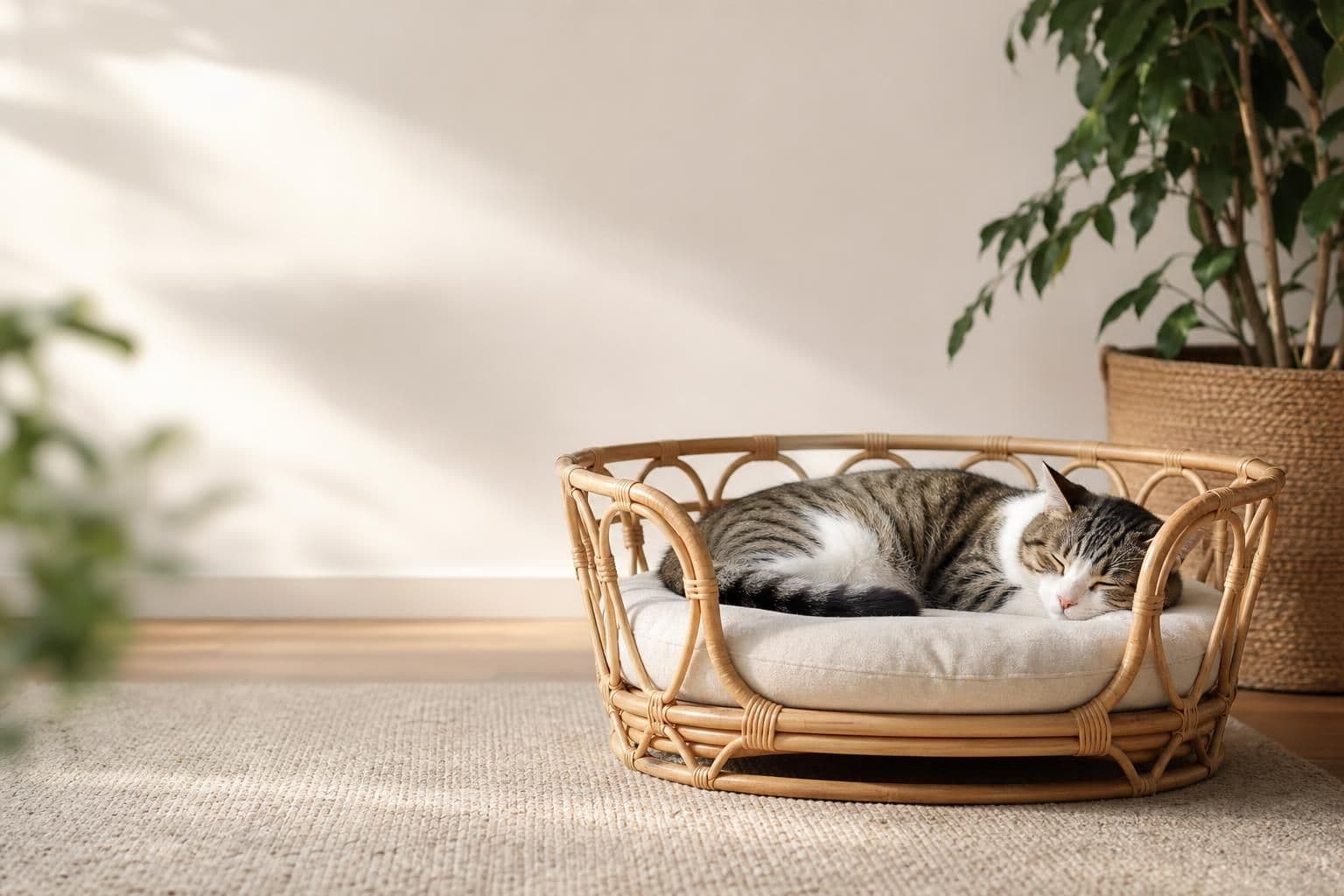
A rattan cat bed is a woven basket-style bed, usually made from natural rattan or a rattan-look synthetic wicker, lined with a soft cushion for sleeping. It's worth buying if your cat likes enclosed or elevated resting spots and you want a bed that holds its shape better than plush alternatives, but it's a poor fit for cats that chew or claw at fibers. The best ones pair a sturdy woven frame with a removable, washable cushion insert.
Key takeaways
- Choose a rattan bed with a securely finished weave (no loose ends) and a removable, machine-washable cushion.
- Natural rattan is breathable and holds shape well, but synthetic wicker resists moisture and chewing better for destructive cats.
- Measure your cat curled up nose-to-tail before buying — most rattan beds run small and shallow compared to plush nests.
What Makes a Rattan Cat Bed Different From Plush or Fabric Beds
Rattan beds use a woven natural fiber (or a plastic rattan-style weave) as the outer shell, which gives them a firmer, basket-like structure that plush and fleece beds don't have. This rigidity means the bed keeps its shape for years instead of flattening or losing loft, which is a common complaint with cheap foam-filled beds. The tradeoff is that rattan has texture and gaps in the weave, so it's not the coziest option for cats who like to burrow completely under blankets.
Natural rattan is a renewable palm derived largely from Southeast Asia, and it's been used in furniture for centuries because it's lightweight yet strong — the same properties that make it popular in pet beds today, according to background from the Food and Agriculture Organization of the United Nations, which tracks rattan as a non-timber forest product.
Safety Considerations Before You Buy
The biggest safety concern with any woven bed is loose fibers or splinters that a cat could ingest while grooming or chewing at the edge. Before buying, check reviews or product photos for a tightly wrapped rim, since a poorly finished edge is the most common failure point on cheaper rattan beds. If your cat is a known chewer of fabric or fiber, a woven bed is not the safest category — a solid plush bed or a fully enclosed nest is a better match, and this is worth thinking through the same way you'd vet safe chew toys for aggressive chewers, where material durability matters just as much as design.
Also check the finish for paint or varnish. Any coating should be listed as non-toxic and pet-safe by the manufacturer; if that information isn't provided, it's reasonable to ask before purchasing.
Sizing: Why "One Size" Rattan Beds Often Disappoint
Most rattan cat beds are sold as a single size, which works fine for an average adult cat but leaves little room for larger breeds or cats that like to stretch out rather than curl. A cat that measures 18–20 inches from nose to base of tail typically needs an interior bed diameter of at least 16–18 inches to curl comfortably without spilling over the rim. Because generic S/M/L labels don't tell you much on a bed shaped like a basket, it helps to measure your cat directly — the same nose-to-tail and girth measurements used when measuring a dog for a clothes size chart apply just as well to sizing a cat bed, since both come down to real body dimensions rather than a vague size label. Ziva Paws applies this same inch-based approach across its product sizing, including bedding, rather than relying on generic size tiers.
Natural Rattan vs. Synthetic Wicker: Which to Choose
| Feature | Natural rattan | Synthetic wicker |
|---|---|---|
| Moisture resistance | Lower — can warp or mold if kept damp | Higher — wipes clean, resists humidity |
| Chew resistance | Splinters if gnawed | More flexible, less likely to splinter |
| Weight | Lighter | Slightly heavier depending on frame |
| Typical lifespan | Long if kept dry | Long, more weather-tolerant |
Natural rattan is the better choice for a dry indoor spot away from direct sun, since prolonged UV exposure can dry out and crack natural fibers over time. Synthetic wicker is the safer pick for humid climates, bathrooms, or households where the bed might get knocked into a water bowl.
Comfort Add-Ons That Make a Woven Bed Actually Cozy
A bare woven shell isn't enough for most cats — the cushion inside does the real comfort work. Look for:
- A cushion at least 1.5–2 inches thick so the weave doesn't press through to your cat's body.
- A removable cover with a zipper, since washing is inevitable with shed fur and the occasional accident.
- A raised rim on at least two sides, which cats often like to lean against — similar to why enclosed nest-style beds are recommended for anxious pets in general, as covered in what to look for in a cozy bed for anxious dogs, where the security of a partial enclosure reduces visible triggers.
When Ai and Dudu, the two cats who test products before they're listed at Ziva Paws, tried a rattan-style nest, the detail that mattered most wasn't the weave itself but how thick and grippy the cushion was — a thin, slippery pad made them hesitate to settle in, while a snug, cushioned liner got used daily. That's a useful gut-check for any woven bed: if the outside look sold you but the inside padding feels like an afterthought, it probably will be for your cat too. Ziva Paws' home and bedding collection includes woven and plush styles built around that same tested-cushion approach.
Placement and Maintenance Tips
Rattan beds do best in a stable spot rather than being dragged around daily, since repeated shifting can loosen the weave at stress points over time. Vacuum the frame weekly to clear dust and fur from the gaps, and spot-clean the frame with a barely damp cloth rather than soaking it, since standing water is what eventually warps natural fiber. The cushion insert should be washed on a normal cycle every one to two weeks depending on shedding, which is a good general guideline echoed by veterinary hygiene advice from the American Veterinary Medical Association on reducing allergen and bacteria buildup in pet bedding.
Frequently Asked Questions
Q: Are rattan cat beds safe for cats that chew?
No — chewers can splinter or ingest loose fiber strands, so a solid plush or fully upholstered bed is a safer choice for cats with a strong chewing habit.
Q: How long do rattan cat beds typically last?
A well-made rattan or synthetic wicker frame can last several years if kept dry and away from constant clawing, since the woven structure resists flattening better than foam-filled beds.
Q: Can I put a rattan cat bed outside?
Natural rattan isn't weatherproof and can crack or mold with repeated moisture exposure, so it's best kept indoors; synthetic wicker tolerates humidity better but still shouldn't sit in direct rain.
Q: What size rattan bed does my cat need?
Measure your cat curled up nose to tail and add a couple of inches of margin; most adult cats need an interior bed diameter of at least 16–18 inches to curl comfortably without hanging over the edge.
Q: Do rattan beds work for kittens?
They can, but the open weave and firm rim are less forgiving than a soft-sided nest, so many owners wait until a kitten is closer to full size before switching to a woven bed.