Catnip Fish Toy for Cats: What to Look for Before Buying
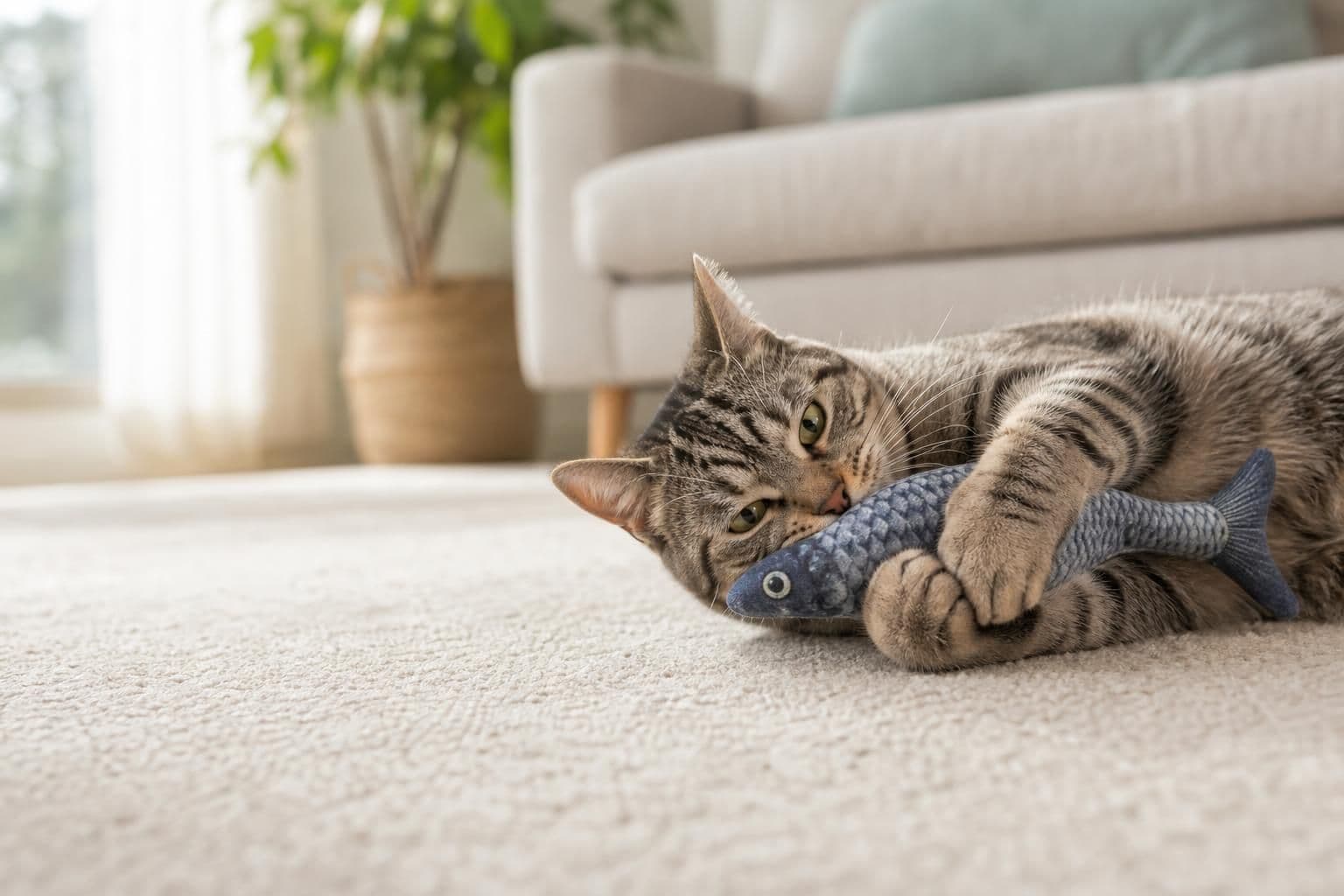
Key takeaway
A good catnip fish toy for cats should have securely stitched seams, catnip that's contained in an inner pouch rather than loose stuffing, and fabric sturdy enough to survive kicking, biting, and dragging across the floor. The best ones trigger a cat's hunting instinct through shape, texture, and scent, not just novelty. Price and cute packaging matter far less than construction and how fresh the catnip actually is.
Key takeaways
- Look for a sealed inner catnip pouch, not loose herb sewn into the main body — it lasts longer and won't spill.
- Choose fabric your cat can safely bite and kick (canvas, felt, or heavy plush) rather than thin fake fur that shreds.
- Rotate two or three toys instead of leaving one out constantly — cats habituate to catnip scent within days.
Why Cats React to Catnip in the First Place
Catnip (Nepeta cataria) contains nepetalactone, a compound that binds to receptors in a cat's nasal tissue and triggers a short burst of play behavior — rolling, chasing, kicking, and rubbing. According to the American Society for the Prevention of Cruelty to Animals, the reaction typically lasts around 10 minutes before a cat loses interest, and it can take up to two hours before they'll respond to catnip again. This is a normal, harmless response, not a sign of distress, and roughly one in three cats has no reaction to catnip at all due to genetics.
That two-hour reset window matters when you're shopping: a single catnip fish toy won't hold a cat's attention all day, so the toy's physical design — not just the scent — is what keeps play sessions interesting once the initial nepetalactone rush fades.
What Makes a Catnip Fish Toy Actually Good
Not all fish-shaped catnip toys are built the same. A few construction details separate the ones that last from the ones that fall apart after a week:
- Sealed catnip pouch: The herb should sit in a separate inner sack, not loose in the stuffing. This keeps potency longer and means torn fabric doesn't dump catnip across your floor.
- Reinforced seams: Cats often bite and kick a fish toy along its belly and tail — the two weakest stitch points. Double-stitched seams in those areas hold up far better.
- Bite-safe fabric: Canvas, felt, or tightly woven plush resist puncturing better than thin synthetic fur, which can shred into small fibers a cat might swallow.
- Size proportional to the cat: A fish toy long enough for a cat to wrap both front paws around (roughly 6–10 inches) tends to get "bunny-kicked" more than tiny versions that just get batted around.
- Refillable design: Some fish toys have a small zipper or velcro pouch so you can top up catnip once the original scent fades, extending the toy's useful life significantly.
At Ziva Paws, every toy — including catnip fish — gets a trial run with the shop's own cats, Ai and Dudu, before it's listed. Ai tends to go straight for anything with a rattly or crinkly element inside the pouch, while Dudu is pickier and mostly ignores toys where the catnip scent is faint. That kind of real-world difference is a useful reminder that "cat-tested" doesn't mean every cat will respond the same way.
Safety Considerations Before You Buy
Catnip itself is considered non-toxic to cats, and the Food and Drug Administration classifies it as generally recognized as safe when used as intended for pets. The bigger safety concern with fish-shaped toys is usually the small parts — plastic eyes, felt fins, or dangling threads that can be chewed off and swallowed. When evaluating a toy, check for:
- No glued-on parts that can be pulled loose (eyes, fins should be stitched or printed, not glued)
- No long loose threads or ribbon tails that could become a choking or intestinal hazard
- Washable fabric, since catnip toys pick up saliva and dirt quickly during rough play
If your cat is an aggressive chewer who tends to puncture toys quickly, a heavier canvas-bodied fish will outlast a soft plush one, even if the plush version looks more appealing on a shelf.
Catnip Alternatives Worth Knowing About
Not every cat responds to nepetalactone, and some owners prefer to rotate scents anyway. Silver vine and valerian root are common alternatives used in fish-shaped toys, and research summarized by veterinary behavior sources suggests silver vine triggers a similar play response in a larger share of cats than catnip does, including some cats that don't react to catnip at all. If your cat seems indifferent to a catnip fish toy after a few tries, a silver vine version is worth testing before concluding your cat "just doesn't like toys."
How to Keep the Toy Interesting Over Time
Catnip potency fades with air exposure, handling, and time. A few habits extend a toy's shelf life:
- Store unused catnip fish toys in a sealed bag or container between play sessions to slow scent loss.
- Rotate two or three toys on a schedule instead of leaving one out permanently — this also matches the natural two-hour reset window cats experience after a catnip reaction.
- Refresh refillable pouches with fresh dried catnip every few months if the toy has a reload pocket.
- Pair the fish toy with interactive play — dragging it, tossing it, or using it during a scheduled play session — rather than leaving it purely as a solo toy, since cats often engage longer when a human is part of the hunt sequence.
Toys are only one piece of a cat's enrichment routine. For cats who get anxious or overstimulated after high-energy play, having a calm space to settle afterward matters too — the same logic that applies to picking a cozy bed for anxious dogs applies to cats who need a low-stress spot to decompress post-play. If you're also outfitting a multi-pet household, checking a clothes size chart based on real measurements rather than guessing S/M/L can save a return trip when ordering apparel alongside toys.
Cats that respond strongly to catnip may also enjoy toys that combine scent with movement or texture, such as teaser and puzzle-style toys that give them something to track and capture, not just chew.
Frequently Asked Questions
Q: How long does the catnip reaction last in cats?
The reaction typically lasts around 10 minutes, after which most cats need roughly two hours before they'll respond to catnip again, according to the ASPCA.
Q: Is it safe if my cat swallows a small amount of catnip?
Catnip is generally recognized as safe for cats in typical amounts, though swallowing non-food parts of a toy — like plastic eyes or threads — is the bigger safety concern, not the herb itself.
Q: Why doesn't my cat react to catnip toys at all?
About one in three cats lacks the genetic sensitivity to nepetalactone and simply won't respond to catnip; silver vine or valerian-based toys are worth trying as an alternative.
Q: How often should I replace a catnip fish toy?
Replace it once seams fray, stuffing pokes through, or the catnip scent stays weak even after refilling a pouch — usually a sign the fabric or pouch integrity has broken down.
Q: Can kittens play with catnip toys?
Most sources suggest waiting until a kitten is a few months old, since very young kittens often don't respond to catnip yet and may not need the added stimulation during early development.