Crochet Cat Collar with Bell: What to Check Before You Buy
Key takeaway
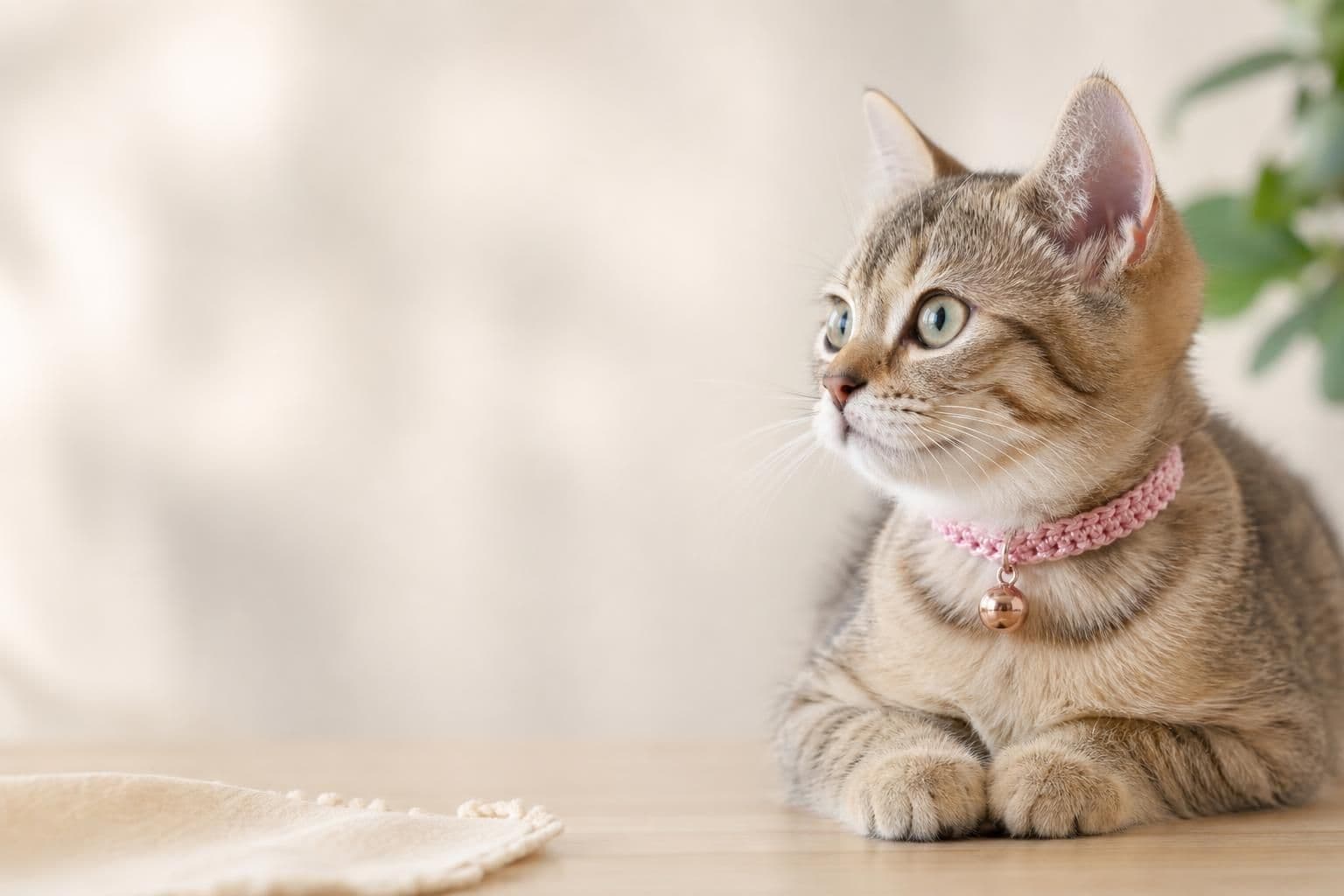
A good crochet cat collar with bell should have a breakaway safety clasp, a soft yarn or cotton-blend construction that won't chafe fur, and a bell sewn on securely enough that it can't be chewed off and swallowed. Look for one sized by actual neck measurement in inches rather than a generic small/medium/large label, since cat necks vary more than the labels suggest. The bell itself should be lightweight and small enough that it doesn't bother a cat's sensitive hearing at close range.
Key takeaways
- Choose a breakaway or quick-release clasp — it's the single most important safety feature on any cat collar.
- Measure your cat's neck in inches (not by guessing a size letter) and leave room for two fingers underneath.
- Check the bell's attachment point regularly; loose stitching is the most common failure point on handmade collars.
Why Crochet Construction Changes What You Should Check
Crochet collars are soft and flexible, which cats generally tolerate better than stiff nylon or leather. But that same flexibility means the stitching quality matters more than it would on a machine-woven collar. Yarn that's too loosely worked can stretch out of shape after a few weeks, and a bell stitched directly into the crochet pattern (rather than clipped on with a jump ring) is less likely to work loose over time. When you're comparing listings, look for close, tight stitch work around the bell and the buckle — that's usually a sign the maker reinforced the stress points rather than just decorating the collar.
Safety Features You Shouldn't Skip
Any collar on a free-roaming or even indoor-outdoor cat needs a way to release under pressure. The American Veterinary Medical Association recommends breakaway or quick-release collars for cats specifically because a fixed buckle can catch on branches, fences, or furniture and put a cat at risk of strangulation. A breakaway clasp is designed to pop open at a set amount of pulling force — usually somewhere in the low single-digit pounds of pressure — so the cat gets free, and you replace or re-clip the collar rather than the vet stitching a neck wound.
A few other safety points specific to crochet collars with bells:
- The bell should be smaller than the cat's mouth opening so it can't become a choking hazard if chewed.
- Avoid collars where the bell hangs on a long loop of thread; a short, tight attachment point reduces snagging risk.
- Check the collar every couple of weeks for fraying yarn near the buckle, since that's the first place wear shows.
Getting the Fit Right Without Guessing
Most adult cats have a neck circumference somewhere between 8 and 12 inches, but that range is wide enough that a single "one size fits most" collar often ends up too loose or too tight. The most reliable way to fit any collar — crochet, leather, or nylon — is to wrap a soft tape measure around the cat's neck where the collar will sit, then add roughly two finger-widths of slack so it's snug but not restrictive. This is the same tape-measure approach used in measuring a pet accurately for a clothing size chart: actual inches beat size letters every time, because a "small" from one shop can be a "medium" from another. Ziva Paws applies this same inch-based approach across its clothing and accessories, listing chest, neck, and length measurements instead of vague size tiers.
Do Bells Actually Help?
Bells serve two purposes: letting you hear where your cat is in the house, and giving wildlife a warning before your cat gets close. On the wildlife side, the effect is real but modest — cats are efficient stalkers, and a bell only helps if it rings during the approach rather than just at the pounce. Free-roaming domestic cats are estimated to kill more than a billion birds a year in the United States alone, according to figures compiled by the American Bird Conservancy, which is why bells, along with keeping cats indoors or supervised outdoors, are often recommended together rather than as a single fix. Indoors, a bell mostly helps you and other household pets know when a cat is moving through a room, which matters if you have a nervous dog or a baby gate to manage.
Caring for a Crochet Collar
Yarn holds odor and dirt more than smooth synthetic webbing, so a crochet collar needs a bit more upkeep. Hand-wash in cool water and let it air dry fully before putting it back on — a damp collar left on a cat's neck can lead to skin irritation. If your cat sheds heavily around the neck and collar area, a quick pass with a silicone hair remover or grooming brush before the collar goes back on keeps mats from forming underneath it. Our cats Ai and Dudu test collar and accessory samples before they go on the site, and the biggest thing we watch for is whether they try to scratch a new collar off in the first hour — a sign the fit or texture needs adjusting.
Matching Style to Season and Personality
A lightweight crochet collar breathes better in warm months, while a slightly thicker knit or one paired with a small scarf accent works fine in cooler weather without adding bulk. If your cat already wears seasonal layers, check that any collar sits comfortably over or under a sweater collarline rather than fighting it — Ziva Paws lists collars alongside its other clothing pieces with the same inch-based chest, neck, and length measurements, so you can size a collar and a sweater to the same cat without re-guessing.
Frequently Asked Questions
Q: Is a bell on a cat collar safe?
Yes, as long as it's securely stitched or clipped on and small enough that it can't be swallowed. Check the attachment point periodically, since worn thread or a loose jump ring is the most common way a bell comes loose.
Q: What size collar does a cat need?
Most adult cats need a collar sized to a neck circumference of roughly 8 to 12 inches, measured with a soft tape and left loose enough for two fingers to slide underneath. Measuring in inches rather than relying on a size label gives a more reliable fit.
Q: Do bells actually stop cats from catching birds?
Bells reduce predation somewhat but don't eliminate it, since an experienced hunter can still stalk quietly enough to pounce before the bell rings. Groups like the American Bird Conservancy recommend combining bells with supervised outdoor time or keeping cats indoors for the biggest impact.
Q: How do I know if a collar is a breakaway type?
A breakaway collar has a buckle designed to pop open under a set amount of pulling pressure, rather than a fixed clasp that stays locked no matter what. Most listings state "breakaway" or "quick-release" directly in the product description or title.
Q: Can crochet collars stretch out over time?
Loosely worked yarn can loosen with wear and washing, so it's worth checking the fit every few weeks, especially on kittens who are still growing. Tighter stitch work around the buckle and bell generally holds its shape longer than a loosely crocheted pattern.