The Best Cozy Bed for Anxious Dogs: What to Look For
Key takeaway
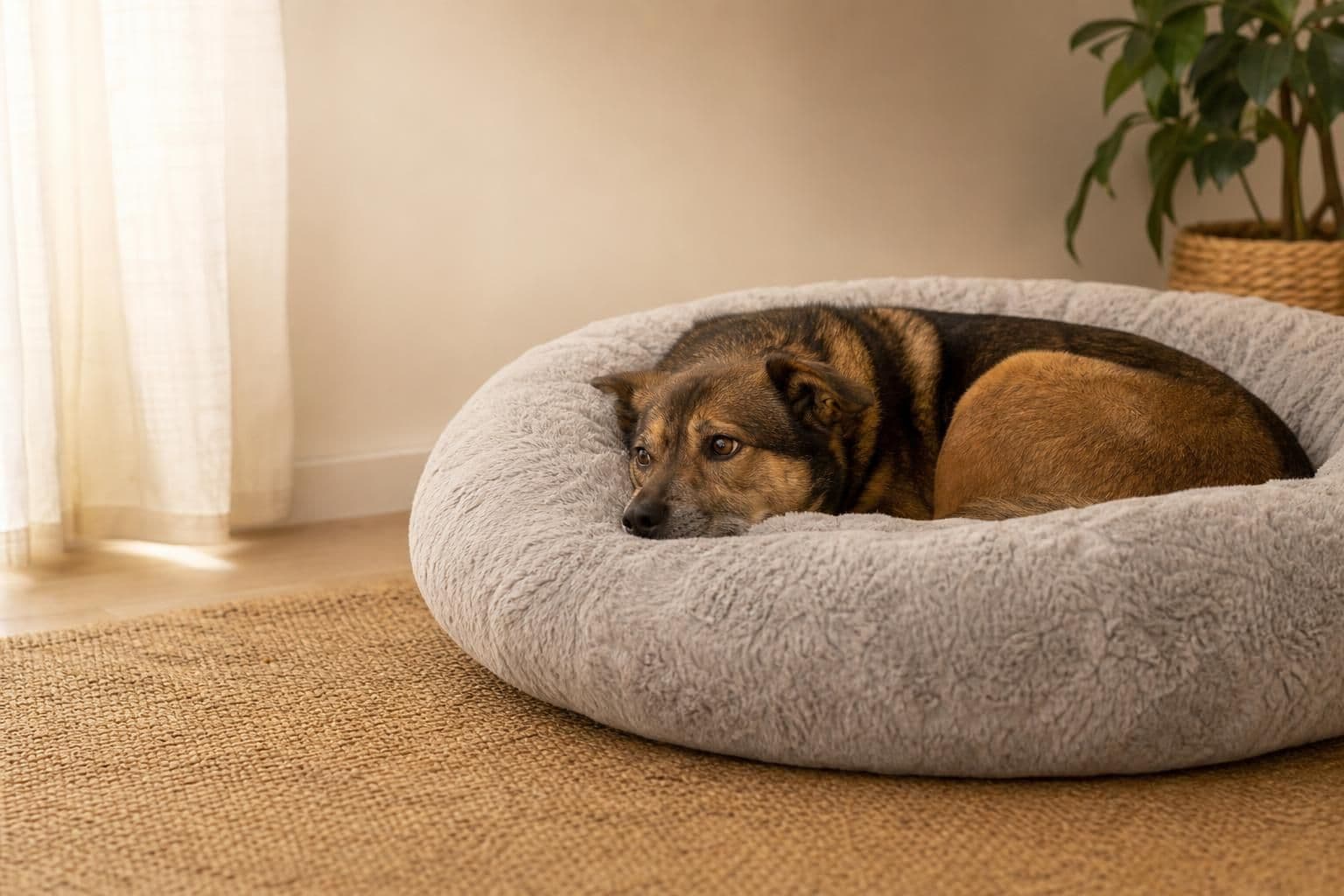
The best cozy bed for an anxious dog is a bolster-style or "cave" bed with raised sides, a fill that holds its shape under weight, and a footprint sized so the dog can curl up and press against the edges without hanging off. That combination mimics the den-like pressure and containment that helps many dogs settle, while still leaving room to stretch. Fabric that can be machine washed matters just as much as shape, since anxious dogs often shed, drool, or have accidents when stressed.
Key takeaways
- Choose a bolster or hooded shape with raised, firm edges over a flat mattress pad — the sense of enclosure is what actually reduces pacing and circling at bedtime.
- Size the bed to your dog's curled-up measurement, not just their breed label, since a too-large bed removes the contained feeling that calms anxious dogs.
- Prioritize a removable, machine-washable cover; stress-related shedding and accidents are common and a bed that can't be cleaned quickly becomes a bed that gets avoided.
Why Bed Shape Matters More Than Softness
Anxious dogs often respond to physical contact and boundaries more than to plushness alone. A bed with raised bolster sides lets a dog lean or tuck their back against something solid, which is the same instinct behind swaddling in puppies and the reason weighted blankets and pressure wraps are used for canine anxiety more broadly. The American Veterinary Medical Association notes that environmental modification — including safe, quiet resting spaces — is a standard first step recommended alongside behavioral or medical treatment for anxiety in dogs.
A flat cushion, no matter how thick, doesn't offer that contained edge. If your dog already tends to sleep pressed into a corner of the room or under furniture, that's a strong sign a bolster or covered "cave" bed will suit them better than an open pad.
Bed Types Compared
| Bed Type | Best For | Containment Level | Typical Care |
|---|---|---|---|
| Bolster (raised-side) bed | Dogs who lean or curl against edges | High | Machine-washable cover, foam base spot-cleaned |
| Hooded/cave bed | Noise-sensitive or den-seeking dogs | Very high | Cover removable, hood may need hand wash |
| Orthopedic flat pad | Senior dogs with joint pain plus mild anxiety | Low | Fully washable, foam air-dries slowly |
| Donut/nest bed | Dogs who curl tightly in a ball | Medium-high | Zip-off cover, stuffing needs fluffing |
| Elevated cot bed | Hot climates, dogs who don't seek enclosure | Low | Wipes clean, not ideal for anxiety alone |
Donut and hooded styles tend to work best for dogs whose anxiety shows up as tight curling or hiding; bolster beds suit dogs who like to rest their head or spine against a raised edge while keeping their legs stretched out.
Getting the Size Right
Sizing is where a lot of anxious-dog beds fail. A bed marked "large" from one brand can be several inches smaller or larger than another brand's "large," and a bed that's too big leaves too much open space, which undercuts the contained feeling that helps a dog settle. Measure your dog curled up in their favorite resting position, from nose to tail base, and add a small margin — not the full stretched-out body length used for crate sizing. This is the same reasoning behind using real inch measurements rather than generic labels when picking clothing, as explained in this guide to measuring a dog for accurate size charts, and it applies just as directly to beds.
If you're between two sizes, size down slightly for anxious dogs rather than up — a snugger fit generally supports the calming effect better than extra room does.
Fill and Fabric That Hold Up
The inside of the bed matters as much as the shape:
- Memory foam or high-density foam base – keeps its shape under repeated weight so the bolster edges don't flatten out within weeks.
- Polyester fiberfill bolsters – lightweight and washable, though they compress faster than foam over months of daily use.
- Faux fur or sherpa cover – adds a soft, low-static surface many dogs will burrow into, but check it's rated machine-washable, not just spot-clean.
- Non-skid base fabric – prevents the bed from sliding on hardwood or tile, which matters because a bed that shifts underfoot can itself trigger startling in a nervous dog.
Cheap fiberfill that clumps after a few washes will stop offering support exactly where an anxious dog needs it most — under their chest and along their spine.
Placement Also Affects Anxiety
Where the bed sits in the home changes how well it works. A corner away from foot traffic, with at least one solid wall behind it, reinforces the same enclosed feeling the bed shape provides. The ASPCA advises giving anxious dogs a predictable, quiet retreat space as part of general stress management, which applies to bed placement just as much as bed choice. Avoid placing the bed near a front door or a window with street noise, since sound triggers can undo the calming benefit of even a well-chosen bed.
Washing and Maintenance
Anxious dogs are more prone to stress shedding, drooling, or accidents than calmer dogs, so a bed that's difficult to clean often ends up smelling and getting avoided within a month. Look for:
- A zippered, removable outer cover rather than a sewn-on shell.
- A machine-washable rating on both cover and any liner (not just "surface wipeable").
- A foam core, if included, sized to fit your home washer or one that air-dries within a day, since foam left damp can develop odor.
Washing the cover every one to two weeks during high-stress periods — thunderstorm season, moving, new pets in the home — keeps the bed a place the dog wants to return to rather than one they start avoiding.
Frequently Asked Questions
Q: What type of bed is best for dogs with separation anxiety specifically?
A hooded or cave-style bed tends to help most with separation anxiety because the covered top blocks visual stimulation from the room, which can reduce pacing while you're away. Pairing it with a piece of your worn clothing inside the bed adds familiar scent, which some dogs find calming.
Q: Are weighted or heavy blankets better than a bolster bed for anxiety?
They serve different purposes and can be used together — a bolster bed provides passive containment all day, while a weighted blanket adds direct pressure during acute stress events like storms. Neither replaces veterinary guidance if anxiety is severe or sudden in onset.
Q: How do I know if my dog's bed is too small versus appropriately snug?
A snug bed lets your dog fully rest their head and hips inside the bolster edges without their legs hanging off the base when curled. It's too small if they can't turn around at all or their weight regularly compresses the bolster flat against the floor.
Q: Can bed choice alone fix a dog's anxiety?
No — bedding is one piece of environmental support, not a substitute for addressing the underlying cause of anxiety. If pacing, whining, or destructive behavior persists, a veterinarian or veterinary behaviorist can rule out medical causes and recommend additional treatment.
Q: How often should an anxious dog's bed be replaced?
Replace it once the foam no longer springs back after your dog gets up, since flattened bolsters stop providing the containment that made the bed effective in the first place. For most daily-use beds, that's roughly every 12 to 18 months, sooner with a heavy or large-breed dog.