Why Does My Dog Sleep on My Clothes?
Key takeaway
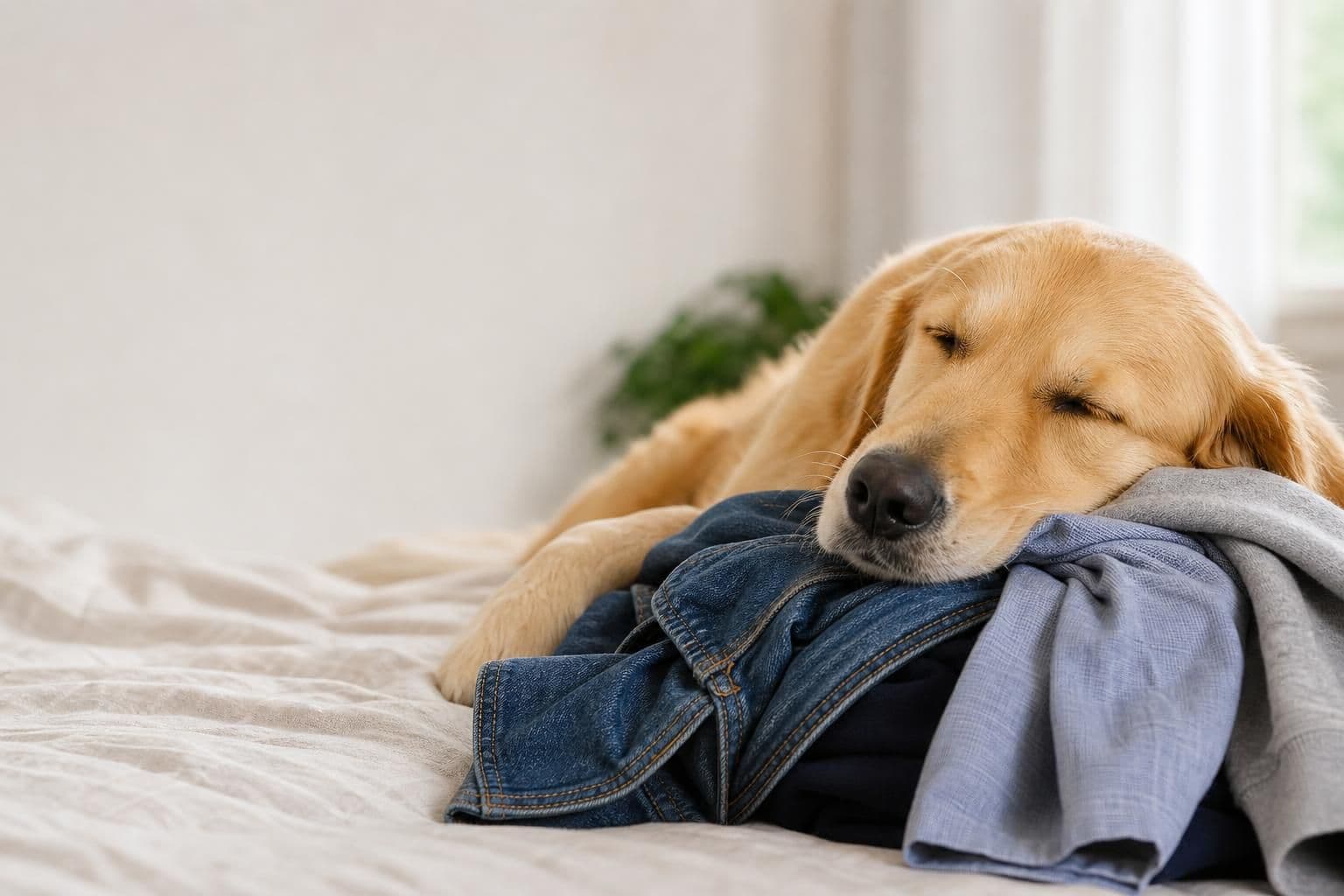
Dogs sleep on their owners' clothes mainly because the fabric carries their scent, and scent is the primary way dogs recognize and feel safe with the people they're attached to. Lying on a worn t-shirt or dirty laundry pile lets a dog stay close to that smell even when the person isn't in the room. In most cases this is a normal comfort-seeking behavior, not a problem to fix.
Key takeaways
- Scent, not texture, is usually the main draw — your laundry smells like you.
- Occasional clothes-nesting is normal; constant distress when separated from your scent may point to anxiety.
- A dedicated bed placed where your dog already naps (and kept near a worn item of yours at first) can redirect the habit without taking away the comfort.
The Scent-Bonding Explanation
A dog's sense of smell is estimated to be tens of thousands of times more sensitive than a human's, with scientists at institutions like Michigan State University's College of Veterinary Medicine noting that dogs have far more olfactory receptors than people do. That heightened sense means your clothes aren't just fabric to your dog — they're a concentrated, readable signature of you: your skin, your sweat, your daily movements. Sleeping on that scent is a way of staying near you even while you're at work or asleep in another room.
This is also why a single worn hoodie or pair of socks dragged off the laundry pile can be more appealing to a dog than a brand-new blanket that smells like nothing at all.
It's a Comfort and Security Behavior
Beyond scent, clothes often end up in soft piles — on a laundry basket, at the foot of a bed, draped over a chair — which naturally invites a dog to curl up. Puppies and newly adopted dogs especially gravitate toward anything that reduces the feeling of being alone, since in a litter they'd normally sleep pressed against siblings and a parent. An item that smells like a trusted person can serve the same emotional function.
Dogs that already have a habit of circling or kneading before settling in are showing the same nesting instinct whether they're on your laundry or a dog bed — it's about creating a den-like pocket of safety, something explained further in this piece on why dogs turn in circles before lying down.
When It's More Than Just Comfort
Occasional clothes-sleeping is harmless, but if your dog becomes distressed specifically because they can't access your scent — pacing, whining, destroying laundry, or refusing to settle anywhere else — that can be an early sign of separation-related anxiety rather than simple comfort-seeking. The American Veterinary Medical Association lists excessive attachment behaviors and destructive activity around an owner's belongings as common indicators worth discussing with a veterinarian if they escalate.
A few signs it's worth monitoring rather than ignoring:
- Your dog only settles on your clothes and refuses an otherwise comfortable bed.
- Clothes-seeking intensifies right before or after you leave the house.
- The behavior comes with drooling, panting, or vocalizing — some of which overlaps with what's covered in why some dogs pant restlessly at night.
Why Some Dogs Do This More Than Others
Breed temperament, early attachment history, and daily routine all play a role. Dogs who were separated from their mother and littermates too early, rescued dogs with an unclear history, or dogs left alone for long stretches often show stronger scent-seeking behavior than dogs with steady, predictable company. Herding and companion breeds bred specifically to work closely with people also tend to show more owner-attachment behaviors than breeds developed for independent work.
Age matters too — senior dogs with declining eyesight or hearing often lean more heavily on scent to navigate their world, which can make a worn piece of clothing more comforting than it was earlier in life.
How to Redirect the Habit Without Removing the Comfort
You don't have to choose between a tidy laundry pile and a secure dog. A few practical steps:
- Place a bed where the behavior already happens. If your dog consistently nests on clothes at the foot of your bed, put a dog bed in that exact spot first — location matters as much as scent.
- Transfer the scent instead of removing it. Rub a worn (clean) t-shirt against the inside of a new bed for a day or two before letting your dog use it unassisted.
- Choose bedding with washable covers. Scent-seeking dogs tend to drool, dig, or burrow, so a bed that holds up to frequent washing keeps the habit sustainable long-term.
- Don't punish the behavior. Scolding a dog for sleeping on laundry can increase anxiety rather than solve it, since the behavior is rooted in seeking reassurance, not misbehaving.
At Ziva Paws, Ai and Dudu — the two resident cats who test products before they're listed — have shown the team the same instinct from the feline side: they'll pick a hamper over a brand-new cat bed every time until the new bed smells familiar. The fix that works for scent-driven nesting cats translates directly to dogs: let the new bed absorb your scent before expecting your pet to prefer it. Shoppers looking for a washable option built for exactly this kind of habit can browse the plush beds and nests collection.
When to Loop In a Veterinarian
If clothes-seeking is paired with pacing, excessive drooling, destructive chewing, or accidents tied specifically to your absence, it's reasonable to raise it with a veterinarian rather than assume it will resolve on its own. These can be manageable signs of separation anxiety, and early intervention — rather than waiting for it to worsen — tends to produce better outcomes. A vet can also rule out physical causes, since dogs seeking unusual comfort spots sometimes do so because of joint discomfort, similar to what's discussed in why dogs dig at their bed before settling.
Frequently Asked Questions
Q: Is it bad to let my dog sleep on my clothes?
No, occasional clothes-sleeping is a normal comfort behavior rooted in scent recognition. It only becomes a concern if it's paired with distress, destructive behavior, or refusal to settle anywhere else.
Q: Why does my dog prefer my dirty laundry over clean clothes?
Dirty laundry carries a stronger concentration of your scent — sweat, skin cells, and daily residue — which is exactly what draws a scent-driven dog in. Clean laundry smells mostly like detergent, so it's less appealing.
Q: Will giving my dog a piece of my clothing stop them from stealing laundry?
Often, yes. Giving a dog a designated worn item (an old t-shirt, for example) can satisfy the scent-seeking urge and reduce rummaging through the actual laundry pile.
Q: Does this behavior mean my dog has separation anxiety?
Not necessarily — many dogs sleep on owner's clothes simply for comfort. It's more likely to indicate anxiety if it's accompanied by pacing, whining, or distress specifically when you're away.
Q: How can I get my dog to use their own bed instead of my clothes?
Place the bed in the spot where your dog already nests, and transfer your scent onto it by rubbing a worn item of clothing on the surface for a day or two before introducing it.