Why Does My Cat Purr? What That Sound Really Means
Key takeaway
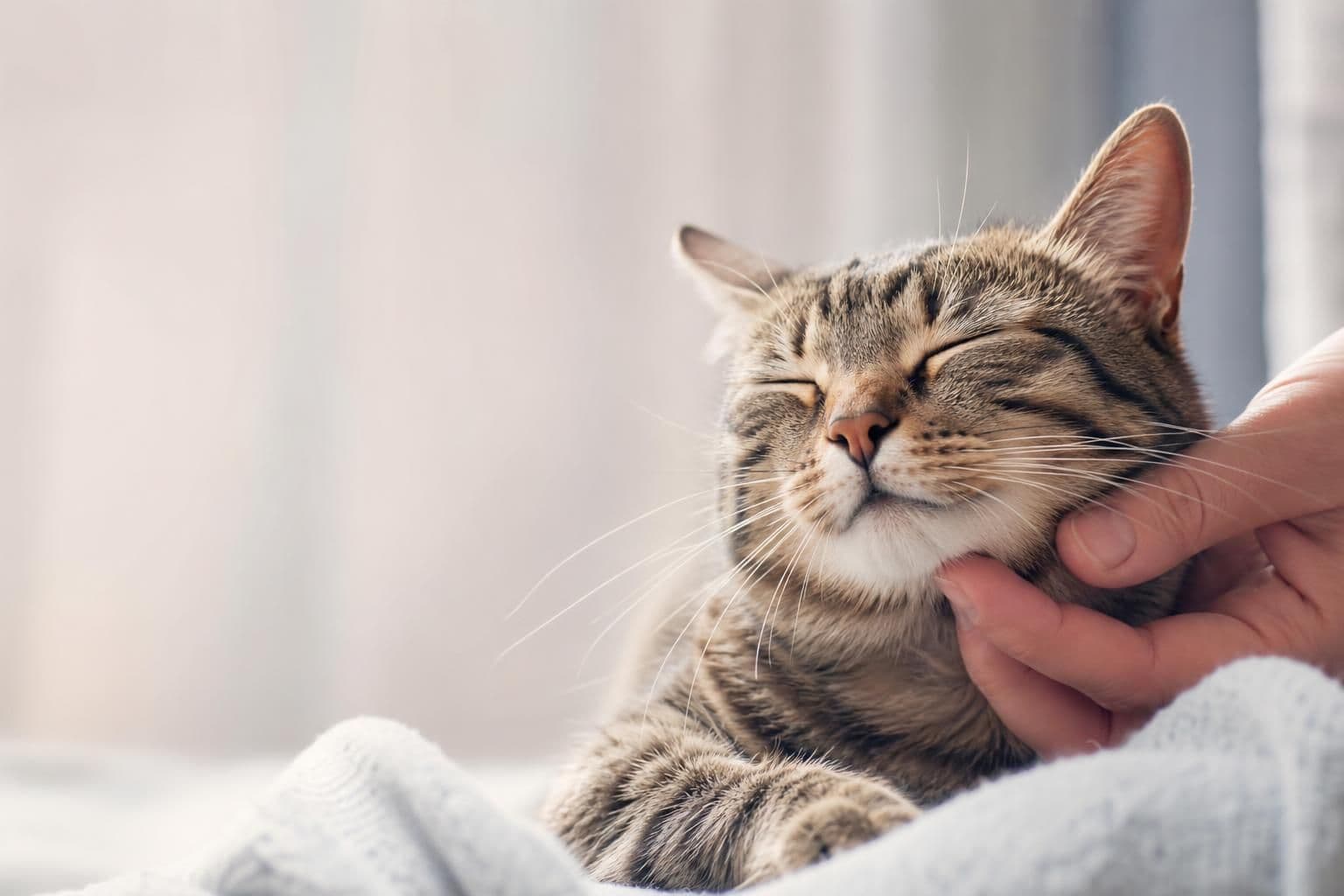
Cats purr by rapidly contracting the muscles of their larynx while breathing, producing a vibrating sound on both the inhale and exhale. Most of the time it signals contentment, but cats also purr when they're in pain, giving birth, or trying to self-soothe — so purring is really a sign of nervous-system arousal, not just happiness. Context, body language, and what else the cat is doing at the time tell you which one it is.
Key takeaways
- Purring is produced by fast twitching of the laryngeal muscles, not vocal cords alone, at roughly 25–150 Hz.
- Cats purr when content, but also when stressed, injured, or in labor — watch body language, not just sound.
- A cat purring while hiding, eating poorly, or flinching from touch needs a vet check, not just a cuddle.
How a cat actually makes the purring sound
Purring comes from a neural oscillator in the brain that sends rapid signals to the muscles around the voice box, causing the space between the vocal folds to open and close very quickly as the cat breathes. This happens on both inhale and exhale, which is why the sound is nearly continuous rather than broken up like a meow. According to the Cornell Feline Health Center, this mechanism is distinct from the one that produces meows or yowls, and it's one of the few vocal behaviors unique to cats and a handful of other species.
The main reasons cats purr
Purring shows up in several different situations, and most of them aren't pure happiness:
- Contentment — lounging in a lap, after a meal, or during gentle petting.
- Bonding and nursing — kittens purr within days of birth, and mother cats purr back, which is thought to help kittens locate her since newborns are blind.
- Self-soothing under stress — at the vet, during car rides, or after a scare.
- Pain or illness — cats recovering from injury or in chronic discomfort often purr steadily.
- Requesting something — a slightly higher-pitched "solicitation purr" layered with a cry-like tone, often used around feeding time.
If your cat only purrs around mealtimes and paces near the bowl, that overlaps with the same routine-driven behavior covered in our piece on cats that only drink from a running faucet — cats are creatures of habit, and purring is often woven into a learned routine, not a spontaneous emotion.
Why purring might mean pain, not pleasure
Veterinary behaviorists have long noted that cats purr while injured, dying, or in active labor, which has led to the theory that the vibration itself may serve a self-soothing or even reparative function. Purring frequencies fall in a range that some researchers have linked to improved bone density and tissue healing in lab studies, though this remains an area of ongoing study rather than settled fact. The practical takeaway: a purring cat that is also hunched, hiding, not eating, or avoiding touch should be seen by a veterinarian rather than assumed to be simply happy.
Reading the body language around the purr
The purr alone is ambiguous; the rest of the cat's posture is where the real information is.
- Relaxed purring: slow blinks, loose body, tail still or gently swaying, ears forward.
- Anxious purring: crouched low, ears flattened, tail tucked, often paired with hiding — the same pattern described in this guide to why cats hide.
- Pain purring: reluctance to jump, flinching when touched in one spot, reduced appetite.
- Attention-seeking purring: circling your legs, headbutting, or vocalizing at you directly, similar to the greeting behavior explained in why cats headbutt their owners.
Does purring mean your cat trusts you?
Often, yes. A cat that purrs while draped across your chest or curled against you is usually showing the same comfort-seeking behavior covered in why cats like to sleep on your chest — proximity to a warm, familiar body lowers a cat's guard enough to let the purring reflex kick in. That said, trust-based purring tends to come with a relaxed body, not a tense one, so the context still matters more than the sound itself.
When purring is a reason to call the vet
Purring becomes a warning sign, not a comfort cue, in a few specific situations:
- The cat is purring while hiding, lethargic, or refusing food.
- Purring is paired with labored breathing, open-mouth breathing, or coughing.
- The cat flinches, growls, or stops purring abruptly when a specific area is touched.
- Purring continues for hours alongside restlessness or repeated trips to the litter box.
The ASPCA notes that sudden behavior changes, including unusual vocalization patterns, are among the clearer early signs that a cat needs veterinary attention, since cats are instinctively good at masking pain.
Supporting a cat that purrs from stress
If stress-purring shows up often — during vet visits, thunderstorms, or new environments — a few low-effort changes can help:
- A snug, enclosed resting spot gives a stressed cat somewhere to retreat, which is part of why many cats gravitate toward a box over a bed; a covered hideaway bed or enclosed cat nest offers the same security in a more durable form.
- Keeping feeding and play on a predictable schedule reduces the background anxiety that triggers stress-purring in the first place.
- A familiar-smelling blanket or bed in a carrier can lower stress during travel or vet visits.
At Ziva Paws, Ai and Dudu — the two resident cats who test products before they're listed — tend to purr loudest in their enclosed nest beds rather than out in the open, which lines up with the general pattern that cats self-soothe best in a space they can control. If you're shopping for that kind of setup, the bedding and furniture collection includes enclosed nests and plush beds sized for that curled-up, hidden posture.
Frequently Asked Questions
Q: Why does my cat purr when I pet her?
This is typically a contentment purr triggered by the rhythmic, predictable sensation of petting, especially around the head and cheeks. If the purring stops abruptly and her ears flatten, she's likely reached her limit for that session.
Q: Why does my cat purr but also bite?
This combination, sometimes called "purr biting" or overstimulation, happens when petting continues past the point of comfort — the purr can lag behind the cat's actual mood. Watch for tail flicking or skin twitching as an early signal to stop before the bite.
Q: Can cats purr when they're in pain?
Yes. Cats purr during labor, injury recovery, and chronic illness, which is why purring should never be the only signal you use to judge whether a cat is comfortable. Look at appetite, posture, and willingness to move as well.
Q: Why does my kitten purr so much?
Kittens start purring within the first few days of life, largely as a way to communicate with their mother during nursing. Frequent purring in a young, healthy kitten is usually just a sign of normal bonding and contentment.
Q: Is it normal for a cat to purr constantly?
Some cats purr almost continuously as part of their individual temperament, while others purr rarely even when content. What matters more than frequency is whether the purring pattern suddenly changes, since a shift from occasional to constant purring (or the reverse) can flag stress or discomfort worth monitoring.