How Often Should I Bathe My Cat?
Key takeaway
Most healthy cats never need a bath because they groom themselves effectively — bathing every 4 to 6 weeks is only necessary for hairless breeds, senior cats who can't groom well, or cats with skin conditions, mobility issues, or visible dirt/odor. For a typical short- or long-haired cat with no health issues, regular brushing does the job, and a bath once or twice a year (or only when truly dirty) is plenty.
Key takeaways
- Healthy cats self-groom and rarely need baths; brushing 2-3 times a week usually keeps coats clean.
- Hairless breeds like Sphynx cats need baths roughly every 1-2 weeks because they lack fur to absorb skin oils.
- Senior, overweight, or arthritic cats may need help bathing because they physically can't reach certain spots anymore.
Why Cats Rarely Need Baths
A cat's tongue is covered in tiny backward-facing hooks called papillae, which work almost like a built-in comb to remove loose fur and distribute natural oils across the coat. This self-grooming process, combined with regular brushing from an owner, keeps most cats clean without water ever being involved. The Cornell Feline Health Center notes that cats spend a significant portion of their waking hours grooming themselves, which is one reason frequent bathing isn't just unnecessary — it can actually strip protective oils from the skin and cause dryness or irritation.
When a Bath Actually Makes Sense
There are specific situations where bathing is genuinely helpful rather than just a routine chore:
- Hairless or near-hairless breeds (Sphynx, Donskoy) need baths roughly every 1-2 weeks since their skin produces oils that would normally be absorbed by fur.
- Senior cats or cats with arthritis often lose flexibility and can't reach their back or hindquarters, leading to matting or a greasy coat near the tail.
- Overweight cats face the same reach problem and may develop odor in skin folds or around the hindquarters.
- Visible contamination — getting into something sticky, oily, or toxic — calls for an immediate bath regardless of schedule.
- Skin conditions or flea treatments prescribed by a veterinarian sometimes include a medicated bathing schedule, which should follow their specific instructions rather than a general rule.
Outside of these cases, a bath once or twice a year, or simply "when visibly dirty," is a reasonable default for most indoor cats.
Signs Your Cat Needs a Bath Soon
Rather than bathing on a fixed calendar, watch for practical signs:
- The coat looks oily or feels greasy to the touch, especially along the back.
- There's a noticeable odor that brushing doesn't resolve.
- Mats have formed that a comb can't work through safely.
- Your cat has stopped grooming certain areas (common in arthritic or obese cats).
- There's visible debris, litter residue, or a sticky substance in the fur.
If mats are the main issue, a self-cleaning slicker brush used a few times a week can prevent them from forming in the first place, which is often more effective — and less stressful for the cat — than reaching for mats with scissors or a bath.
How to Bathe a Cat Safely
When a bath is necessary, a calm, quick process matters more than scrubbing power:
- Brush first to remove loose fur and work out minor tangles before the coat gets wet.
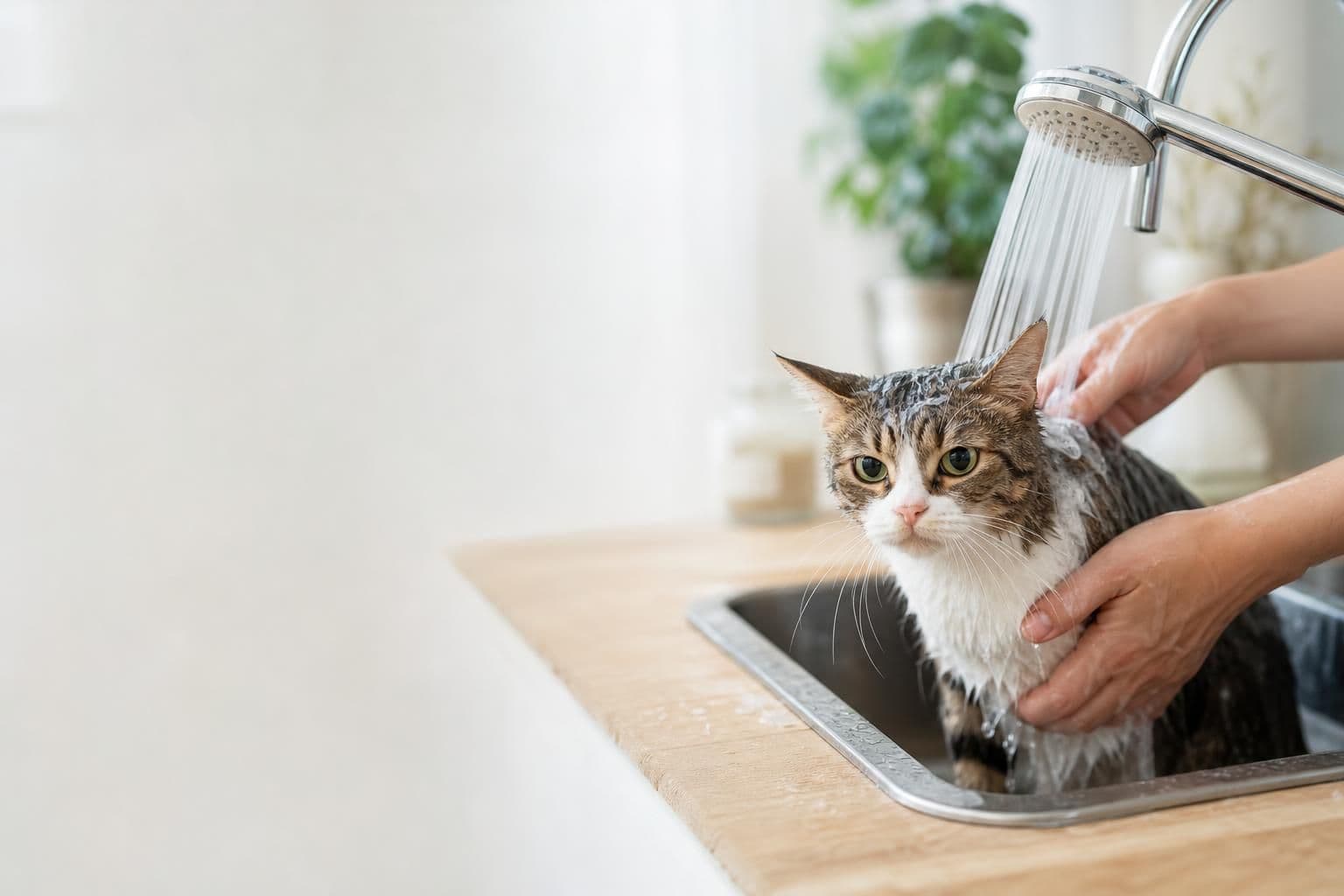
- Use lukewarm water in a sink or shallow basin — never hot, since cats are more sensitive to temperature than humans.
- Use a cat-specific shampoo. Human shampoo and most dog shampoo have a different pH and can irritate feline skin; the American Veterinary Medical Association advises using products formulated for the species being bathed.
- Rinse thoroughly. Leftover shampoo residue is a common cause of post-bath itching.
- Dry immediately with an absorbent towel, since wet fur loses heat quickly and cats can get chilled fast.
- Keep the room warm and avoid drafts until the coat is fully dry, especially for kittens, seniors, or short-haired breeds with less natural insulation.
A dedicated pet towel from the grooming lineup absorbs more water in fewer passes than a regular bath towel, which shortens the time a cat spends cold and wet — something our own cats Ai and Dudu made clear they appreciated during testing, since both made a quick exit the moment a towel pass felt too slow.
Kittens, Seniors, and Cats That Run Cold
Kittens regulate body temperature less efficiently than adult cats, so if a bath is unavoidable (say, after a messy litter-box incident), keep the session short and the drying thorough. Afterward, a soft sweater sized correctly — using actual chest and neck measurements rather than a generic small/medium/large label — can help a kitten hold onto body heat while its coat finishes drying; our sizing-first guide to kitten clothing walks through how to measure properly. Older cats benefit from the same logic: a warm, enclosed resting spot post-bath helps offset the heat they lose faster than younger cats, and a cozy nest bed built for colder months gives them somewhere to settle while they finish drying naturally.
Brushing as the Real Maintenance Routine
For the vast majority of cats, the real answer to "how do I keep my cat clean" isn't bathing — it's brushing. Short-haired cats generally do well with brushing two to three times a week, while long-haired breeds often need daily attention to prevent mats, particularly around the armpits, belly, and behind the ears where fur rubs together. The ASPCA lists regular brushing as one of the simplest ways to reduce shedding and catch skin issues early, since you'll notice lumps, parasites, or bald patches well before they become a bigger problem.
Frequently Asked Questions
Q: How often should I bathe my cat if it's a normal short-haired house cat?
Most short-haired indoor cats never need a scheduled bath — brushing a few times a week is enough, and bathing can be reserved for when the coat is visibly dirty, oily, or has gotten into something that brushing can't remove.
Q: Is it true that cats hate water and bathing is always stressful for them?
Many cats are uneasy around water because it's an unfamiliar sensation, not an instinctive fear, and a calm, quick, well-prepared bath tends to be far less stressful than a drawn-out or forceful one.
Q: Do kittens need baths more often than adult cats?
No — kittens generally need baths less often, since their skin is more sensitive and prolonged water exposure cools them down quickly; baths should only happen when truly necessary and should be kept brief.
Q: Can I use regular shampoo on my cat if I don't have cat shampoo?
No, human and most dog shampoos have a different pH than cat skin and can cause dryness or irritation; a cat-specific formula is the safer choice.
Q: What's a sign that bathing has been done too often?
Dry, flaky skin, a dull coat, or excessive scratching after a bath often means natural oils have been stripped away, which is a cue to space out baths further and rely more on brushing between them.