Best Cat Clothes for Kittens: A Sizing-First Buying Guide
Key takeaway
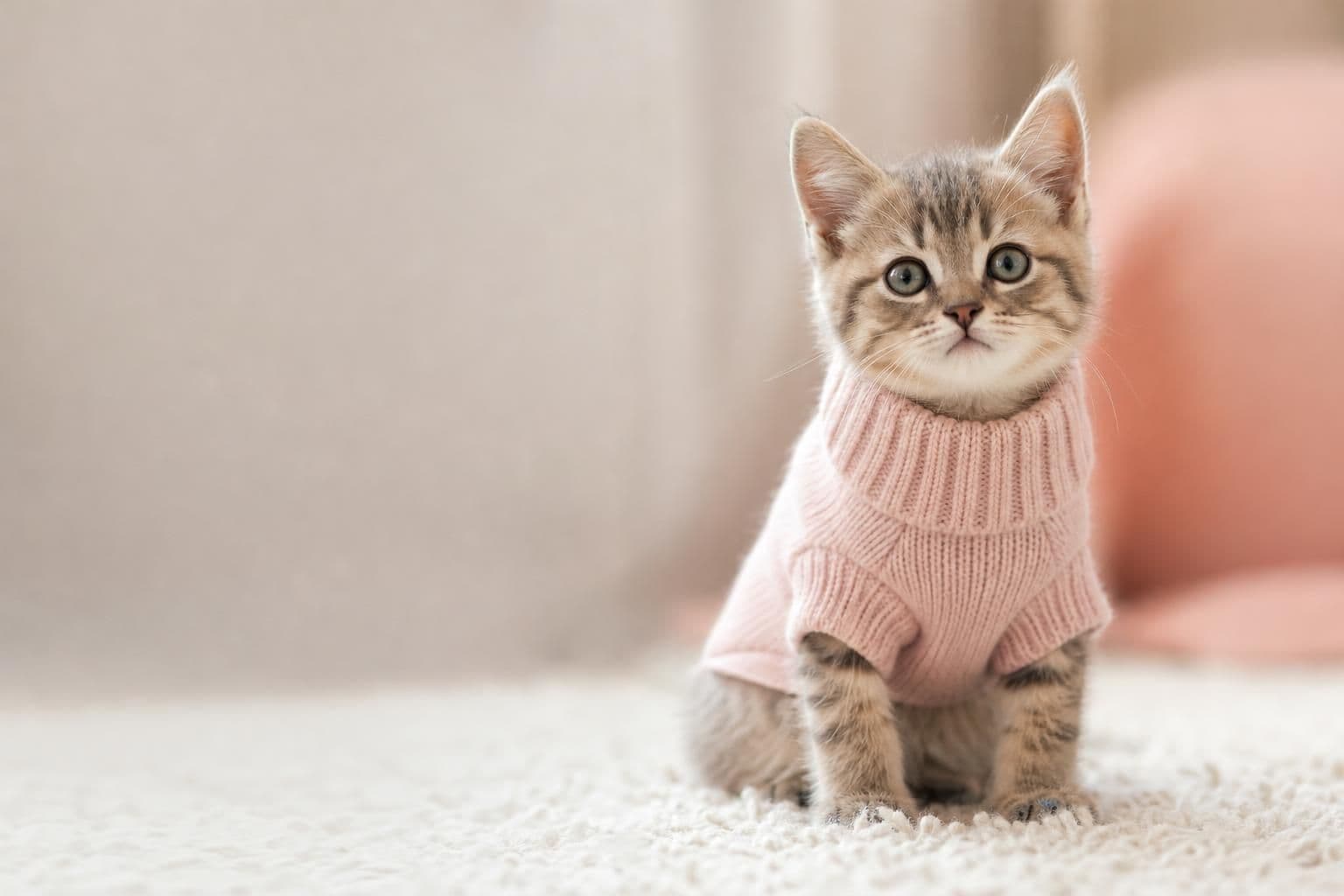
The best cat clothes for kittens are lightweight, stretch-knit garments measured by actual chest and neck inches rather than S/M/L labels, since kittens grow fast and generic sizing rarely fits their small, changing frames. Look for soft cotton-blend or fleece pieces with wide neck openings, no dangling embellishments, and an easy on/off closure. Prioritize breathability and freedom of leg movement over style, especially for kittens under six months old.
Key takeaways
- Measure chest girth, neck circumference, and back length in inches before buying; kitten sizing charts vary too much between brands to trust S/M/L alone.
- Choose stretch-knit fabrics with no zippers, buttons, or loose trims a kitten could chew or snag a claw on.
- Re-measure every few weeks during the first year — kittens can outgrow a garment within a single growth spurt.
Why Kitten Sizing Is Different From Adult Cat Sizing
Kittens don't just need a smaller version of an adult cat sweater — their proportions are different, with relatively bigger heads and shorter torsos compared to their eventual adult size. A garment cut for a petite adult cat often has a neck opening too wide for a kitten's head or a back length that bunches awkwardly at the tail. This is why inch-based measurements (chest girth, neck circumference, back length from collar to tail base) matter more than age or breed guesses. At Ziva Paws, every clothing listing uses these three measurements instead of generic labels, because a "small" from one brand can differ by two or three inches from another.
What to Measure Before You Shop
Take these three measurements with a soft tape, in inches, while your kitten is standing naturally:
- Neck circumference — wrap the tape where a collar would sit, snug but not tight.
- Chest girth — measure around the widest part of the rib cage, just behind the front legs.
- Back length — from the base of the neck to the base of the tail.
Write these down and compare them directly to a brand's size chart rather than guessing from "kitten" or "small" labels. If a chart only lists S/M/L without inches, that's a sign to size up cautiously or look elsewhere.
Fabric and Fit Features That Matter Most
A kitten's skin is thinner and more sensitive than an adult cat's, so fabric choice affects comfort as much as fit. Good options include:
- Stretch cotton-poly knits — flexible enough for play and grooming.
- Light fleece — warm for cooler months without overheating indoor kittens.
- Soft-brushed interior seams — reduce chafing under the legs and around the neck.
Avoid rigid fabrics, hard plastic snaps near the belly, or anything with trailing ribbons, buttons, or sequins a kitten could chew off and swallow. The ASPCA notes that small ingested items are a common cause of feline foreign-body emergencies, so skip decorative add-ons that aren't stitched flat.
Comparing Common Kitten Clothing Types
| Clothing Type | Best For | Sizing Priority | Watch-Outs |
|---|---|---|---|
| Stretch sweater | Everyday indoor warmth | Chest girth + neck | Avoid tight necklines |
| Fleece hoodie | Cooler rooms, drafts | Back length + chest | Check hood doesn't block vision |
| Soft pajama set | Post-grooming or vet recovery | Leg openings + belly room | Avoid tight elastic at joints |
| Lightweight dress | Photos, short outings | Neck + back length | Limit wear time, check hem doesn't drag |
| Collar/scarf accessory | Light styling, no full coverage | Neck circumference only | Should allow two fingers of slack |
This kind of side-by-side comparison is useful because kittens often need different garments for different situations — a hoodie for a chilly apartment is not the same job as a pajama set worn briefly after a vet visit.
Safety Checks Before Every Wear
Before dressing a kitten, run through a quick check: no loose threads around the mouth or paws, no restriction across the shoulders when the kitten reaches forward, and no fabric covering the eyes or ears. The American Veterinary Medical Association advises monitoring any animal in clothing for signs of overheating, limited mobility, or skin irritation, and removing the garment if the pet seems distressed. Kittens especially should only wear clothing in short supervised sessions at first, since they're still learning how their body moves in fabric.
If your kitten also needs grooming support alongside clothing, a grooming basics guide for long-haired cats can help you spot mats before they get trapped under a sweater seam.
How Ziva Paws Approaches Kitten-Friendly Clothing
Every clothing listing on Ziva Paws includes chest, neck, and back-length measurements in inches, which matters most for kittens whose proportions shift quickly between three and twelve months old. The site's two resident cats, Ai and Dudu, test wearability — checking that necklines don't ride up and that leg openings don't bind — before a piece is listed. If you're deciding between a hoodie and a full sweater for a small kitten, the cat hoodie buying guide walks through fit differences between the two styles in more detail. You can browse the current clothing collection when you're ready to match measurements to a specific piece.
When to Skip Clothing Altogether
Not every kitten needs clothes, and some situations call for skipping fabric entirely:
- Kittens under 8-10 weeks old, who are still developing coordination and thermoregulation.
- Kittens showing signs of stress (freezing, excessive grooming, hiding) when dressed.
- Very young or senior kittens with sensitive skin conditions a vet is already monitoring.
In these cases, a warm bed or blanket from a home and bedding collection does the warmth job without the fit complications of clothing.
Frequently Asked Questions
Q: What size clothes does a kitten need?
There's no universal kitten size — it depends on chest girth, neck circumference, and back length in inches, which can vary widely even among kittens of the same age. Always match a kitten's actual measurements to a brand's inch-based size chart rather than relying on an age or "kitten" label.
Q: At what age can a kitten start wearing clothes?
Most kittens can try light, breathable clothing for short supervised periods starting around 8-10 weeks old, once they're steady on their feet. Younger kittens regulate body temperature poorly and can get distressed or overheated in fabric.
Q: How do I know if cat clothes fit a kitten properly?
A good fit allows two fingers of slack at the neck, full shoulder movement when the kitten reaches forward, and no fabric dragging on the ground or covering the eyes. If the kitten freezes, hunches, or tries repeatedly to remove the garment, it's too tight or unfamiliar and should be adjusted or removed.
Q: How often should I re-measure a growing kitten for clothes?
Check measurements every 3-4 weeks during the first several months, since kittens can gain noticeable chest girth and length in short growth spurts. A sweater that fit well a month ago may already be too snug across the chest.
Q: Is it safe to leave clothing on a kitten unsupervised?
It's safer to keep clothing sessions supervised, especially early on, so you can catch snagging, overheating, or chewing on loose fabric before it becomes a problem. Remove clothing during naps or unsupervised play until you're confident the garment fits securely and the kitten tolerates it well.