Grooming Basics for Long-Haired Cats at Home
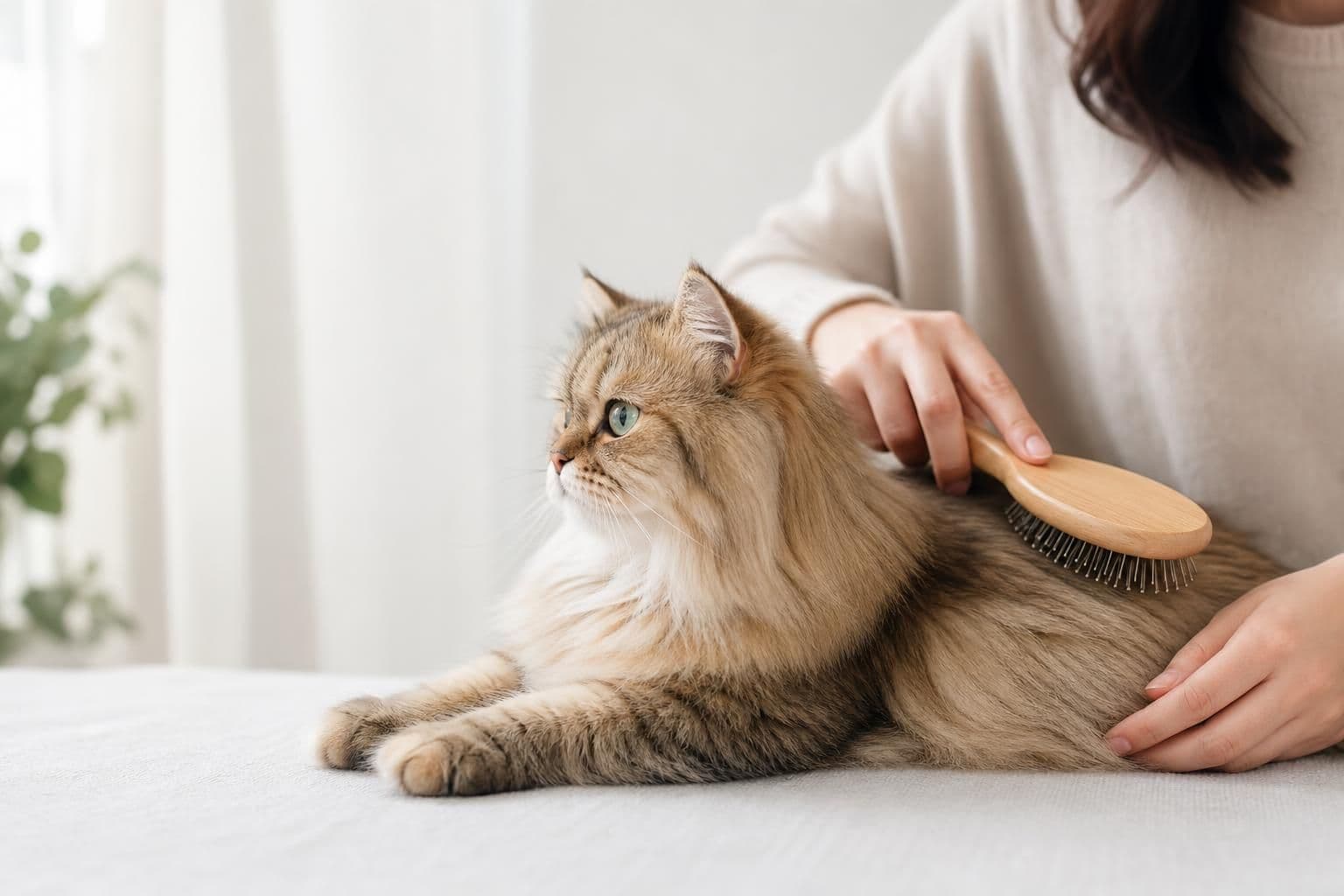
Key takeaway
Grooming a long-haired cat at home comes down to three habits: brushing two to four times a week to prevent mats, checking the belly, armpits, and behind the ears where tangles form first, and trimming or combing out mats before they tighten against the skin. Consistency matters more than any single tool — a few minutes several times a week beats one long session on the weekend. Cats with double coats, like Maine Coons or Persians, shed year-round and need more frequent attention during spring and fall coat changes.
Key takeaways
- Brush a long-haired cat 2-4 times a week, focusing on the belly, armpits, and behind the ears where mats start.
- Catch tangles early with a comb before they tighten into mats that pull on the skin and may need a vet's help to remove.
- Bathe only when visibly dirty or oily, usually every 4-6 weeks at most, and always dry the coat fully to avoid matting underneath.
Why Long-Haired Cats Need More Grooming Than Short-Haired Ones
Long hair tangles on itself in a way short fur doesn't, especially in high-friction spots like the armpits, inner thighs, and behind the ears. Without regular brushing, loose undercoat gets trapped in the top layer of fur and forms mats, which can pull on the skin and become uncomfortable within days. Breeds like Persians, Maine Coons, Ragdolls, and Norwegian Forest Cats are especially prone to this because of their dense double coats.
Cats also groom themselves constantly, and a long-haired cat swallows more loose hair during self-grooming than a short-haired one does. That extra hair intake raises the chance of hairballs, which is one reason brushing at home isn't just cosmetic — it reduces how much hair your cat ends up ingesting.
How Often to Brush a Long-Haired Cat
Most long-haired cats need brushing two to four times a week, and daily brushing during heavy shedding seasons (typically spring and fall) keeps mats from forming faster than you can catch them. A quick daily pass takes under five minutes once your cat is used to it, and it's far easier than untangling a mat that's had a week to set in.
A simple at-home routine:
- Start with a wide-tooth comb to find tangles before they become mats.
- Follow with a slicker brush to lift loose undercoat and finish the coat.
- Check the belly, behind the ears, under the tail, and the armpits last — these areas mat first and get skipped most often.
- Stop if your cat gets agitated; short, frequent sessions work better than forcing a long one.
Our cats Ai and Dudu — one with a noticeably denser undercoat — get brushed on a rotating schedule, and the difference between a day skipped and a day done shows up fastest right behind the ears, which is usually the first place a mat starts. A self-cleaning slicker brush makes the undercoat step faster because the fur releases from the pins with one button instead of needing to be peeled off by hand.
Dealing With Mats Before They Become a Problem
A mat is matted fur pulled tight enough to tug on the skin, and once it's packed down close to the skin, it's no longer safe to cut out with household scissors — the risk of nicking skin that's folded inside the mat is real. The safer approach for small, early mats is to hold the base of the mat firmly against the skin (so you're not pulling on the skin itself) and gently work it apart with a comb or your fingers, starting at the outer edge.
If a mat is already tight against the skin, large, or your cat won't tolerate handling it, a groomer or veterinarian can remove it safely, sometimes with clippers designed for close work near skin. The American Veterinary Medical Association notes that severe matting can hide skin irritation or wounds underneath, which is part of why unchecked mats are a health issue, not just a cosmetic one.
Bathing: Less Often Than You Think
Most long-haired cats don't need regular baths — their coat and self-grooming routine manage ordinary dirt and oil on their own. Bathe only when the coat looks visibly greasy, has something stuck in it, or on a vet's recommendation, which for most healthy cats works out to roughly every 4-6 weeks at the most, and often far less.
When you do bathe:
- Brush out tangles first — wet matted fur tightens further and is much harder to work with.
- Use a cat-specific shampoo; human shampoo can disrupt the skin's natural pH.
- Dry the coat completely, especially at the base near the skin, since damp fur left to air-dry can mat as it dries.
A pet towel built for absorbency cuts drying time noticeably compared to a regular bath towel, which matters more for long coats since trapped moisture near the skin is a common hidden cause of matting after a bath.
Tools Worth Keeping on Hand
A basic long-haired cat grooming kit doesn't need to be elaborate, but a few tools cover most situations:
- Wide-tooth comb – for finding tangles early and working through them gently.
- Slicker brush – for lifting loose undercoat during regular brushing.
- Silicone hair remover or grooming glove – useful for a quick once-over between full brushing sessions, especially for cats who tolerate a hand-shaped tool better than a brush.
- Grooming hammock or wrap – helps keep a wriggly cat still and calm during nail trims or mat checks, which is often more effective than physical restraint.
If your cat strongly resists brushing, a cat grooming glove can be an easier starting point since it feels more like petting than grooming, which helps build tolerance before moving to a brush or comb.
Seasonal and Skin Considerations
Long-haired cats shed their undercoat heavily during seasonal coat changes, typically in spring as the dense winter coat sheds out and again in early fall. Brushing daily during these windows reduces both loose hair around the house and the amount of fur your cat swallows while self-grooming.
Indoor cats kept in consistent climate-controlled homes often shed on a less predictable schedule than outdoor cats, since artificial light and heating can blur the seasonal cues that trigger coat changes — a point covered by veterinary resources like Cornell Feline Health Center. If you're also tracking whether your cat feels cold enough to need a layer indoors, it's worth reading about how to tell if a cat is cold, since a thinning coat after a seasonal shed can change how much warmth they need.
Frequently Asked Questions
Q: How often should I brush my long-haired cat?
Brush two to four times a week for most long-haired cats, and daily during spring and fall shedding seasons. Focus each session on the belly, armpits, and behind the ears, where mats form first.
Q: Can I cut out a mat with scissors myself?
Only for very small, loose mats that sit away from the skin — tight mats close to the skin carry a real risk of cutting the skin underneath since it can fold up inside the tangle. For anything tight or large, a groomer or vet can remove it safely.
Q: How often does a long-haired cat need a bath?
Most healthy long-haired cats need bathing only occasionally, roughly every 4-6 weeks at the most, since their coat and self-grooming handle normal dirt and oil. Bathe sooner only if the coat looks visibly greasy or something is stuck in it.
Q: Why does my long-haired cat get mats even though I brush regularly?
Mats often form in spots that get missed during a quick brushing pass, especially the armpits, behind the ears, and under the tail. Slowing down to check those specific areas each session usually solves it.
Q: Do long-haired cats get more hairballs?
Yes — because they ingest more loose fur while self-grooming than short-haired cats do. Regular brushing removes loose undercoat before it's swallowed, which can reduce how often hairballs occur.