Best Cat Grooming Glove: A Buyer's Guide
Key takeaway
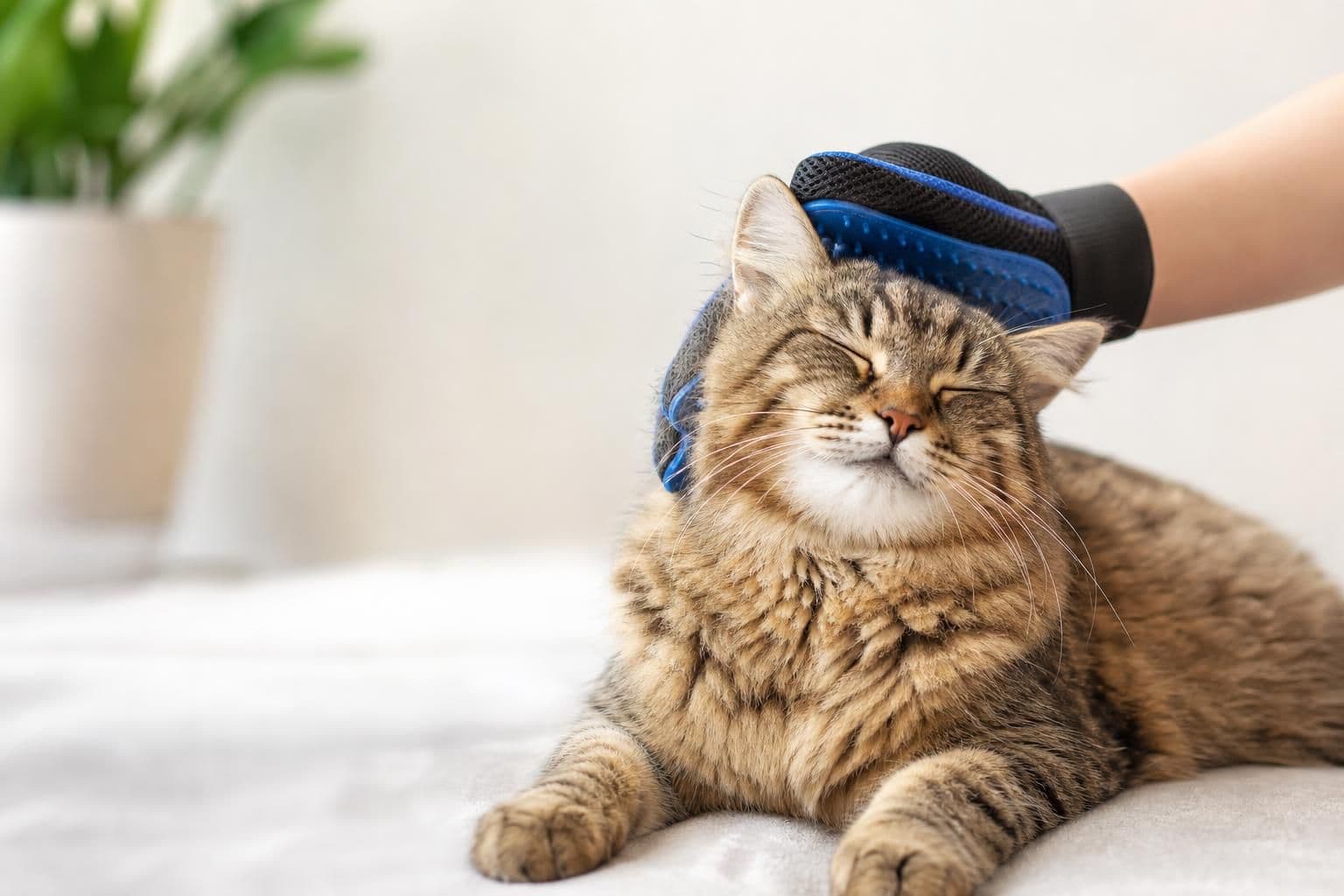
The best cat grooming glove is a silicone or rubber-tipped mitt that fits snugly on your hand, lifts loose fur during petting motions rather than scratching it out, and works best on cats with short to medium coats who tolerate brushing poorly. It's gentler than a slicker brush but removes less undercoat, so it suits cats who are anxious, elderly, or sensitive around traditional grooming tools. For heavy shedders or matted coats, a glove should be a supplement to — not a replacement for — a proper brush.
Key takeaways
- Choose a glove with soft, flexible silicone tips (not hard plastic nubs) if your cat has thin or sensitive skin.
- Gloves excel at light daily shedding control and bonding time; they don't substitute for a slicker brush on dense or matted coats.
- Always brush in the direction of hair growth and stop if your cat's tail flicks or ears flatten.
How a grooming glove actually works
A grooming glove has small rubber or silicone projections across the palm and fingers. As you pet your cat, the tips catch loose hairs sitting in the topcoat and pull them free, mimicking the texture of a cat's tongue. This is why many cats accept gloves more readily than brushes — the motion feels like petting, not a tool. The tradeoff is depth: gloves mostly lift surface shedding and don't reach the dense undercoat the way a slicker brush's fine wire bristles do.
Cats shed in cycles tied to daylight length, and indoor cats under artificial light can shed in a less predictable pattern year-round, according to the American Veterinary Medical Association, which notes that coat and skin health reflect overall wellness. A glove used two to three times a week during heavier shedding periods, like spring, helps manage loose fur before it ends up on furniture or ingested during self-grooming.
Who benefits most from a glove vs. a brush
Not every cat needs the same tool. Matching the glove to your cat's coat type and temperament matters more than brand or price.
- Short-haired cats: gloves work well as a primary tool since there's less undercoat to manage.
- Long-haired or double-coated cats: a glove helps with surface fur, but a slicker brush or metal comb is still needed to prevent mats near the armpits, belly, and behind the ears.
- Anxious or elderly cats: the petting-like motion of a glove is often better tolerated than bristles, especially for cats with arthritis who flinch at pressure.
- Kittens: gloves are a gentle way to introduce grooming routines before a kitten is ready for brushes.
Our resident cats, Ai and Dudu, have different coats and different tolerances — one sits still for a glove session, the other only tolerates a few strokes before walking off, which is a normal range of reactions and worth planning around rather than fighting.
Comparing grooming glove options
| Feature | Grooming Glove | Slicker Brush | Silicone Hair Remover Tool |
|---|---|---|---|
| Best for | Light shedding, sensitive/anxious cats | Dense undercoat, mat prevention | Furniture and fabric, not the cat itself |
| Feel for cat | Feels like petting | Can feel scratchy if pressed too hard | Not used on the cat |
| Undercoat removal | Light | Thorough | None |
| Learning curve | Low | Moderate (watch pressure/angle) | Low |
| Typical frequency | 2–3x/week | 1–2x/week for long coats | As needed for cleanup |
What to check before buying
Material and fit determine whether a glove actually gets used or ends up in a drawer after one try.
- Tip material: soft silicone flexes with skin contact; hard plastic nubs can feel sharp on cats with thin fur over the spine or hips.
- Glove fit: a loose glove slips during strokes and frustrates both of you — look for adjustable wrist straps.
- Washability: fur should rinse off easily under water; textured surfaces that trap hair deep inside are harder to clean.
- One-handed vs. two-handed sets: pairs let you hold the cat gently with one hand while grooming with the other, useful for squirmier cats.
- Size: a glove designed for a human adult hand but sold as "one size" may still run large or small — if there's a sizing chart, use it rather than guessing, the same way clothing fit improves when you check an inch-based chart instead of a generic label like S/M/L.
Grooming routine and safety basics
Brush in the direction hair grows, starting at the head and neck and moving toward the tail. Avoid repeated passes over the same sensitive spot — belly, armpits, and the base of the tail are common trouble areas. Keep sessions short at first, 2–5 minutes, and stop before your cat shows stress signals like a thrashing tail, flattened ears, or skin twitching. The Cornell Feline Health Center notes that regular grooming also gives owners a chance to spot skin lumps, parasites, or wounds early, since you're handling the whole body systematically rather than just petting the easy spots.
If your cat has a sudden change in shedding pattern, bald patches, or skin that looks red or scabbed, that's a reason to check with a veterinarian rather than grooming through it — a glove won't fix an underlying skin issue.
Gloves, towels, and the rest of a grooming kit
A grooming glove rarely works alone. Most owners pair it with a pet towel for a quick wipe-down after shedding sessions, especially for cats who dislike water-based baths. If your cat tends to shed heavily around seasonal coat changes, it's also worth reading up on what to look for in a cat hoodie if you dress your cat for warmth — a clean, de-shed coat sits better under fabric and causes less static cling.
For cats who get fidgety during grooming, having a comfortable resting spot nearby helps end the session on a calm note; a soft perch or bed gives them somewhere to settle immediately after.
Frequently Asked Questions
Q: How often should I use a cat grooming glove?
Two to three times a week is typical for light shedding control, increasing briefly during seasonal shedding peaks like spring and fall. Daily short sessions are fine if your cat enjoys it.
Q: Can a grooming glove replace brushing for long-haired cats?
No. A glove manages surface shedding well, but long-haired and double-coated cats still need a slicker brush or metal comb to prevent mats in dense undercoat areas like behind the ears and under the legs.
Q: Are grooming gloves safe for kittens?
Yes, gloves are often a gentle first grooming tool for kittens since the motion feels like petting rather than brushing. Keep sessions brief and stop at the first sign of discomfort.
Q: Why won't my cat tolerate a grooming glove?
Some cats dislike any handling tool regardless of design, especially if past grooming felt rushed or uncomfortable. Try shorter sessions, lighter pressure, and pairing grooming with treats or calm petting time before reintroducing the glove.
Q: What's the difference between a grooming glove and a silicone hair remover for furniture?
A grooming glove is designed for direct skin contact and gentle fur lifting on the cat's body. A silicone hair remover tool is meant for fabric, furniture, and car seats, and isn't built for use directly on an animal.