Best Cat Hoodie: What to Look for Before You Buy
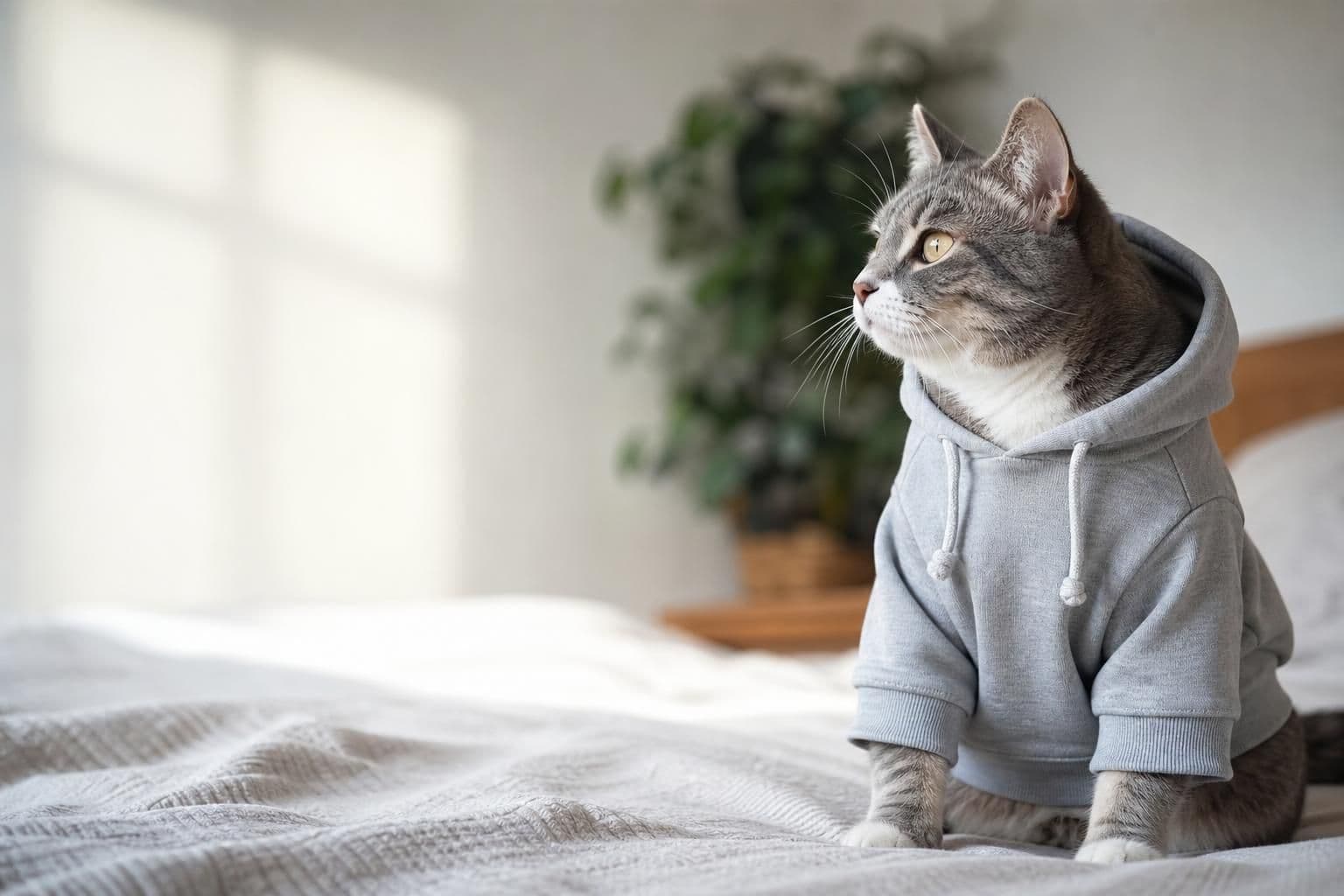
Key takeaway
The best cat hoodie is made from a stretchy, breathable knit (not stiff fleece), has leg openings sized to your cat's actual chest and neck measurements in inches, and has no dangling drawstrings, zippers near the chin, or tight elastic cuffs that could trap a claw. A good fit lets your cat walk, crouch, and groom normally within a few minutes of putting it on. If a hoodie restricts shoulder movement or makes a cat freeze in place, it's the wrong size or cut, not just an adjustment problem.
Key takeaways
- Measure chest girth, neck, and back length in inches before buying — S/M/L labels vary wildly between brands.
- Choose a two-way stretch knit over stiff fleece so shoulders and front legs move freely.
- Watch your cat for 10-15 minutes after dressing them; freezing, falling over, or excessive scratching means it doesn't fit.
Why Fit Matters More Than Style for Cats
Cats carry their weight differently than dogs and have a looser, more mobile shoulder structure, which is part of why they can squeeze through small gaps. A hoodie cut for a dog's torso often binds across a cat's shoulders even if the chest number matches. The practical fix is a garment designed around cat anatomy, with wider armholes and a shorter back panel that stops before the hips so it doesn't interfere with the litter box.
Measuring matters because the label system most stores use doesn't correspond to anything standardized. "Medium" on one site might fit a 9-pound cat and "medium" on another might fit a 14-pound cat. Ziva Paws lists clothing by actual chest, neck, and back-length inches for this reason — it's the same logic covered in more detail in the dog bandana sizing guide, where the same inch-first approach applies across species.
Fabric and Construction to Look For
Not all "hoodie" listings use the same material, and the difference shows up fast once a cat tries to walk in it.
- Two-way stretch knit: moves with the shoulders and spine; best for cats who dislike restriction.
- Brushed fleece: warmer but stiffer; better for short stretches in cold rooms than all-day wear.
- Soft-shell or quilted layers: add warmth for senior or short-haired cats but can be heavier than needed indoors.
- Hood size: should sit loosely behind the ears, not pull forward over the eyes when the cat lowers its head.
- Closures: hook-and-loop or snap closures along the belly are easier to adjust than zippers, which can snag whiskers or skin.
Seams matter too. Flat or covered seams along the belly and inner legs reduce chafing, especially on cats with thinner fur in those areas.
Sizing: Inches, Not Guesswork
Before ordering, measure three numbers with a soft tape:
- Neck: around the base where a collar would sit, with two fingers of slack.
- Chest girth: the widest part behind the front legs.
- Back length: from the base of the neck to the base of the tail.
Compare those three numbers against the brand's actual inch chart rather than trusting a size name. A cat that measures 14 inches at the chest can fall into completely different size tiers depending on how loosely or tightly a brand designed that tier.
| Hoodie style | Best for | Typical fit notes |
|---|---|---|
| Lightweight knit pullover | Everyday indoor wear, kittens learning clothes | Stretches over the head; easiest to size by chest inches |
| Brushed fleece hoodie | Cold apartments, drafty rooms | Warmer but less stretch; size up if your cat is muscular |
| Front-zip or snap hoodie | Cats who dislike head openings | Faster to put on; check the zipper guard covers skin fully |
| Hoodie with sleeves | Senior cats needing joint coverage | Watch shoulder mobility closely during the first wear |
| Hooded dress-style | Cats that tolerate clothing well, photos/events | Longer back length; make sure it clears the litter box |
Safety Checks Before Every Wear
A hoodie that's safe for one cat isn't automatically safe for another, so a quick check each time helps, especially with new garments.
- No loose threads, buttons, or trims a cat could chew off and swallow.
- No elastic cuffs tight enough to leave a mark after removal.
- Hood fabric doesn't bunch near the eyes or ears when the cat turns its head.
- The cat can fully extend its front legs without the sleeve or armhole pulling.
The American Veterinary Medical Association notes that any pet clothing should allow normal movement and be removed if an animal shows signs of distress such as freezing, excessive scratching at the garment, or refusal to move. That guidance applies directly to cats, who are less likely than dogs to vocalize discomfort and more likely to simply go still.
When a Cat Actually Needs a Hoodie
Clothing isn't a daily requirement for most healthy cats, but there are specific situations where a well-fitted hoodie helps:
- Short-haired or hairless breeds in cooler rooms, where body heat loss is faster than in double-coated cats.
- Senior cats with reduced muscle mass who feel cold more easily even indoors.
- Post-surgical recovery, where a soft hoodie can cover an incision area instead of a hard cone — only with veterinary approval for the specific wound.
- Anxious cats in new environments, where some owners find a snug (not hooded-over-the-eyes) layer has a calming, swaddle-like effect, similar to how some cats seek out enclosed spaces to self-soothe.
If your cat already gets anxious around changes in routine, it's worth reading about why cats sometimes meow at night before introducing a new garment, since stress signals can overlap.
How We Test Fit Before Listing a Hoodie
Ziva Paws has two resident cats, Ai and Dudu, who try on new clothing before it's listed. The practical value of that step is catching things a size chart can't show — whether a hood tips forward when a cat lowers its head to eat, or whether a "relaxed fit" tag actually binds across the shoulders during a stretch. That first-hand check is also why every clothing listing gives chest, neck, and back-length inches instead of a single size word.
If you're shopping around more broadly for pet apparel and supplies beyond one store, the guide to PetSmart alternatives covers other retailers worth comparing on selection and sizing approach.
Frequently Asked Questions
Q: How do I know if a cat hoodie is too small?
If the hoodie pulls tight across the shoulders when your cat reaches forward, or the leg openings dig in and leave a visible line after removal, it's too small. A properly sized hoodie allows full extension of the front legs.
Q: Can I use a dog hoodie for a cat?
Generally no — dog hoodies are cut with a deeper chest and narrower shoulder opening that doesn't match a cat's more flexible shoulder structure, so even a "matching" chest measurement can still bind.
Q: How long can a cat safely wear a hoodie?
There's no fixed universal time limit, but most cats should be monitored closely in the first 15 minutes and not left in clothing unsupervised for extended stretches, since fabric can shift and bunch without a person there to adjust it.
Q: Do hairless cat breeds need hoodies more than furred cats?
Hairless and short-coated cats lose body heat faster in cool rooms, so a hoodie is more of a practical need for them, while furred cats usually only need one in drafty spaces or during recovery from illness or surgery.
Q: What's the easiest hoodie style for a cat who hates getting dressed?
A front-snap or front-zip hoodie is usually easier than a pullover, since it avoids pulling fabric over the head — a step many cats resist more than the rest of the dressing process combined.