Best Dog Bed for Small Breeds: What to Look For
Key takeaway
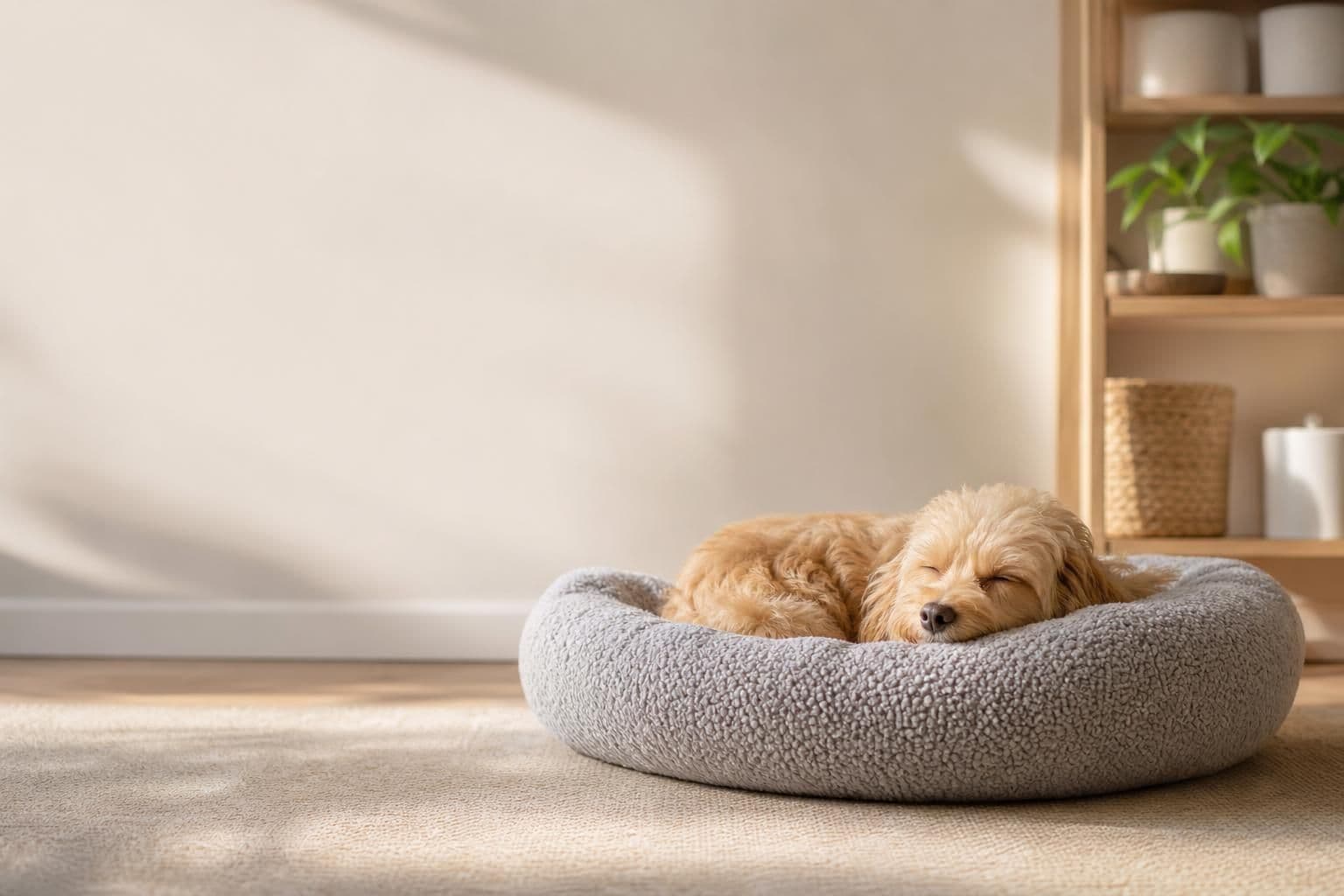
The best dog bed for small breeds is one sized to the dog's actual curled-up measurements (not just breed averages), made of washable, low-off-gassing materials, and shaped to support natural sleeping positions like curling or burrowing. Bolstered or nest-style beds tend to suit small dogs best because they mimic the enclosed feeling of a den, which can reduce anxiety during sleep. Beyond shape, look for a removable, machine-washable cover and a base that won't compress flat within a few months of nightly use.
Key takeaways
- Measure your dog curled up (nose to tail, side to side) and add 4-6 inches — don't rely on breed name alone to pick a size.
- Bolstered, nest, or hooded beds generally suit small breeds better than flat mats, since they support curling and add a sense of security.
- Check the cover for a real zipper and machine-wash label; a bed that can't be washed regularly becomes a dust and allergen trap.
How to Size a Bed for a Small Breed
Small breed doesn't mean one standard size — a 6-pound Chihuahua and a 20-pound Corgi are both technically "small," but they need very different beds. The most reliable method is to measure your dog while they're curled up in their typical sleeping position, from nose to tail tip and across the widest part of their curled body, then add 4 to 6 inches to each dimension so they have room to stretch without hanging off the edge.
This is the same measure-first approach that matters for pet clothing sizing — generic S/M/L labels vary wildly between brands, so an inch-based measurement is the only number you can trust across different manufacturers.
Materials and Construction That Hold Up
Small dogs may weigh less, but daily kneading, digging, and pacing before lying down wears down foam and stuffing just as fast as it does for larger breeds. A few construction details separate a bed that lasts from one that flattens in a season:
- Fill type: high-density foam or clustered fiberfill holds loft longer than loose polyester stuffing, which packs down within weeks.
- Cover fabric: tightly woven fabrics resist claw snags better than plush minky-style fabric, though minky is softer to the touch.
- Base material: a non-slip bottom keeps the bed from sliding on hardwood or tile, which matters more for small dogs that push off the edge to jump down.
- Washability: a zip-off cover that goes in a standard washing machine is far easier to maintain than a bed requiring spot-cleaning only.
Regular washing isn't just about odor — the American Veterinary Medical Association notes that bedding can harbor allergens and parasites like fleas if not cleaned regularly, which matters most for pets that spend many hours a day in one bed.
Shapes That Suit Small Breeds
Small breeds often prefer beds that let them burrow or lean against a raised edge, rather than open flat mats. When Ai and Dudu — the two resident cats who test products before they're listed — settled into a bolstered nest style bed during testing, they consistently chose the corner with the highest bolster to rest their heads against, which lines up with what many small-breed owners report: dogs and cats alike gravitate toward enclosed, supported shapes over flat surfaces.
Comparing Bed Styles for Small Breeds
| Bed style | Best for | Pros | Watch out for |
|---|---|---|---|
| Bolstered/nest bed | Dogs that curl up tightly | Raised edges support the head and back | Can run warm in summer months |
| Flat orthopedic mat | Older dogs or those with joint stiffness | Even support, easy to wipe down | Less cozy feel for anxious sleepers |
| Hooded/cave bed | Dogs that like to burrow or hide | Blocks light and drafts, adds privacy | Not ideal for dogs that overheat easily |
| Elevated cot bed | Warm climates, dogs that sprawl | Airflow underneath keeps them cool | Less cushioning on hard floors |
| Donut/round bed | Dogs that sleep in a tight circle | Soft rim doubles as a headrest | Rim can flatten faster than firmer foam |
Anxiety, Sleep Position, and Bed Shape
Dogs that circle repeatedly before lying down, or that dig at bedding, are often trying to recreate the enclosed feel of a den — a behavior rooted in wild canid ancestors who slept in burrows for warmth and safety, as described by the American Kennel Club. A bed with raised sides or a hood can satisfy that instinct better than a flat cushion, which is one reason nest-style and hooded beds are frequently recommended for anxious or easily startled small dogs. For a deeper look at features that help nervous sleepers specifically, see our guide to calming bed features for anxious dogs.
Placement and Everyday Care
Where the bed sits matters almost as much as the bed itself. Small dogs are sensitive to drafts and floor-level cold, so placing the bed away from exterior doors and air vents helps it stay a genuinely comfortable spot rather than one they avoid in winter. Rotating between two beds — one in use, one washing — keeps a fresh, dry sleeping surface always available, which is worth considering since most covers need a full wash-and-dry cycle before they're ready to use again.
Frequently Asked Questions
Q: What size bed does a small dog actually need?
Measure your dog curled up from nose to tail and across the widest point, then add 4 to 6 inches to each measurement. This gives enough room to stretch and reposition without the bed being so large it loses its cozy, secure feel.
Q: Are bolstered beds better than flat mats for small breeds?
For most small dogs, yes — bolstered or nest-style beds support curling and give a sense of enclosure that many small breeds prefer. Flat mats can still work well for older dogs with joint stiffness who need even, unobstructed support to get up easily.
Q: How often should a dog bed cover be washed?
A general guideline is every one to two weeks, or more often if the dog sheds heavily or spends most of the day on the bed. Look for a bed with a removable, machine-washable cover so this doesn't become a chore.
Q: Can a bed help with a small dog's anxiety?
A well-shaped bed won't resolve anxiety on its own, but hooded or high-bolster designs that mimic a den can make sleep more secure-feeling for nervous dogs. Consistent placement in a quiet, draft-free spot reinforces that same sense of safety.
Q: How long does a small-breed dog bed typically last before it needs replacing?
It depends heavily on fill type and daily wear, but high-density foam holds its shape noticeably longer than loose polyester stuffing, which tends to flatten within a few months of nightly use. Checking loft by pressing the center of the bed every few weeks is a simple way to catch flattening before it affects sleep quality.