Best Dog Scarf for Winter: What to Look For
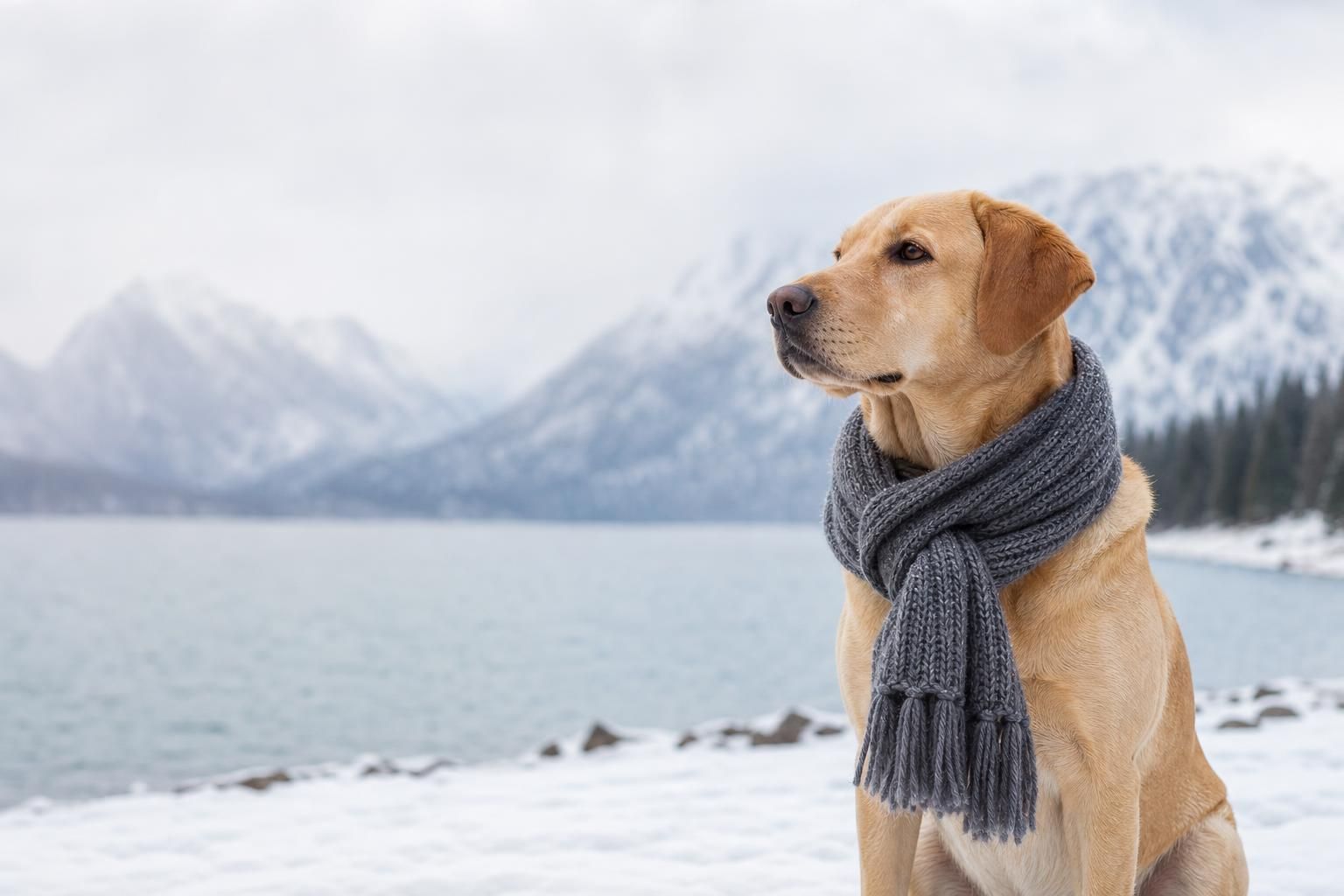
Key takeaway
The best dog scarf for winter is made from a snug-knit or fleece fabric that stays put without tightening around the throat, sized to the dog's actual neck measurement rather than a generic S/M/L label, and finished with a secure but breakaway-friendly closure. For short-haired breeds or dogs that already struggle with cold ears and paws, a scarf paired with a chest-covering layer like a sweater or coat does more than a scarf alone. The right choice depends on your dog's coat thickness, neck shape, and how much time they spend outside in wind or wet snow.
Key takeaways
- Measure your dog's neck circumference in inches and add about half an inch of ease — don't rely on S/M/L tags alone.
- Choose snag-resistant knits or fleece over loosely woven scarves that can unravel or catch on branches and fences.
- Pair a scarf with a torso layer for dogs under 15 pounds or short-haired breeds, since a neck wrap alone won't cover enough surface area to matter in freezing wind.
Why Neck Warmth Matters in Cold Weather
Dogs lose body heat fastest from areas with less fur and more exposed skin — ears, paws, belly, and the neck where a collar sits against short fur. The American Veterinary Medical Association notes that small breeds, short-coated dogs, puppies, and senior dogs are more vulnerable to cold-weather injury and should have outdoor time limited in freezing conditions regardless of what they're wearing. A scarf won't replace that judgment call, but it does add a layer over an area dogs can't easily self-warm by curling up the way they protect their belly and paws.
What Makes a Winter Scarf Actually Work
Not every scarf sold for dogs is built for real cold. A few traits separate a functional winter accessory from a purely decorative one:
- Fabric weight — midweight fleece or tight-knit wool-blend holds warmth better than thin cotton or loosely woven plaid.
- Fit at the neck — it should sit snug enough not to slide over the ears but loose enough to fit two fingers underneath comfortably.
- Closure type — snap or hook-and-loop closures let you adjust for growth or added layers underneath, unlike a fixed loop scarf that can't be resized.
- Length and bulk — a shorter, fitted wrap is safer for active dogs than a long trailing scarf that can get stepped on or caught.
When Ai and Dudu — the two resident cats who test products before they're listed — tried on scarf-style wraps during cold-weather product checks, the ones that stayed in place without being readjusted every few minutes were the snug-knit styles with a hook-and-loop closure rather than pull-over loops.
Sizing: Why Inches Beat S/M/L
Neck shape varies enormously between a greyhound, a French bulldog, and a Pomeranian, even at the same generic "small" label. A scarf sized by inches — measuring around the base of the neck where a collar normally sits — fits far more consistently than a size chart based on breed category alone. This is the same reasoning behind inch-based sizing on Ziva Paws' clothing line, where every garment lists chest, neck, and back-length measurements instead of just a letter size, since two "medium" dogs can differ by several inches depending on body shape. If you're also shopping for a coat or sweater to go with the scarf, the same measuring approach — snug tape measure, not a guess — applies, and our guide to sizing clothes for French Bulldogs walks through the exact spots to measure for stocky, short-necked breeds.
Scarf Styles Compared
| Style | Best For | Warmth Level | Fit Adjustability |
|---|---|---|---|
| Fleece infinity loop | Dogs that tolerate pull-over layers | Moderate | Low (fixed size) |
| Snap-closure wrap scarf | Dogs sensitive around the head | High | High |
| Knit bandana-scarf hybrid | Mild cold, short outings | Low–Moderate | Medium |
| Scarf built into a coat collar | Dogs needing full-body warmth | High | Depends on coat sizing |
A snap-closure wrap tends to be the safest default because it avoids pulling anything over the dog's ears and can be loosened if you're layering it over a sweater underneath.
Pairing a Scarf With the Rest of a Winter Wardrobe
A scarf covers a small surface area, so dogs under about 15 pounds, short-haired breeds, or seniors with less muscle mass to generate body heat generally need more than a neck wrap in freezing temperatures. A scarf works best as a finishing layer over a sweater, hoodie, or trench coat that already covers the chest and back. If your dog also sleeps somewhere drafty, cold mornings can be just as hard on comfort as cold walks — our guide on choosing a cozy nest bed for winter covers how indoor bedding warmth factors into a dog's overall cold tolerance, which matters more for dogs already prone to shivering outside.
Safety Checks Before You Buy
A scarf that isn't fitted correctly can be more of a hazard than a comfort item. Before buying:
- Confirm the closure can't be chewed loose and swallowed — avoid small plastic clips on dogs that mouth their clothing.
- Check that the scarf doesn't restrict head turning or panting; a dog should be able to pant freely with it on.
- Avoid long fringe or dangling ends on dogs that play with other animals, since loose fabric is a snagging risk.
- Remove the scarf indoors or during unsupervised time, the same way you'd remove a collar tag that jingles too much — it's an outdoor accessory, not an all-day garment.
The RSPCA advises that any pet clothing should allow normal movement, toileting, and temperature regulation, and should be removed if a dog shows signs of distress, overheating, or skin irritation underneath.
Frequently Asked Questions
Q: How do I measure my dog's neck for a winter scarf?
Wrap a soft tape measure around the base of the neck where a collar normally rests, then add about half an inch for comfortable ease. Avoid guessing from breed size alone, since neck shape varies even within the same weight class.
Q: Can a dog wear a scarf and a coat at the same time?
Yes, as long as the scarf's closure can be loosened enough to fit comfortably over the coat's collar without pressing into the throat. Check that the dog can still turn its head and pant normally once both layers are on.
Q: Are knit scarves safe for dogs that chew their clothing?
Loosely knit or fringed scarves are riskier for chewers because loose threads can be pulled and swallowed. A tighter knit or fleece scarf with a sewn or snap closure is generally safer for dogs that nibble at their own clothes.
Q: How cold does it need to be before a dog needs a scarf?
There's no single temperature that applies to every dog — it depends on coat thickness, size, age, and health. Veterinary guidance generally points to extra caution and shorter outdoor time once temperatures approach freezing, especially for small or short-haired breeds.
Q: Will a scarf alone keep a small dog warm in snow?
No — a scarf covers only the neck, so small or short-haired dogs typically need a chest-and-back layer like a sweater or coat in addition to a scarf for real snow or wind exposure.