Best Cat Window Perch: A Buyer's Guide
Key takeaway
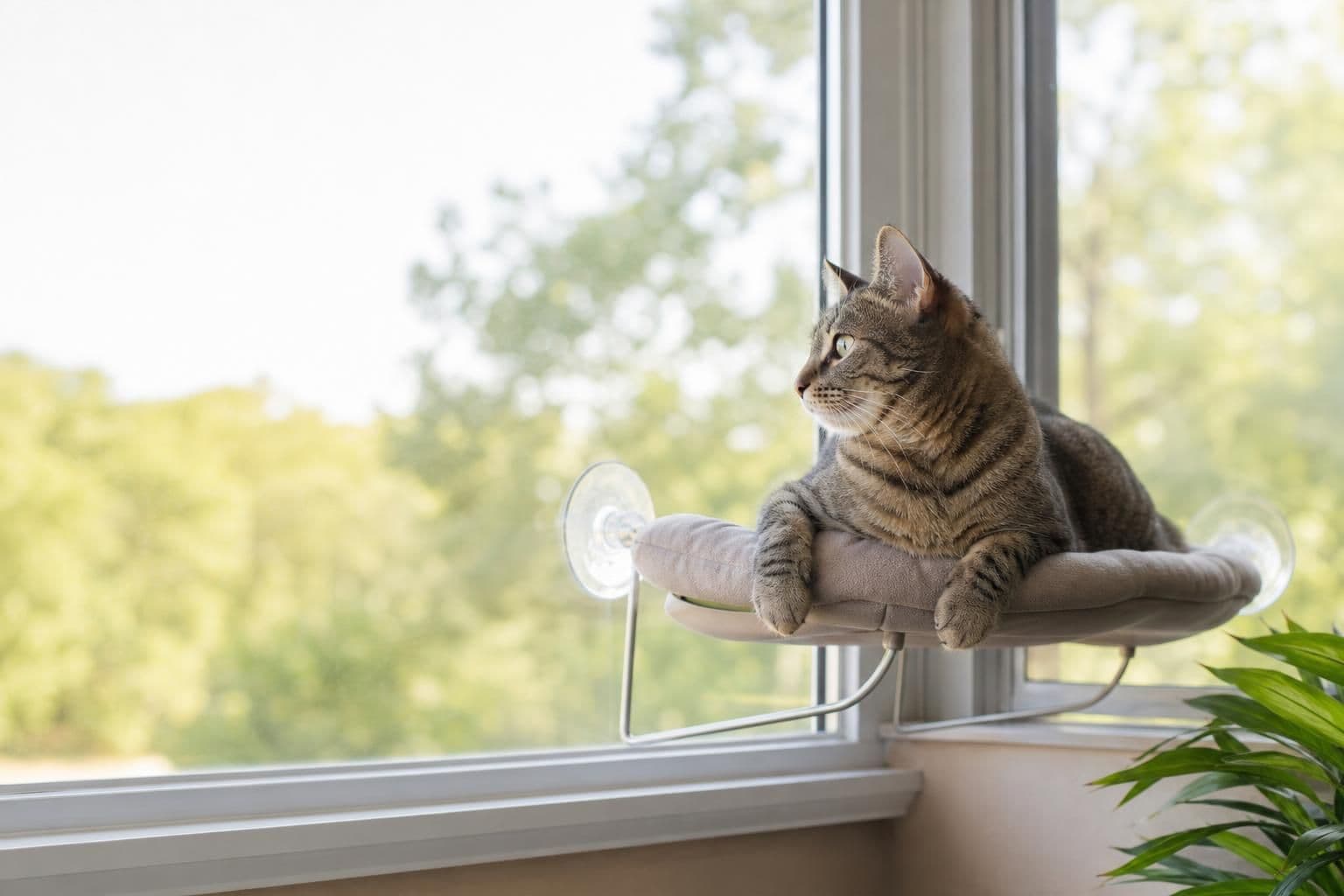
The best cat window perch for most homes is a suction- or frame-mounted platform rated for at least 30-50 lbs, with a non-slip surface and a lip or rail to stop sliding, sized to fit your cat's full stretched-out length rather than just their standing footprint. Suction-cup models work well on smooth single-pane glass but need regular tension checks, while bracket or sill-clamp styles hold more weight and suit older windows or double-hung frames. The right choice depends less on brand and more on your window type, your cat's size, and how often you're willing to re-check the mounting hardware.
Key takeaways
- Match the perch's weight rating to your cat's adult weight plus a safety margin, not just their current size.
- Suction mounts suit smooth glass; clamp or bracket mounts suit sills, blinds hardware, or textured frames.
- Measure your cat's stretched body length, not standing height, before choosing a perch size.
How to Match a Perch to Your Window Type
Window perches generally attach in one of three ways: suction cups directly on the glass, a bracket that clamps onto the sill or frame, or a hammock-style perch that hangs from blind brackets or screws into the wall below the window. Suction-cup models are the easiest to install and remove, which makes them popular for renters, but they depend on completely smooth, clean glass to hold their seal. Bracket and clamp styles distribute weight onto the window frame or sill instead of the glass itself, so they tend to carry higher weight limits and work on older or slightly uneven windows where suction wouldn't seal.
If your windows have blinds or curtains mounted close to the glass, measure the clearance before buying — many perches need at least 3-4 inches of depth between the glass and any hardware to sit flat.
Weight Limits and Safety Checks
Most suction-based perches on the market are rated somewhere between 15 and 50 lbs, but that rating assumes correctly installed, undamaged suction cups on clean glass. Suction strength degrades with UV exposure and temperature swings, so a perch that held fine in spring may need re-checking by summer. A simple safety habit: press down firmly on the perch before your cat uses it each week, and replace suction cups annually or sooner if you notice them feeling soft or loose.
Bracket-mounted perches avoid this degradation issue entirely since they're secured with screws or clamps into solid material, which is one reason multi-cat households often prefer them.
| Mount type | Typical weight capacity | Best for | Maintenance needed |
|---|---|---|---|
| Suction cup | 15-30 lbs | Smooth single-pane glass, renters | Monthly tension check |
| Reinforced suction | 30-50 lbs | Larger cats, double-glazed windows | Monthly tension check |
| Sill/frame clamp | 40-60+ lbs | Older windows, multi-cat homes | Occasional screw tightening |
| Blind-bracket hammock | 20-40 lbs | Windows with existing blind hardware | Check bracket wear |
Sizing the Perch to Your Cat
A perch that looks roomy in photos can still feel cramped once your cat is fully stretched out sunbathing. Measure your cat from nose to base of tail while they're relaxed, and add a few inches of margin — most adult domestic cats fall between 15 and 20 inches in body length, though larger breeds run longer. Ziva Paws takes the same approach with its clothing line, where every size is listed in inches of chest, neck, and back length instead of generic S/M/L labels, because "medium" means different things across brands. The same logic applies here: a perch description should tell you the actual platform dimensions, not just "fits most cats."
For multi-cat households, consider either a wider single perch or two separate perches at different windows — cats often prefer not to share a narrow ledge, even if they get along elsewhere in the house.
What Ai and Dudu Noticed During Testing
When Ziva Paws' resident cats Ai and Dudu tested a window perch style for the shop, the most consistent behavior was testing the surface with a paw before committing to a jump — both cats avoided perches that wobbled even slightly on first contact. That lines up with general feline behavior around new elevated surfaces: cats tend to investigate stability before weight-bearing, which is worth remembering if your cat seems hesitant at first. Giving a new perch a few days near a window your cat already favors tends to help adoption more than placing it somewhere unfamiliar.
Where to Put It for Best Use
Cats are drawn to windows partly for temperature regulation and partly for visual stimulation — watching birds, traffic, or neighborhood activity engages natural predatory attention even indoors. The American Veterinary Medical Association notes that environmental enrichment, including visual and sensory stimulation, supports behavioral health in indoor cats. A south- or west-facing window with a few hours of afternoon sun is often the most requested spot in a household with multiple perch options.
Avoid placing a perch directly above a heat register or in a spot with no shade option, since cats regulate body temperature partly through seeking shade, as described by the Cornell Feline Health Center. If your home doesn't get much natural light in winter, a perch paired with a cozy bed nearby gives your cat a warm fallback spot — something worth considering alongside your choice of condo setup for multiple cats if space is shared.
Perch vs. Other Cat Furniture
A window perch isn't a replacement for floor-level resting spots or climbing structures — it serves a specific function (elevated observation) rather than general comfort. Many households pair a perch with a separate plush bed or hammock-style resting spot elsewhere in the room, since cats often rotate locations throughout the day based on light, temperature, and activity in the house. If your cat already has a favorite blanket or nest-style bed, a window perch tends to get used as a daytime lookout rather than an overnight sleeping spot.
Grooming and Cleanup Considerations
Perches near windows collect fur, dander, and sometimes drool from glass-watching, so a washable or wipeable cover is worth checking for before purchase. A quick weekly pass with a silicone hair remover or slicker brush keeps shed fur from building up on the perch fabric, especially during seasonal shedding periods when cats lose undercoat more heavily.
Frequently Asked Questions
Q: How much weight can a suction cup cat window perch hold?
Most suction-cup perches are rated between 15 and 50 lbs depending on the number and size of suction cups, but the actual holding power depends on clean, smooth glass and regular tension checks, since suction weakens over time with heat and UV exposure.
Q: Are window perches safe for older or heavier cats?
A bracket or sill-clamp perch is generally a safer choice for heavier or senior cats since it's secured to the frame rather than relying on a glass seal, and it won't degrade the way suction cups can over months of use.
Q: Can I install a window perch without drilling into the frame?
Yes — suction-cup models and some sill-clamp designs require no drilling, making them suitable for rental homes, though sill-clamp models still need a firm grip point on the window frame to stay secure.
Q: How do I know what size perch my cat needs?
Measure your cat's body length from nose to tail base while relaxed and choose a platform at least a few inches longer than that measurement so they can stretch out fully, rather than relying on size labels like "small" or "large."
Q: Do cats actually use window perches regularly?
Cats are generally drawn to elevated spots with a view because it supports natural observational and resting behavior, and many owners find a well-placed perch near a sunny window becomes one of the most used pieces of furniture in the home.