Best Cat Carrier Backpack: A Buyer's Guide
Key takeaway
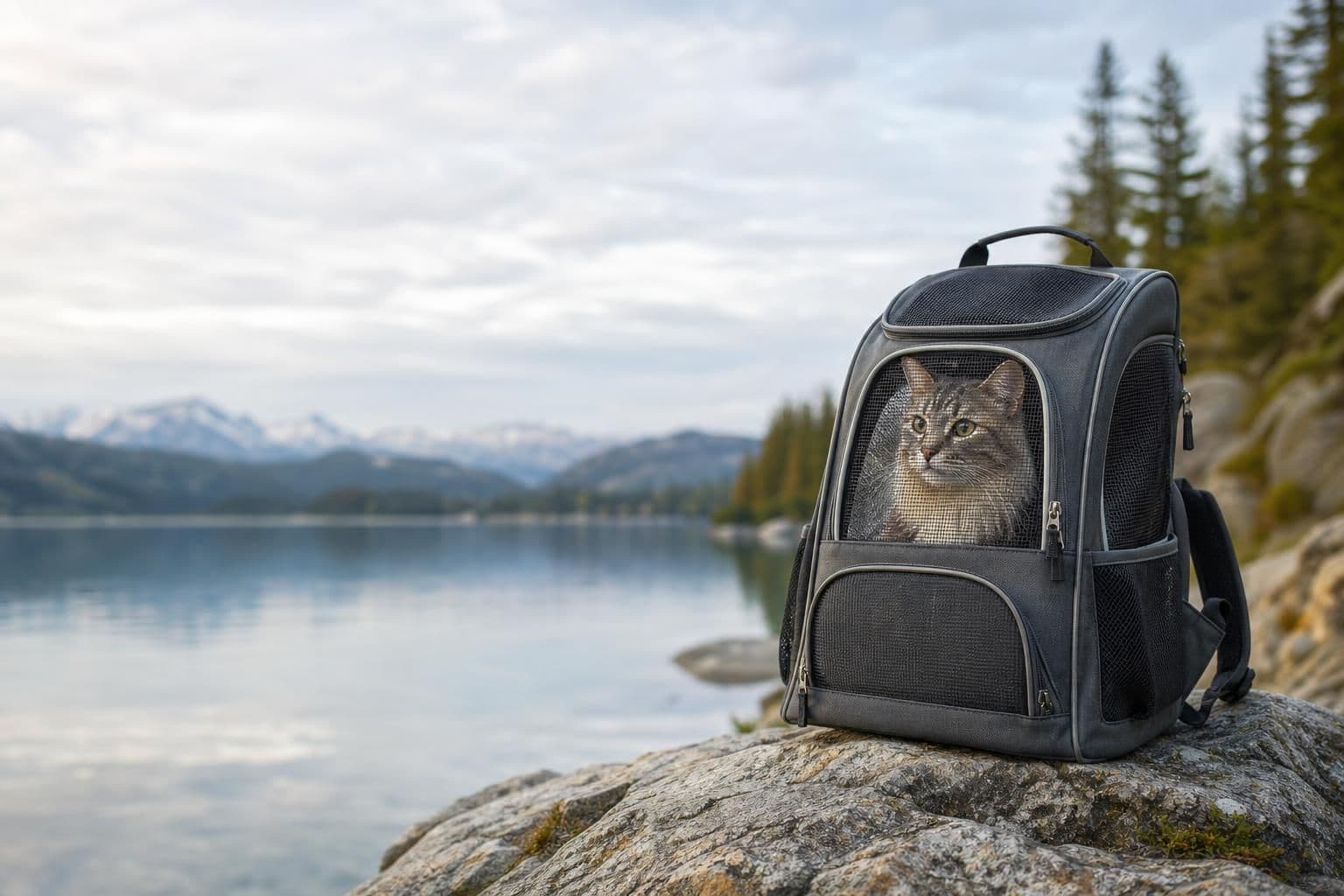
The best cat carrier backpack is one with mesh ventilation on at least two sides, a weight-rated frame that supports your cat's full adult size (not just kitten weight), a leash clip inside to prevent escape, and an opening wide enough to load a scared cat without wrestling. Hard-sided bubble-window backpacks suit cats who like to see out; fully enclosed soft-sided ones suit cats who feel safer hidden. There's no single "best" model — the right one matches your cat's temperament and how often you'll actually use it.
Key takeaways
- Choose a carrier rated for your cat's full adult weight, not just "universal" sizing — most cats are 8-12 lbs, and loaded fabric seams stress quickly past that.
- Mesh on two or more sides plus an internal safety leash clip matter more than brand or color.
- Let your cat explore the carrier at home for several days before a trip; forcing a first-time stuffing at the vet door almost guarantees a fight.
What Actually Makes a Carrier Backpack Good
A carrier backpack earns its price by solving three problems at once: containment, airflow, and comfort on your back. Cheaper models often nail one and skip the others — a cute window but stiff mesh that traps heat, or soft padding with zippers a determined cat can push open from inside. Look for:
- Structured base panel so the carrier doesn't collapse and pin your cat when you set it down.
- Two-way zippers on the main opening, so you can load from the top or front depending on your cat's preference.
- Interior tether clipped to a harness, not just the collar, in case the main closure fails.
- Padded, adjustable straps rated for the carrier's loaded weight, not just the empty shell.
A carrier that photographs well but lacks these details usually shows its weaknesses the first time a cat tries to climb out mid-walk.
Soft-Sided vs. Hard-Shell vs. Expandable Window
| Type | Ventilation | Best for | Watch out for |
|---|---|---|---|
| Soft-sided mesh backpack | High, multi-side | Short trips, vet visits, calm cats | Less structure, can sag with heavier cats |
| Hard-shell bubble window | Moderate, vented base | Cats who like to see outside, hiking | Heavier empty weight, pricier |
| Expandable/combo backpack | Varies by panel | Air travel where under-seat space flexes | Zippers add failure points if cheaply made |
| Rolling carrier-backpack hybrid | Moderate | Airports, multi-cat transport | Bulky for stairs or crowded transit |
Most households do fine with a soft-sided mesh backpack for routine vet runs, and step up to a hard-shell or bubble-window style only if the cat travels often or the owner hikes with the cat regularly.
Safety and Airline Rules Worth Knowing
If you plan to fly with your cat, airline-approved sizing is non-negotiable — most carriers must fit fully under the seat in front of you, and airlines enforce this at the gate, not just at check-in. The Transportation Security Administration requires that cats be removed from carriers during the security screening, so a carrier that opens and closes smoothly in a crowded checkpoint line genuinely matters, not just at home. For general carrier safety and acclimation guidance, the American Association of Feline Practitioners publishes carrier-training resources aimed at reducing feline travel stress, since cats are a species that strongly prefers familiar, enclosed spaces over sudden transport in anything unfamiliar.
Helping an Anxious Cat Accept the Backpack
Cats that hate carriers usually hate the surprise of them, not the carrier itself. Leaving the backpack open on the floor for a week with a treat or two inside, long before any trip, turns it into furniture instead of a threat. This overlaps with why cats gravitate toward boxes and enclosed nooks in the first place — the same instinct that makes a cat prefer a cardboard box over an open bed is the instinct a good carrier backpack should work with, not against. If your cat already tends to bolt and hide at loud noises or new objects, it's worth reading up on why cats hide so you can time the introduction for a calm moment rather than right before a stressful event.
Fit and Comfort Add-Ons
Sizing a carrier backpack is about the cat's length and girth, not just a vague weight number on the box — a cat with a long torso can outgrow a "universal" carrier while still being under the stated weight limit. This is the same reasoning behind inch-based measurements rather than generic small/medium/large labels in pet clothing: a number you can actually measure against your own cat beats a size label that varies by brand. Ziva Paws applies that same chest-and-length measuring approach to its clothing collection, and the principle carries over directly to carrier shopping — measure your cat's back length and chest girth before you buy, and compare against the carrier's interior dimensions, not just its marketing size.
Inside the carrier, a familiar-smelling liner makes a bigger difference than most owners expect. A soft blanket or pad from a home bedding collection that already carries your cat's scent can cut down on carrier resistance almost as much as training does. For cats prone to drooling or accidents under stress, a quick-absorbing pet towel folded into the base also saves a lot of post-trip cleanup. Ziva Paws' resident cats, Ai and Dudu, are famously particular about textures, and the team has noticed that a carrier liner with the cat's own scent gets accepted far faster than a brand-new, unscented pad straight out of the package.
Where to Shop for the Rest of the Travel Kit
A carrier backpack is usually just one piece of a bigger travel or vet-visit kit — leash, harness, a spill-proof water bowl, and calming bedding all matter too. If you're building out a full pet essentials list and comparing where to shop beyond a single big-box retailer, this roundup of PetSmart alternatives for dog and cat essentials covers options across categories rather than just carriers.
Frequently Asked Questions
Q: How much weight can a cat carrier backpack hold?
Most soft-sided backpacks are rated for 15-20 lbs including the carrier's own weight, but always check the manufacturer's stated limit rather than assuming — overloading stresses zippers and seams exactly where they're most likely to fail.
Q: Are hard-shell or soft-sided cat carrier backpacks safer?
Both can be safe if they have secure zippers, an internal tether, and enough ventilation; hard-shells offer more impact protection, while soft-sided carriers flex better for cats who dislike rigid enclosures.
Q: Can I use a cat carrier backpack on an airplane?
Many are designed to fit under an airline seat, but sizing requirements vary by airline, so check the carrier's exact dimensions against your specific airline's under-seat limits before flying.
Q: How do I get my cat used to a carrier backpack before a trip?
Leave the carrier open and accessible at home for several days with treats or a familiar blanket inside, so your cat associates it with safety rather than only with vet visits.
Q: What's the difference between a cat carrier backpack and a regular pet carrier?
A carrier backpack is designed to be worn hands-free on your shoulders, usually with a rigid base and ventilation panels, while a standard carrier is typically hand-carried by a top or side handle.