Silicone Pet Hair Brush: Does It Actually Work?
Key takeaway
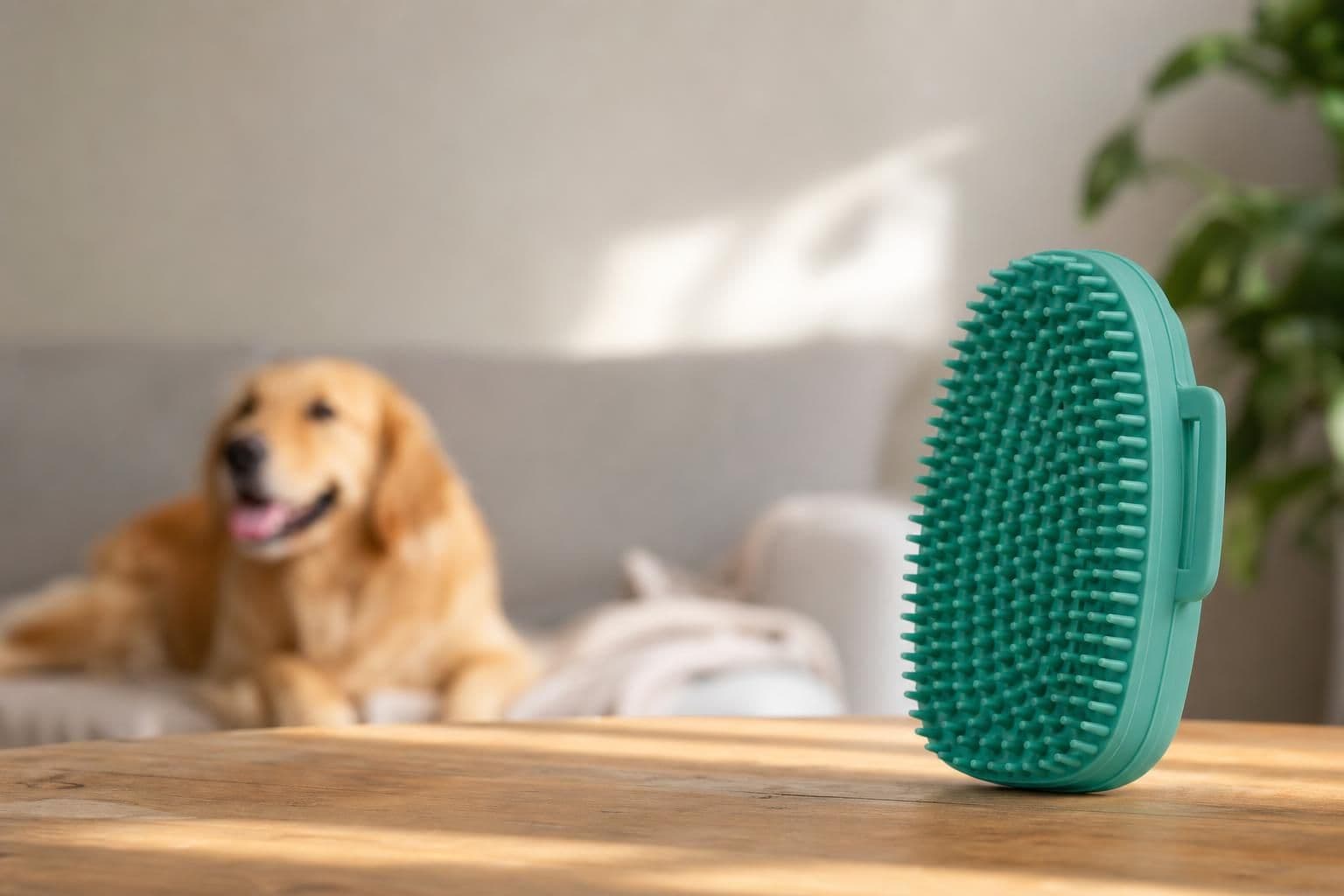
Yes, silicone pet hair brushes work for removing loose, already-shedding fur from the top coat, especially on short- and medium-haired dogs and cats — but they are not a substitute for a slicker brush or deshedding tool when it comes to reaching the dense undercoat or breaking up mats. Their soft rubber tips are gentle enough for daily use and double as a bathing tool, which is why many owners keep one in rotation alongside a stiffer brush.
Key takeaways
- Silicone brushes lift loose surface hair and distribute skin oils well, but they don't penetrate a thick undercoat the way a slicker or deshedding rake does.
- They're gentle enough for sensitive skin, cats, and bath time, making them a good "everyday" tool rather than a once-a-week deep-shed tool.
- Pair a silicone brush with a slicker brush during heavy shedding seasons (spring and fall) for the best result.
How a Silicone Pet Hair Brush Physically Works
A silicone pet hair brush uses soft, flexible rubber bristles or nubs, usually molded in rows on a palm-sized pad, that catch loose hair through friction and slight static cling rather than piercing into the coat like metal pins do. When you run it against the direction of hair growth, the nubs flex against the skin and gather hair that's already detached but still tangled in the topcoat. That's the key mechanical limitation: it collects hair that's ready to come out, not hair that's still anchored in the undercoat.
This is also why silicone brushes work so well in the bathtub. Wet fur makes loose hair easier to lift, and the rubber won't scratch skin the way a metal comb can when used on damp fur. Many owners use a silicone brush for a pre-bath pass and a post-bath pass, which noticeably reduces the amount of hair that ends up on towels and floors afterward.
Where It Excels — and Where It Falls Short
Good for:
- Daily maintenance brushing on short-haired dogs and cats
- Bath-time deshedding (wet or with shampoo lathered in)
- Cats or dogs who dislike the scratch of metal-pin brushes
- Touch-ups between full grooming sessions
Not ideal for:
- Breeds with a thick double coat carrying significant undercoat volume
- Mats or tangles, which need a slicker brush or comb to work through
- Long-haired cats and dogs during peak shedding, where undercoat buildup is the main issue
When our own cats, Ai and Dudu, were tested with grooming tools during product selection, the silicone option worked well for their regular coat upkeep and bath routine, but a slicker-style brush still did more of the heavy lifting during their spring shed. That pattern lines up with how the tool is designed to function — it's a surface-level solution, and a very good one for that specific job.
Why Shedding Happens in the First Place
Shedding is a normal biological process tied to hair growth cycles, and most dogs and cats shed some amount year-round, with heavier shedding in spring and fall as coats adjust to seasonal temperature and daylight changes. According to the American Veterinary Medical Association, coat and skin health can also be affected by nutrition, parasites, and underlying medical conditions, so a sudden increase in shedding or bald patches is worth a veterinary check rather than just more brushing. Regular brushing itself doesn't stop shedding — it just removes hair before it ends up on furniture, clothing, or bedding.
Cats in particular spend a large portion of their day self-grooming, and swallowed loose hair is a common contributor to hairballs. The Cornell Feline Health Center notes that regular brushing is one of the simplest ways to reduce the amount of hair a cat ingests during self-grooming, which is a practical reason to keep a silicone brush in the routine even outside of shedding season.
Choosing the Right Tool for Your Pet's Coat
- Short, single coat (many cats, short-haired dogs): A silicone brush alone can often handle regular maintenance.
- Double coat, moderate to heavy shedding (Huskies, Labs, many cats with dense undercoats): Use a silicone brush for surface hair and bath time, but add a slicker brush or undercoat rake weekly during shedding season.
- Long-haired or prone to mats: Silicone brushes won't prevent matting; a comb or slicker brush should do the detangling work first.
- Sensitive skin or grooming-averse pets: Silicone's soft nubs are usually the most comfortable starting point to build a positive grooming habit before introducing firmer tools.
A self-cleaning slicker brush is a natural pairing here — it handles the undercoat work a silicone brush can't, and a self-cleaning design makes the pull-and-toss cleanup step less tedious. Keeping both types on hand covers the full range of coat conditions through the year.
A Quick At-Home Test
If you're unsure whether your pet's coat needs more than a silicone brush, run a slicker brush over a small section after using the silicone brush. If a noticeable amount of loose undercoat still comes out, that's a sign your pet's coat needs both tools rather than one or the other. This is also a useful check before a seasonal shed, since the amount of hair that comes out with a slicker brush after silicone grooming tends to jump noticeably in spring and fall.
Shedding season also tends to show up on bedding, not just floors — a pet that sleeps in one favorite spot each day will deposit loose hair there daily. If your pet's current bed is hard to vacuum or wash, it's worth reading through what to look for in a cozy bed for anxious dogs for washable, low-maintenance options that make hair cleanup part of a simple laundry routine rather than a chore.
Frequently Asked Questions
Q: Does a silicone pet hair brush hurt on sensitive skin?
No — the soft rubber nubs are designed to be gentle, which is why silicone brushes are often recommended for cats, puppies, and pets with sensitive skin who don't tolerate firmer metal-pin brushes well.
Q: Can I use a silicone brush during a bath?
Yes, silicone brushes are commonly used wet, either with shampoo or on damp fur, since the water helps loosen hair and the rubber won't scratch wet skin the way some metal tools can.
Q: Will a silicone brush stop my dog or cat from shedding?
No brush stops shedding entirely — it's a natural hair growth cycle — but regular brushing with the right tool removes loose hair before it spreads around the house and reduces how much hair a cat ingests while self-grooming.
Q: How often should I use a silicone pet hair brush?
Daily or every other day works well for most pets as light maintenance, with a slicker brush added once or twice a week during heavier shedding periods in spring and fall.
Q: Is a silicone brush enough for a double-coated breed?
Usually not on its own — double-coated breeds carry a dense undercoat that a silicone brush can't fully reach, so pairing it with a slicker brush or undercoat rake gives better results during shedding season.