Is a Gravity Water Dispenser Safe for Cats?
Key takeaway
A gravity water dispenser is safe for cats when it's made of non-toxic materials (BPA-free plastic, stainless steel, or ceramic), cleaned every 1-2 days, and placed away from litter boxes and direct sunlight. The main risks aren't the mechanism itself but neglected maintenance — biofilm buildup, mold in the reservoir, and stale-tasting water that discourages cats from drinking enough.
Key takeaways
- Gravity dispensers are safe by design; the risk comes from infrequent cleaning, not the gravity mechanism.
- Wash the reservoir and bowl every 1-2 days with warm soapy water, and deep-clean weekly to prevent biofilm.
- Cats prone to chin acne or with flat faces may do better with a wide, shallow bowl instead of a narrow gravity spout.
How a Gravity Water Dispenser Works
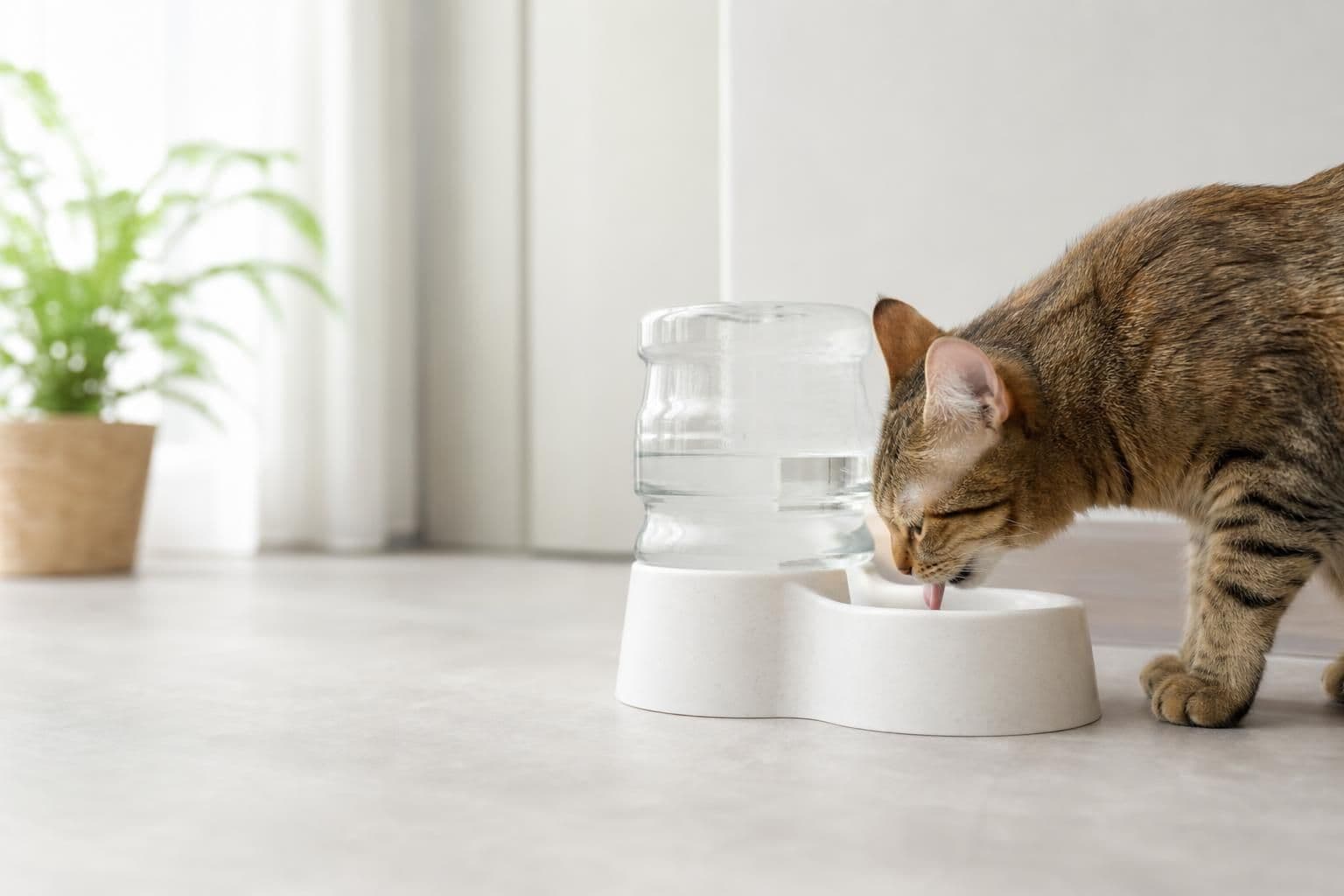
A gravity water dispenser uses simple air pressure and gravity: water sits in an upside-down reservoir connected to a lower bowl, and as the cat drinks and the bowl level drops, air enters the reservoir and lets more water flow down to refill it. There are no motors, filters, or electrical parts, which is exactly why many owners consider it a lower-maintenance, lower-risk alternative to pump-driven fountains. The tradeoff is that gravity units don't aerate or circulate water, so they rely entirely on you to keep the water fresh.
The Real Safety Concerns to Know About
The device itself rarely fails in a dangerous way, but a few specific issues do come up:
- Biofilm and bacterial growth. Standing water in a reservoir that isn't rinsed daily can develop a slimy biofilm layer, which harbors bacteria. The CDC notes that pet water and food bowls are a recognized source of household bacterial contamination if not washed regularly.
- Plastic material quality. Cheap plastics can leach odors or degrade over time, which is why BPA-free plastic, stainless steel, or ceramic reservoirs are the safer long-term choice.
- Chin and muzzle contact. Cats with flat faces (like Persians or exotic shorthairs) or those prone to feline chin acne may develop irritation from repeated contact with a narrow gravity spout; a wider bowl reduces friction on the chin.
- Tip-over risk with lightweight units. A dispenser that's top-heavy or made of thin plastic can tip if a cat jumps near it, spilling water and startling the cat. Weighted or wider-based designs are more stable.
- Reduced total water intake. Cats are famously poor at self-regulating water intake, and stale or warm-tasting water from an uncleaned reservoir can make cats drink less, not more — a bigger practical risk than the dispenser mechanism itself.
Gravity Dispensers vs. Fountains: Which Is Actually Safer?
Neither style is inherently unsafe — the safety difference comes down to what each format requires from you.
| Factor | Gravity Dispenser | Water Fountain |
|---|---|---|
| Moving parts | None | Pump, motor |
| Cleaning frequency needed | Every 1-2 days | Every 3-5 days (plus filter changes) |
| Electrical risk | None | Cord/outlet near water |
| Water freshness | Static until refilled | Continuously circulated |
| Noise sensitivity | Silent | Some cats dislike pump hum |
Fountains circulate water, which some cats find more appealing and which slows bacterial growth slightly between cleanings. Gravity dispensers have no electrical components at all, which some owners prefer for cats that are skittish around cords or motor noise. Either can be a safe, sound choice as long as cleaning is consistent.
How to Keep a Gravity Dispenser Genuinely Safe
A few habits matter more than the dispenser's price point or brand:
- Rinse and refill daily. Even if the reservoir looks full, empty and rinse the bowl portion daily; water sitting in the lower bowl is what cats' mouths actually touch.
- Deep-clean weekly. Take the unit fully apart and wash the reservoir, bowl, and any seals with warm soapy water or a dishwasher-safe cycle if the manufacturer allows it.
- Check the seal. A worn or cracked gasket where the reservoir meets the bowl can let water flow too fast or trap grime in the gap — replace it if it looks degraded.
- Keep it away from litter areas. The World Health Organization and veterinary hygiene guidance both point to keeping food and water sources physically separated from waste areas to limit cross-contamination.
- Watch your cat's drinking posture. If a cat seems to hesitate, paw at the water, or avoid a narrow spout, switch to a wider basin — comfort affects how much they actually drink.
At Ziva Paws, resident cats Ai and Dudu are the ones who end up testing water and feeding items before they go on the shop floor, and the pattern that shows up fastest is which bowl shapes they'll walk away from versus drink from consistently — width and stability tend to matter more to them than the brand or price point. If you're comparing options, the feeding collection includes wider stainless bowls alongside gravity-style dispensers, which is useful if your cat turns out to be a chin-sensitive drinker.
Signs a Dispenser Has Become Unsafe
Stop using a unit and clean or replace it if you notice:
- A pink, orange, or black film on the plastic (mold or bacterial colonies)
- A persistent musty smell even after rinsing
- Cracks or cloudy scratches in clear plastic, which trap bacteria and are harder to fully clean
- Your cat suddenly drinking less or avoiding the bowl
These signs point to hygiene failure, not a design flaw in gravity dispensers as a category.
Related Habits That Support Hydration and Comfort
Hydration habits tend to connect to a cat's broader routine — where they sleep, how anxious they are, and how enriched their environment is. A cat that feels secure and unstressed is generally a more consistent eater and drinker. If you're also working on a calmer home setup, the same attention to comfort and material safety used for water dispensers applies to bedding choices — see what to look for in a cozy bed for anxious pets for the overlapping logic of washable, non-toxic materials.
Frequently Asked Questions
Q: Are gravity water dispensers safe for kittens?
Yes, as long as the bowl portion is shallow enough for a kitten to reach comfortably and the unit is stable enough not to tip. Clean it daily, since kittens drink and play in water more unpredictably than adult cats.
Q: How often should I clean a gravity water dispenser?
Rinse the bowl daily and fully disassemble and deep-clean the reservoir and seals weekly. More frequent cleaning is needed in warm weather or multi-cat households where water turns over slowly.
Q: Can mold in a cat's water dispenser make them sick?
Yes, mold and bacterial buildup in stagnant water can cause gastrointestinal upset or discourage drinking altogether, which raises the risk of dehydration and urinary issues. Regular cleaning prevents this almost entirely.
Q: Is stainless steel or plastic safer for a cat water dispenser?
Stainless steel and ceramic resist scratching and bacterial buildup better than plastic over time, since plastic can develop micro-scratches that trap grime. BPA-free plastic is still safe if it's kept clean and replaced when it becomes scratched or cloudy.
Q: Do gravity dispensers work well for multi-cat households?
Yes, a larger-capacity gravity dispenser can reduce how often you refill water, which is convenient with multiple cats, but it still needs the same daily and weekly cleaning schedule — more cats simply means faster water turnover and more saliva contact.