How to Choose an Automatic Pet Feeder With Water Dispenser
Key takeaway
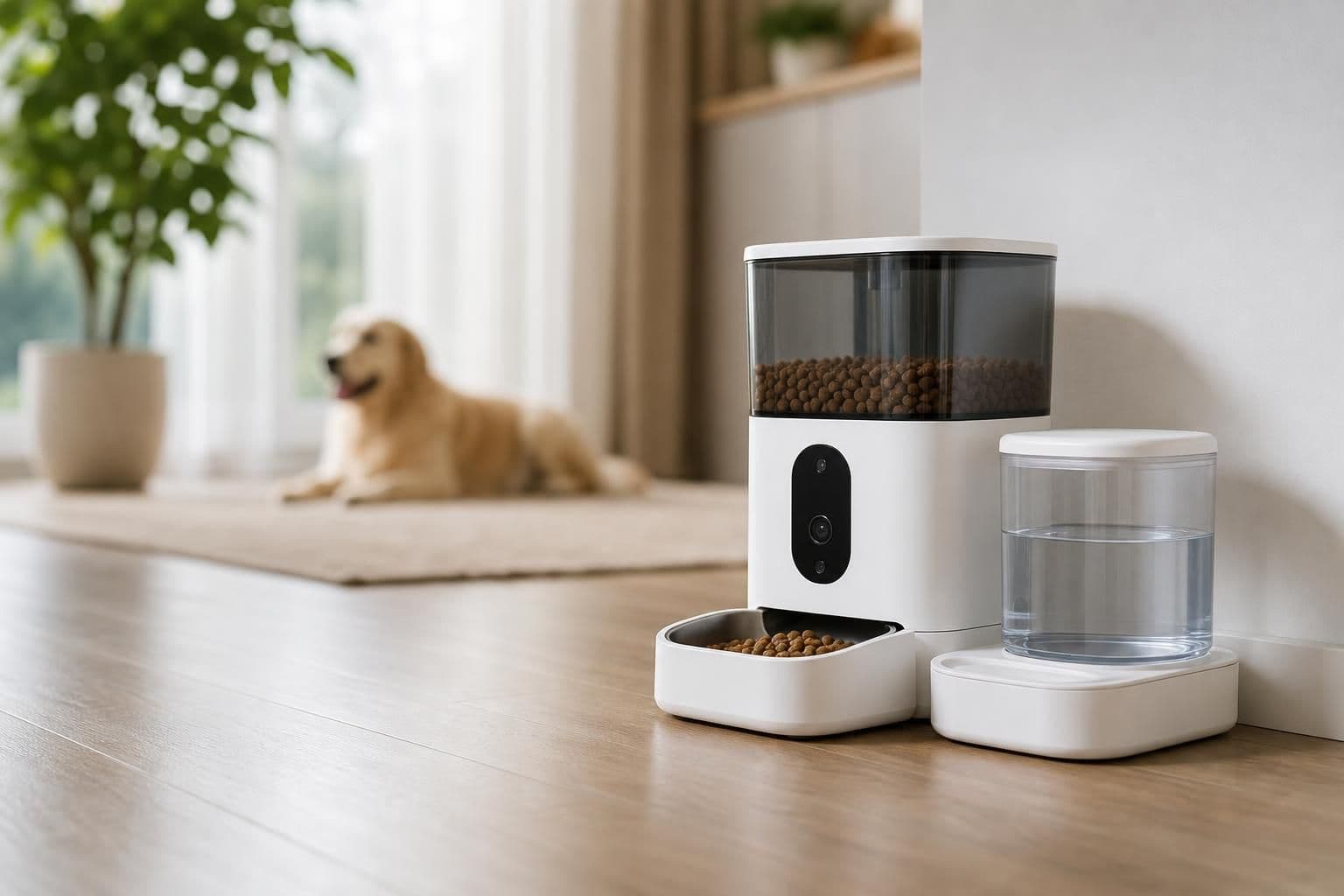
An automatic pet feeder with water dispenser is a combo unit that portions dry food on a schedule while gravity-feeding or pump-circulating fresh water, so pets have access to both even when an owner isn't home. The best choice depends on how many pets share the unit, how much water and food capacity you need between refills, and how easy the parts are to take apart and clean. For most single-pet households, a mid-size hopper (around 6-8 cups of food) paired with a filtered water reservoir covers a long weekend without refilling.
Key takeaways
- Match capacity to actual pet count and appetite — a single-cat unit is not enough for a two-dog household.
- Prioritize dishwasher-safe or tool-free-disassembly parts, since bacteria builds up fastest in stagnant water bowls.
- Choose battery backup or a corded unit with surge protection so a power blip doesn't mean a missed meal.
What These Devices Actually Do
A combo feeder typically has two independent systems in one housing: a rotating or auger-driven food hopper set to release measured portions at programmed times, and a separate water side that's either gravity-fed (water flows down as the bowl empties) or pump-circulated through a filter to keep it moving and oxygenated. The two systems don't interact, so a jam in the food side won't affect water flow and vice versa. Circulating water fountains are popular with cats in particular because moving water encourages them to drink more, which supports urinary tract health — a topic covered by veterinary and public health resources on pet hydration and preventive care.
Sizing the Feeder to Your Household
Before comparing brands, count actual mouths and appetites, not just pets:
- One cat or small dog: a compact hopper (4-6 cups) with a 1-2 liter water reservoir usually lasts 2-3 days.
- Multiple cats or a medium dog: look for 6-8 cup hoppers and a 2-3 liter reservoir refreshed every 1-2 days.
- Multi-pet or large-breed households: either a higher-capacity single unit or two separate stations, since one feeder tray can create food-guarding stress between pets.
If your pets already free-feed, transitioning to scheduled portions is a good moment to also check whether their bedding setup supports calmer mealtime behavior — anxious eaters often do better with a defined feeding spot away from high-traffic areas, similar to the placement advice in this guide on choosing a cozy bed for anxious dogs.
Cleaning and Maintenance Matter More Than Specs
The single biggest complaint with combo feeders isn't the electronics — it's buildup in the water reservoir and food chute. Standing water in gravity fountains can develop a biofilm within a few days if not rinsed, and dry kibble residue in a hopper attracts pantry moths if the container isn't sealed. When comparing units, check for:
- Reservoirs and bowls rated dishwasher-safe on the top rack.
- A hopper lid that seals tightly against humidity, since humid kibble clumps and jams the dispensing motor.
- Replaceable carbon filters on pump-style fountains, generally swapped every few weeks depending on water hardness and usage.
Power, Backup, and Scheduling Features
Corded units are more reliable for continuous water circulation, but a battery backup (usually 3-4 AA batteries) keeps the food schedule running through a short outage. Look for a feeder that lets you set multiple small meals rather than one or two large ones — the American Veterinary Medical Association and most veterinary nutrition guidance favor smaller, more frequent portions for pets prone to bloat or rapid eating, and a good scheduler should support at least 4 feeding times per day. Portion accuracy also matters more than the marketing number of "cups" — a unit that consistently under- or over-dispenses by even a tablespoon per meal adds up over a month.
Safety Checks Before You Buy
- Cord placement: Both curious cats and chewing puppies can worry a power cord; look for models with a cord guard or the ability to route the cord along a wall.
- Material safety: Food-grade, BPA-free plastic or stainless steel components are standard for anything touching food or water.
- Choking hazards: Confirm no small removable parts (filter caps, battery covers) are within reach of a pet that likes to paw at things.
- Stability: A wide, non-slip base prevents tipping if a larger dog bumps the unit while eating.
Our cats Ai and Dudu test feeding and water products before they're listed at Ziva Paws, and the pattern we notice most is that units with a wide base and a snug-fitting lid get knocked around far less than tall, narrow designs — a small design detail that matters more day-to-day than extra digital features.
Where an Automatic Feeder Fits Into a Full Routine
A feeder solves the "when" of eating, but pairing it with a proper slow feeder bowl helps with the "how" for pets that gulp their food, since fast eating is linked to bloat risk in some dog breeds according to veterinary sources. If sizing is a recurring frustration across your pet gear — not just feeders but coats, harnesses, and bedding — it's worth applying the same inch-based approach described in this guide to measuring a dog for accurate clothing sizes, since generic S/M/L labels cause similar mismatch problems across categories, not just apparel. Ziva Paws' own feeding collection uses that same specific-measurement mindset for bowls and dispensers rather than vague size tiers.
Frequently Asked Questions
Q: How often should I clean an automatic pet feeder with water dispenser?
Rinse the water reservoir and bowl every 1-2 days and run a full wash with soap or a dishwasher cycle weekly; wipe the food hopper monthly or whenever you refill it to prevent residue buildup.
Q: Can one combo feeder work for both a cat and a dog?
It can, but only if both pets eat calmly together and the portion sizes don't overlap in a way that lets one pet eat the other's share; separate stations are usually safer for mixed households.
Q: Do automatic feeders work during a power outage?
Most units include battery backup for the food dispensing motor, so scheduled meals continue, but gravity-fed water sides keep working regardless of power since they don't rely on a pump.
Q: What size water reservoir does a single cat actually need?
A cat typically drinks a modest amount daily depending on diet and activity, so a 1-2 liter reservoir refreshed every 2-3 days is usually sufficient for one cat, though more if the household is warm or dry.
Q: Are auger-style or rotating-tray feeders more reliable for dry kibble?
Auger-style dispensers tend to handle irregularly shaped kibble more consistently than rotating trays, which can jam if a large piece of food wedges in the tray opening.