Best Dog Trench Coat: How to Choose the Right Fit
Key takeaway
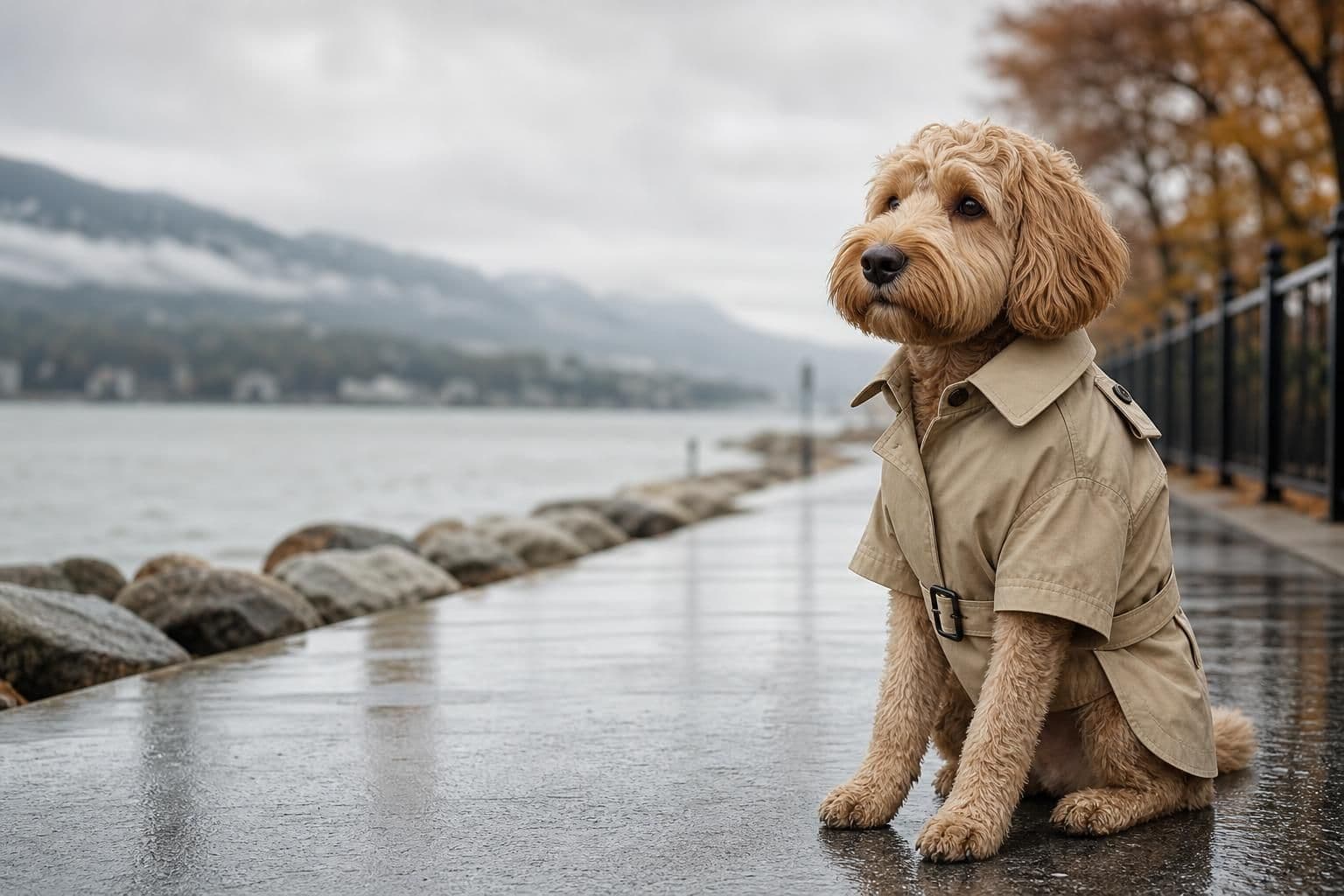
The best dog trench coat is a water-resistant, properly fitted outer layer that covers the back and belly without restricting shoulder movement, uses a chest girth and back-length measurement rather than a generic size label, and fastens securely enough to stay put during a windy or rainy walk. Look for taped or coated seams, a leash-hole or D-ring opening, and a lining weight that matches your climate. Fit matters more than style here, because a coat that binds at the shoulders or gaps at the chest will end up discarded on the closet floor.
Key takeaways
- Measure chest girth, neck, and back length in inches before buying — a trench coat sized by "small/medium/large" alone is a guess, not a fit.
- Prioritize a water-resistant or water-repellent outer shell with sealed or taped seams if your dog walks in rain or snow.
- A properly fitted coat should let you slide two flat fingers under the belly strap and chest band without pinching.
What actually makes a trench coat "the best" for dogs
A dog trench coat earns that label by doing three things well: keeping the dog dry, staying on through normal movement, and not restricting the shoulders or bathroom posture. Trench coats differ from basic sweaters because they typically have a belted or snap closure at the belly, a collar that stands up against wind, and a shell fabric treated to resist water rather than absorb it. Cotton and wool blends look sharp but soak through quickly in steady rain; a polyester or nylon shell with a water-resistant coating is the more functional choice for anything beyond a dry sidewalk stroll.
Length matters too. A true trench style extends from base of neck to base of tail, sometimes slightly past it, which protects more of the back and belly than a short jacket. For dogs with long backs relative to their legs — dachshunds, corgis — a trench cut without a properly measured back length will either drag on the ground or leave the lower back exposed.
Why inch-based sizing beats S/M/L for coats
Generic size labels assume every "medium" dog has the same proportions, but a 25-pound French Bulldog and a 25-pound Beagle have very different chest depths and back lengths. The three measurements that actually predict fit are:
- Chest girth — the widest part of the ribcage, measured snugly but not tight.
- Neck circumference — where a collar would normally sit.
- Back length — from the base of the neck (where a collar sits) to the base of the tail.
At Ziva Paws, every clothing listing — including coats and outerwear — is sized by these inch measurements instead of a single letter code, specifically because so many returns in pet apparel come down to a "medium" that didn't match the dog's actual shape. If you've already dealt with sizing frustration on costumes, the same measuring approach used in a sizing-first Halloween costume guide applies directly to trench coats.
Trench coat styles compared
| Style | Best for | Water resistance | Typical closure |
|---|---|---|---|
| Classic belted trench | Daily rain walks, moderate cold | High (coated shell) | Belly belt + Velcro/snap chest strap |
| Hooded trench | Driving rain, wind | High | Snap/zip front with hood |
| Lightweight trench (unlined) | Mild drizzle, spring/fall | Moderate | Velcro chest and belly straps |
| Fleece-lined trench | Cold, damp winter climates | Moderate to high (shell-dependent) | Belted or button front |
| Quilted/insulated trench | Freezing temps with wet snow | High | Belted with reinforced snaps |
Unlined trench coats are the most breathable and easiest to size correctly because there's no bulky lining to throw off chest measurements. Insulated versions add warmth but can run tighter than expected, so checking the chest girth number — not just the label — is especially important for those.
Fit checkpoints before you buy
A coat that looks right on a size chart can still fail in person. Before finalizing a purchase, check:
- Shoulder clearance — the dog should be able to extend both front legs fully forward without the coat pulling across the chest.
- Leg strap or leash hole placement — it should sit at the natural collar line, not forcing the leash clip through fabric.
- Belly coverage without restriction — the strap should close without pinching loose skin, particularly on deep-chested breeds.
- Tail clearance — the coat shouldn't trap or sit on the base of the tail, which can cause chafing over repeated wear.
Dudu, one of the two cats who test products before they're listed at Ziva Paws, isn't a trench coat candidate, but the same shoulder-clearance and strap-pinch checks the team uses on cat apparel carry over directly to dog outerwear fit testing — watching how a garment moves with the animal, not just how it measures flat on a table.
Climate and material considerations
The American Kennel Club notes that short-coated and small-breed dogs lose body heat faster and benefit more from added layers in cold or wet weather than double-coated breeds built for insulation (AKC). If you're shopping ahead of a specific storm pattern or seasonal shift, checking regional forecasts through the National Weather Service can help you decide between a lightweight water-resistant trench and a fully insulated one — a dog walking in 40°F steady rain needs different protection than one in dry 50°F wind.
If your dog already tolerates a sweater or vest well, a trench coat is usually an easy next step. If your dog has historically resisted wearing clothing altogether, it's worth reading why some dogs refuse to wear booties — the same acclimation principles (short sessions, treats, letting the dog sniff the garment first) apply to introducing a coat.
Caring for a trench coat between walks
Water-resistant shells generally need wiping down rather than frequent machine washing, since repeated washing can strip the coating over time. Check the care label, but as a general rule: shake off loose dirt, spot-clean mud with a damp cloth, and let the coat air dry fully before storing it to prevent mildew inside the lining. A grooming hammock or towel setup makes drying off a wet dog before the coat goes back on considerably faster, especially for dogs who shake off water everywhere.
Frequently Asked Questions
Q: How do I measure my dog for a trench coat?
Measure chest girth around the widest part of the ribcage, neck circumference where a collar sits, and back length from the base of the neck to the base of the tail, all in inches. Compare these three numbers to the brand's size chart rather than relying on a weight range alone.
Q: Are trench coats warm enough for winter, or just rain protection?
A classic unlined trench coat is primarily a rain and wind shield, not a cold-weather insulator. For freezing temperatures, look for a lined or insulated trench style, and consider layering a sweater underneath on especially cold days.
Q: Can a trench coat replace a raincoat for dogs?
A well-made trench coat with a coated or taped-seam shell functions as a raincoat for most walking conditions. In heavy, sustained downpours, a hooded version offers more complete coverage than a classic collar-only trench.
Q: Will a trench coat restrict my dog's movement?
It shouldn't, if sized correctly — your dog should be able to fully extend both front legs and sit normally without the fabric pulling or binding at the shoulders. Restriction is almost always a sizing issue rather than a design flaw.
Q: How often should my dog wear a trench coat?
There's no fixed schedule; it depends on your climate and your dog's coat type. Short-haired and small breeds typically benefit from a coat anytime temperatures drop below their comfort range or rain is in the forecast, while heavily double-coated breeds may rarely need one.