Best Cooling Vest for Dogs: How to Choose the Right One
Key takeaway
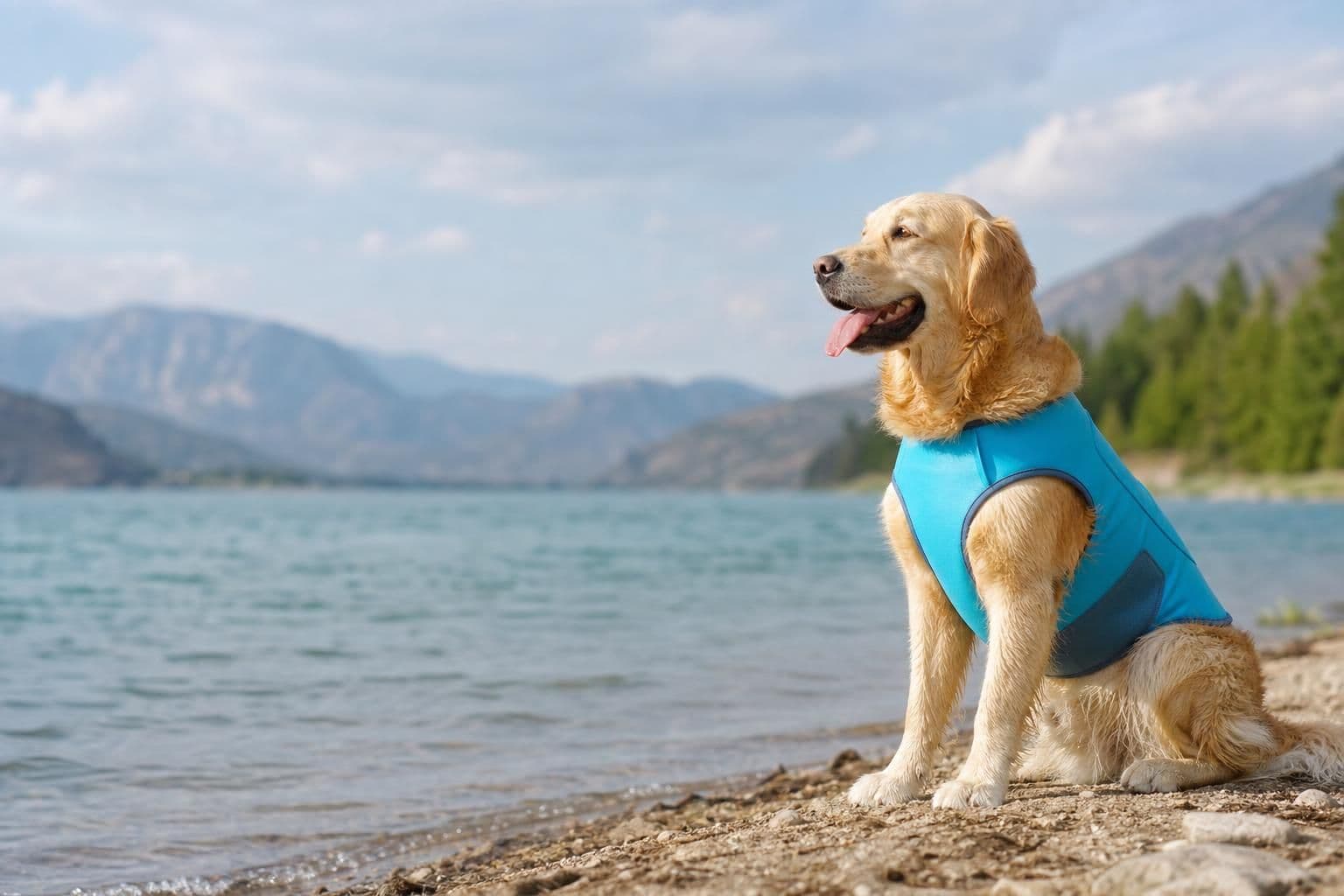
The best cooling vest for dogs is an evaporative or gel-based vest that fits snugly across the chest and back without restricting leg movement, stays damp (not soaked) for 1-2 hours in dry heat, and comes in a size based on actual chest and neck measurements rather than generic S/M/L. For most dogs doing moderate outdoor activity in warm weather, an evaporative fabric vest offers the best balance of cooling power, weight, and ease of care.
Key takeaways
- Evaporative vests cool through water and airflow; gel vests cool through stored cold and work better in humid climates.
- Measure your dog's chest girth and neck before buying — a loose vest traps heat instead of releasing it.
- Re-wet or re-chill the vest every 1-2 hours during active use; a cooling vest is a supplement to shade and water, not a replacement.
How Cooling Vests Actually Work
Most cooling vests use one of two mechanisms. Evaporative vests use a fabric core that holds water; as the water evaporates off the dog's body, it pulls heat away, similar to sweating. Gel or ice-pack vests contain inserts that are chilled in a freezer or refrigerator and release stored cold directly against the skin.
Evaporative vests tend to work best in dry, breezy conditions where moisture can actually evaporate. In humid regions, evaporation slows down, so a gel vest or a combination design often performs more consistently. Dogs regulate heat mainly by panting rather than sweating through skin, since they have only a limited number of sweat glands concentrated in their paw pads, according to the American Veterinary Medical Association. A cooling vest supports that natural process by lowering the surface temperature of the torso, but it does not replace the dog's need for shade, airflow, and water.
Comparing the Main Types of Cooling Vests
| Vest type | How it cools | Best for | Typical downside |
|---|---|---|---|
| Evaporative fabric | Water evaporation + airflow | Dry heat, long walks, hiking | Needs re-wetting every 1-2 hours |
| Gel/ice pack insert | Stored cold against skin | Humid climates, short outings | Heavier; inserts need a freezer |
| Reflective/UV mesh | Blocks direct sun exposure | Light-coated or sun-sensitive dogs | Minimal active cooling, more of a shield |
| Combination (evaporative + reflective) | Both mechanisms | Variable weather, all-day wear | Higher cost, bulkier fit |
Getting the Fit Right
A cooling vest that gaps at the chest or rides up over the shoulders loses most of its benefit because the cooled fabric isn't in contact with skin. For an accurate fit, measure:
- Chest girth — around the widest part of the ribcage, just behind the front legs.
- Neck circumference — where a collar would normally sit.
- Back length — base of neck to base of tail, so the vest doesn't dig into the hind legs or leave the lower back exposed.
This is the same reason Ziva Paws lists every piece of clothing by inch measurements instead of S/M/L — a "medium" label means something different across brands, but a chest measurement doesn't. The same logic applies when shopping for a cooling vest from any retailer: look for a size chart in inches, not just a breed-based size guide, since body shape varies widely even within one breed.
Signs Your Dog Needs More Than a Vest
A cooling vest helps manage mild heat stress, but it isn't a treatment for overheating. Watch for heavy panting that doesn't slow down, bright red gums, stumbling, or collapse — these are signs of heat exhaustion or heatstroke and require immediate veterinary attention, not just a vest change, per guidance from the American Kennel Club. Short-nosed breeds like bulldogs and pugs are at higher risk because their airway shape makes panting less efficient at cooling.
If you're also trying to read your dog's comfort level in cold weather on the opposite end of the season, the cues are different — see how to tell if your dog is cold for the signs that indicate the opposite problem.
When a Cooling Vest Makes Sense
Cooling vests are most useful for:
- Dogs with thick or dark coats walked during midday heat
- Working or sporting dogs exercising outdoors
- Senior dogs or dogs with heart or respiratory conditions that make heat regulation harder
- Short trips in a hot car as a backup — never a substitute for leaving a dog in a parked car
They're less necessary for dogs that mostly stay in air-conditioned spaces or only go outside briefly for bathroom breaks.
Caring for a Cooling Vest
Evaporative vests typically air-dry and can be re-wetted with regular tap water; gel vests need a freezer or fridge cycle between uses. Rinse either type after use on a beach or in chlorinated water, since salt and chemical residue can irritate skin against a damp vest. Always dry the vest fully before long-term storage to prevent mildew buildup in the fabric core.
Hydration matters just as much as the vest itself — a dog working hard in heat needs frequent access to water, and a slow feeder or automatic water dispenser at home can help maintain a consistent drinking routine on hot days when appetite and thirst cues shift.
Frequently Asked Questions
Q: How long does a dog cooling vest stay cool?
An evaporative vest typically stays effectively cool for 1-2 hours in dry conditions before it needs re-wetting; a gel-insert vest stays cold for a similar window before the inserts warm to body temperature and need re-chilling.
Q: Can a cooling vest replace shade and water on a hot day?
No. A cooling vest supplements a dog's natural heat regulation but doesn't replace access to shade, airflow, and fresh water, which remain the primary ways to prevent overheating.
Q: Are cooling vests safe for all dog breeds?
Most healthy dogs can wear a properly fitted cooling vest, but short-nosed breeds and dogs with heart or respiratory conditions still need extra caution in heat regardless of the vest, since their panting efficiency is already reduced.
Q: How do I measure my dog for a cooling vest?
Measure chest girth behind the front legs, neck circumference where a collar sits, and back length from neck base to tail base, then compare those numbers to the brand's inch-based size chart rather than relying on a general S/M/L label.
Q: Is a cooling vest the same as a cooling mat or bandana?
No. A vest covers more surface area and holds direct contact across the torso, while a cooling mat works passively when a dog lies on it and a bandana cools a smaller area around the neck — vests generally offer more consistent cooling during active movement.