Stainless Steel vs Ceramic Dog Bowl: Which One Wins?
Key takeaway
For most dogs, a stainless steel bowl is the safer everyday choice because it's non-porous, dishwasher-safe, and won't shatter if knocked off a step or dropped by an enthusiastic eater. Ceramic bowls can be a good option for slower, calmer dogs and owners who prioritize a heavier, tip-resistant base and a decorative look, but they carry a chip and crack risk that stainless steel doesn't. The right pick usually comes down to how your dog eats, not just what looks nice in the kitchen.
Key takeaways
- Choose stainless steel for daily durability, easy sanitizing, and resistance to bacteria buildup in scratches.
- Choose ceramic only if it's labeled lead-free and food-safe, and inspect it regularly for hairline cracks.
- Weight matters more than material for tip-prone dogs — a heavy ceramic or a rubber-bottomed steel bowl both solve sliding.
How the two materials actually differ
Stainless steel is a metal alloy, so it doesn't absorb odors or liquids the way porous materials can, and it resists scratching well enough that most everyday dents and dish-cleaning marks don't create deep grooves bacteria can hide in. Ceramic bowls are made from fired clay coated in glaze; the glaze surface is smooth and easy to wipe down, but any chip exposes the unglazed clay underneath, which is porous and harder to fully clean.
The FDA's guidance on food-contact ceramics notes that glazes must meet lead and cadmium leaching limits, which is why sourcing matters — a bowl marketed for pets isn't always tested to the same standard as tableware. Stainless steel bowls used for pet food are typically food-grade (often labeled 18/8 or similar), the same family of alloy used in commercial kitchen equipment.
Weight, stability, and mess
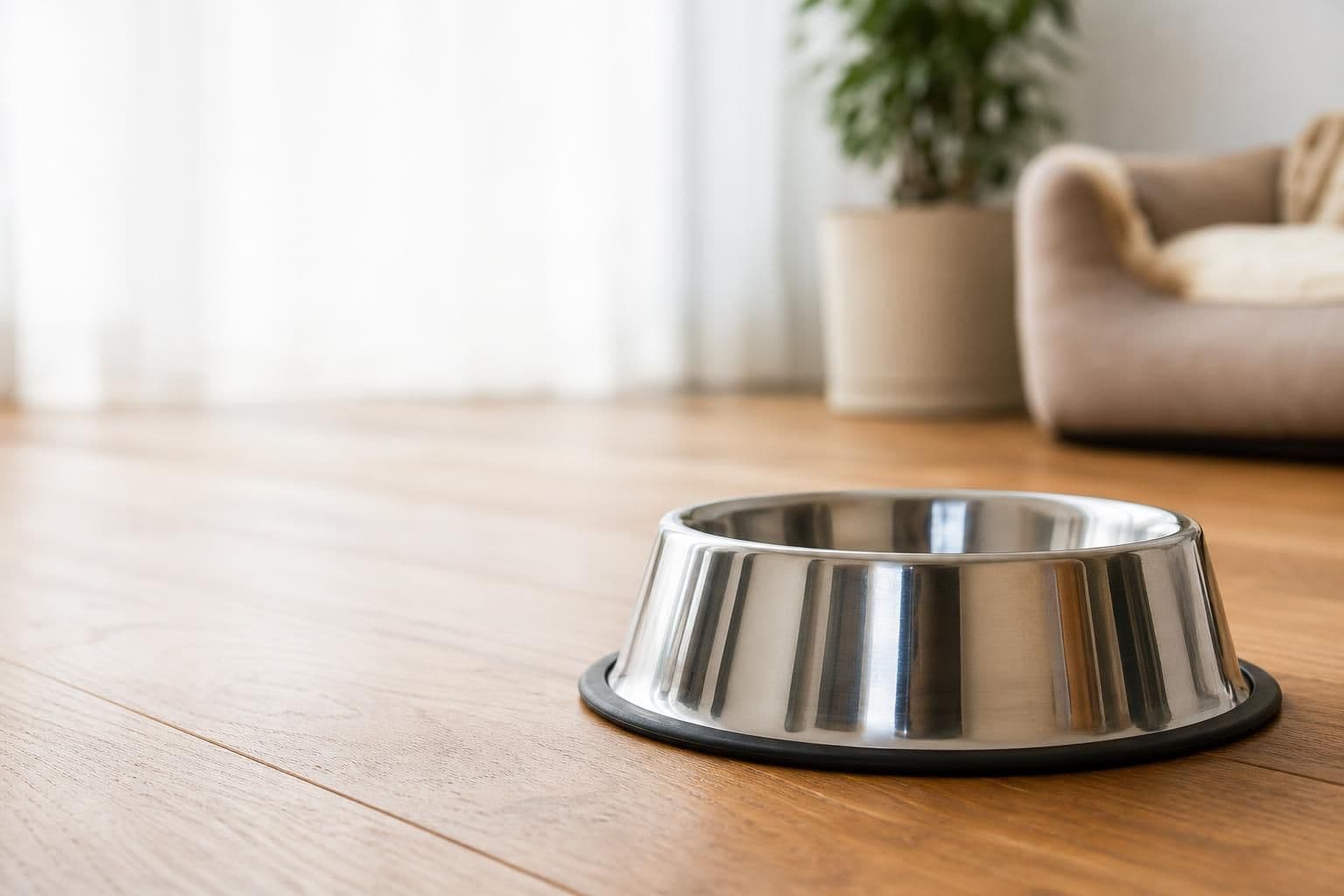
Ceramic's biggest practical advantage is weight. A heavy ceramic bowl sits still on tile or hardwood in a way a lightweight steel bowl won't, which matters for dogs that nose their bowl around while eating or drinking. Many stainless steel bowls solve this with a rubberized or silicone base ring instead of relying on the metal's own weight — so the stability gap is closeable without switching materials entirely.
Neither material is naturally spill-proof. If your dog is a messy drinker, a raised or slow-feed design does more for splash control than the bowl material does.
Safety considerations that matter more than looks
- Breakage risk: Ceramic can crack or chip from a hard drop, a temperature shock (hot water on a cold bowl), or just age. A chipped edge can be sharp enough to nick a dog's tongue or gums.
- Bacteria harborage: Any scratched or chipped surface — steel or ceramic — creates a spot bacteria can colonize. The CDC's guidance on pet food and bowl hygiene recommends washing pet dishes with soap and hot water after each use, regardless of material, precisely because residue builds up fast in warm rooms.
- Allergic-style reactions: Dogs with dark muzzle staining or chin acne sometimes react to plastic, but this is rarely reported with stainless steel or properly glazed ceramic, which is part of why vets often suggest switching to one of the two when troubleshooting muzzle irritation.
- Lead and glaze quality: Only buy ceramic bowls explicitly labeled food-safe and lead-free; decorative pottery not designed for food contact is not a safe substitute.
Side-by-side comparison
| Factor | Stainless Steel | Ceramic |
|---|---|---|
| Durability | Dents but rarely breaks | Can chip or crack |
| Weight/tip resistance | Light unless rubber-based | Heavy, sits still naturally |
| Cleaning | Dishwasher-safe, non-porous | Dishwasher-safe if glaze intact; porous once chipped |
| Odor/stain resistance | High | Good until glaze wears |
| Typical lifespan | Years with normal use | Shorter if handled roughly |
| Best for | Active eaters, multi-pet homes | Calm eaters, indoor-only use |
Which one fits your dog's actual habits
Think about how your dog eats before you think about how the bowl looks. A dog that paws at the bowl, drags it across the floor, or shares a feeding station with another pet is a better match for stainless steel — it survives that treatment without becoming a hazard. A slow, calm eater in a low-traffic spot can do well with ceramic, as long as you check it periodically for chips near the rim or base.
Bowl material is only one piece of a comfortable feeding setup — for dogs prone to gulping or bloating, a slow-feeder insert or puzzle-style bowl can matter more than steel versus ceramic. Our own house testers, Ai and Dudu, get rotated through new feeding gear before it's listed, and the pattern holds for cats too: the cat who eats fast likes a heavier, wider base regardless of material, while the picky eater cares more about the bowl not carrying old food smell. Ziva Paws' feeding collection includes stainless steel and slow-feed styles sized for both routines.
Cleaning and maintenance basics
- Wash daily with hot, soapy water even if a bowl "looks" clean — saliva and food residue build a biofilm faster than most owners expect.
- Inspect ceramic bowls under good light every few weeks for hairline cracks, especially near the base where drops land hardest.
- Avoid extreme temperature swings with ceramic — don't pour boiling water into a bowl straight from the fridge.
- Replace any bowl, steel or ceramic, once it's visibly scratched deep enough to catch a fingernail.
If you're also updating other parts of your dog's routine — sizing a new sweater for the season or picking bedding for a nervous sleeper — getting the actual measurements right matters just as much as it does for a food bowl; our guide on measuring your dog for an accurate clothing size walks through the same "measure, don't guess" logic Ziva Paws uses for its inch-based sizing charts.
Frequently Asked Questions
Q: Is stainless steel or ceramic better for dogs with food allergies?
Neither material itself causes allergies, but stainless steel is less likely to trigger chin acne or muzzle irritation because it's non-porous and doesn't hold bacteria in tiny surface scratches the way a chipped ceramic glaze can.
Q: Can ceramic dog bowls contain lead?
Some can, if the glaze isn't formulated and tested for food contact. Only buy ceramic bowls explicitly labeled food-safe and lead-free, and avoid decorative pottery not intended for feeding use.
Q: Do stainless steel bowls rust?
Properly made food-grade stainless steel (often labeled 18/8) resists rust under normal washing conditions; rust spots usually signal a lower-grade metal or a bowl that's been scratched down to a weaker layer underneath.
Q: Why do stainless steel bowls slide around on the floor?
Steel is lighter than ceramic, so an unweighted bowl moves more easily when a dog noses or paws at it. A rubber or silicone base ring fixes this without giving up steel's durability.
Q: How often should I replace my dog's food bowl?
Replace it as soon as you notice deep scratches, chips, or persistent odor that survives a hot wash — for most households that's a multi-year interval for stainless steel and shorter for ceramic that takes regular drops.