Best Deshedding Tool for Cats: A Buyer's Guide
Key takeaway
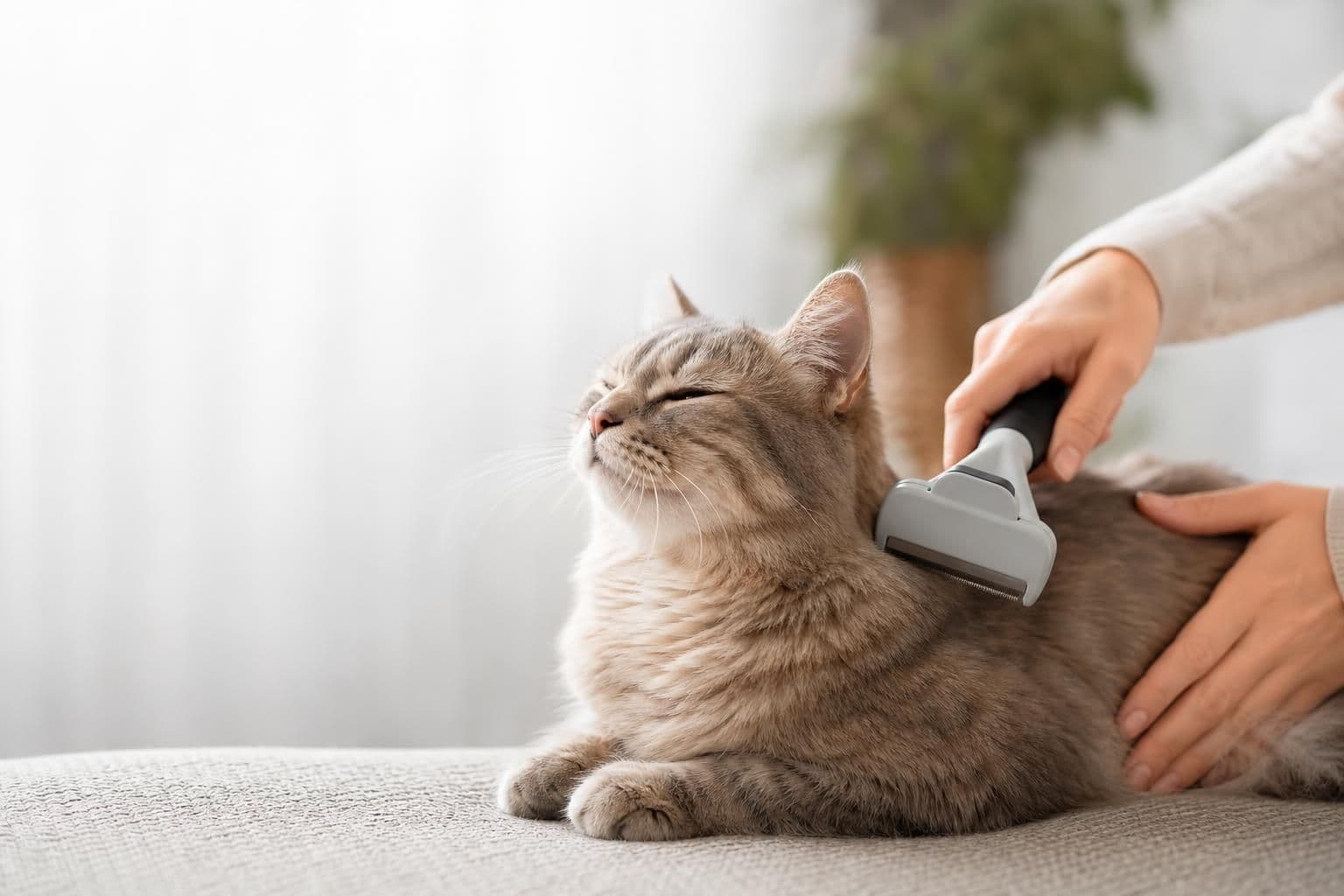
The best deshedding tool for most cats is a fine-toothed slicker brush or grooming glove used two to three times a week, paired with a self-cleaning design so loose fur pulls off the brush in one motion instead of tangling in your fingers. Short-haired cats generally do well with a rubber grooming glove or bristle brush, while long-haired and double-coated cats benefit from an undercoat rake that reaches the dense layer beneath the topcoat. The right choice depends less on brand and more on your cat's coat length, skin sensitivity, and how much loose fur you're actually trying to remove.
Key takeaways
- Match the tool to coat length: gloves and soft slickers for short hair, undercoat rakes for long or double coats.
- Brush 2-3 times a week during normal shedding and daily during seasonal heavy shedding periods.
- A self-cleaning slicker brush saves time and reduces the chance of skin irritation from repeated re-brushing over the same patch.
Why Cats Shed So Much in the First Place
Cats shed year-round, but most owners notice two spikes a year tied to daylight length, typically in spring and fall, when the coat transitions between seasonal density. The Cornell Feline Health Center notes that grooming is also a major source of hairballs, since cats swallow loose fur during self-grooming and it can accumulate in the digestive tract. Regular brushing removes that fur before your cat ingests it, which is one of the clearest practical reasons to keep a deshedding tool in rotation rather than relying on grooming alone.
Types of Deshedding Tools and What They're Actually For
Not every "deshedding tool" does the same job. Some lift loose topcoat hair, others dig into the undercoat, and a few are built mainly for comfort on sensitive skin.
- Slicker brush — fine, slightly bent wire bristles that catch loose fur from the topcoat; works on most coat types.
- Undercoat rake — longer, wider-set teeth that reach through a thick topcoat to pull loose undercoat fur; best for Maine Coons, ragdolls, and other dense-coated breeds.
- Grooming glove — rubber nubs worn like a mitt; gentle enough for skittish cats or kittens still getting used to brushing.
- Deshedding comb — a two-row metal comb, useful for spot-checking mats and tangles before or after brushing.
- Self-cleaning slicker brush — a retractable-bristle version of a standard slicker; press a button and the fur releases in a clump instead of needing to be pulled off by hand.
Comparing the Main Options
| Tool Type | Best For | Ease of Cleanup | Typical Session Time |
|---|---|---|---|
| Grooming glove | Short hair, nervous or first-time cats | Wipe or shake off | 2-3 minutes |
| Standard slicker brush | Most coat types | Pull fur off by hand | 3-5 minutes |
| Self-cleaning slicker brush | Daily or frequent brushing routines | One-button release | 3-5 minutes |
| Undercoat rake | Long-haired, double-coated breeds | Pull fur off by hand | 5-8 minutes |
| Metal comb | Mat prevention and spot-checking | Pull fur off by hand | 1-2 minutes |
When Ai and Dudu test grooming tools before they go up on the shop, the difference between a standard slicker and a self-cleaning one shows up mainly in how many times you stop mid-session to clear the bristles — with two cats and shedding season overlapping, that adds up fast. If you're comparing brushes for your own routine, the grooming collection lists a self-cleaning slicker brush alongside silicone hair removers and pet towels, which is worth a look if fast cleanup matters to you.
How Coat Type Should Drive Your Choice
A cat's coat type matters more than any marketing claim on the packaging. Short-haired breeds like domestic shorthairs or Siamese usually just need surface fur lifted, so a glove or soft slicker is enough. Long-haired and double-coated cats — Persians, Maine Coons, Norwegian Forest Cats — carry a dense undercoat that mats if left unbrushed, and a rake or wide-tooth comb is often necessary to prevent tangles from tightening into mats close to the skin. The American Veterinary Medical Association advises checking for mats around the armpits, belly, and behind the ears specifically, since these areas trap loose fur that a quick topcoat brushing can miss.
Building a Simple Deshedding Routine
- Start with a comb to check for existing mats or tangles before brushing.
- Brush in the direction of hair growth using a slicker or rake, working in short sections rather than long strokes.
- Pay extra attention to the belly, legs, and tail base, where mats form first.
- Finish with a damp pet towel wipe-down to catch any remaining loose fur, especially during seasonal shedding.
- Reward calmly afterward so grooming stays a low-stress routine rather than something your cat starts avoiding.
Cats that resist brushing altogether may respond better to shorter, more frequent sessions rather than one long weekly one. The ASPCA recommends introducing grooming tools gradually and pairing them with treats, which applies just as much to deshedding brushes as it does to nail trims.
Signs a Tool Isn't Working for Your Cat
If your cat flinches, hides, or tries to bite the brush every time you bring it out, the tool may be too stiff for their skin or moving against the coat's natural lay. Redness or irritated skin after brushing usually means you're pressing too hard or using teeth that are spaced too tightly for a short coat. Switching to a softer glove or a gentler slicker often solves the problem without giving up on brushing altogether. It's also worth checking bedding and furniture for excess shed fur between sessions — if your cat naps in the same spot constantly, a washable cover or plush bed can cut down on how much loose fur ends up back in the air, a principle covered in more detail in this guide to choosing bedding that's easy to keep clean even though it was written with dogs in mind.
Frequently Asked Questions
Q: How often should I brush a cat to control shedding?
Most cats do well with brushing two to three times a week, increasing to daily sessions during spring and fall shedding peaks. Long-haired cats generally need more frequent brushing than short-haired ones to prevent mats.
Q: Are deshedding tools safe for cats with sensitive skin?
Yes, if you choose a soft-bristle glove or gentle slicker and avoid pressing hard against the skin. Stop immediately if you notice redness, and switch to a softer tool if your cat seems uncomfortable.
Q: Do deshedding tools help prevent hairballs?
Removing loose fur before your cat swallows it during self-grooming can reduce hairball frequency. Regular brushing is one of the simplest ways to cut down on the amount of fur your cat ingests.
Q: Can I use the same tool on a kitten as an adult cat?
Kittens usually tolerate a soft grooming glove better than a stiffer slicker brush or rake, since their skin is more sensitive. As they grow, you can introduce firmer tools gradually once they're comfortable with handling.
Q: What's the difference between a slicker brush and an undercoat rake?
A slicker brush uses fine, closely spaced bristles to lift loose topcoat fur, while an undercoat rake has longer, wider teeth designed to reach the dense layer beneath. Double-coated or long-haired cats typically need both.