Do Cats Get Cold in Winter? Here's How to Tell
Key takeaway
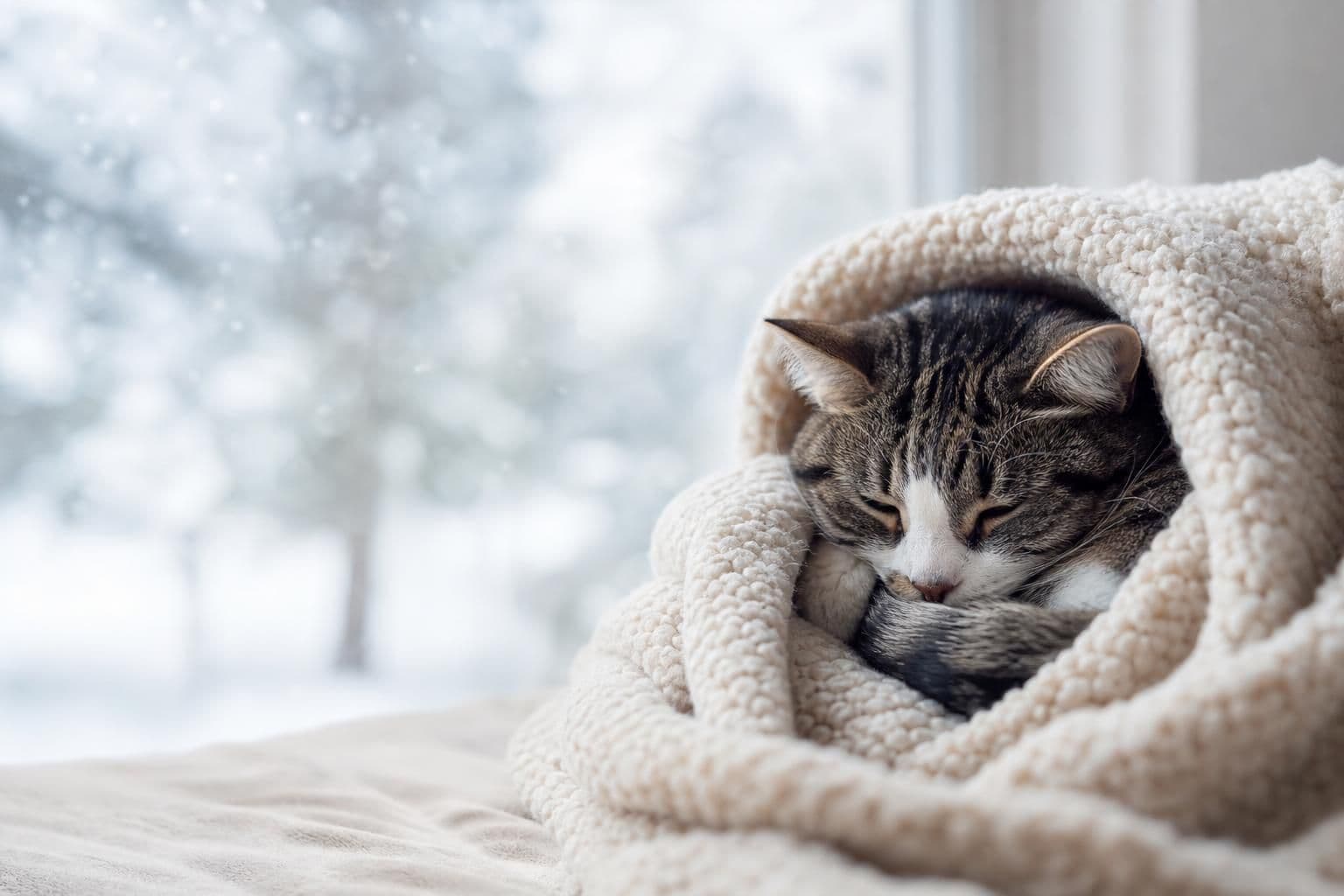
Yes, cats get cold in winter, including indoor cats. A cat's normal body temperature runs around 100.5–102.5°F, and when room or outdoor temperatures drop, cats lose heat through their ears, paw pads, and belly faster than most owners expect. Kittens, senior cats, short-haired breeds, and cats with low body fat are the most vulnerable to feeling chilled or developing hypothermia.
Key takeaways
- Shivering, curling into a tight ball, cold ears/paws, and seeking out warm spots (vents, laptops, sunny windows) are the first signs a cat is cold.
- Indoor temperatures below roughly 60°F can be uncomfortable for thin-coated or senior cats, even if the room feels fine to people.
- Outdoor or feral cats need insulated, draft-free shelter once nighttime temperatures approach freezing — a regular cardboard box is not enough.
Why cats feel the cold even indoors
Cats evolved from desert ancestors, but domestic cats today have a wide range of coat types and body fat levels, so cold tolerance varies a lot from one cat to another. A sleek Siamese or an elderly arthritic cat loses heat much faster than a plush-coated Maine Coon. Central heating also dries the air and creates cold spots near floors, windows, and tile, which is why cats gravitate toward beds, sunbeams, or heating vents in winter.
Kittens under about 4 months old can't regulate body temperature as efficiently as adults, and cats with kidney disease, hypothyroidism, or arthritis often feel colder because of slower circulation or reduced muscle mass. Weight matters too — a lean or underweight cat has less insulation than one carrying a healthy layer of fat.
Signs a cat is cold
Cats rarely announce discomfort directly, so watch behavior instead:
- Shivering or trembling, especially after coming in from outside
- Curling into a tight ball with the tail wrapped over the nose
- Cold ears, paws, or tail tip to the touch
- Seeking heat sources: radiators, sunny spots, laptops, or under blankets
- Reduced activity, reluctance to move, or hiding in enclosed spaces
- Puffed-up fur (piloerection), which is the cat's own attempt to trap warm air
If a cat's body feels cold throughout, is lethargic, or has a weak pulse, that's beyond normal chilliness and warrants a same-day veterinary visit, since it can signal hypothermia rather than simple discomfort.
What counts as "too cold" for a cat
There's no single universal number, because it depends on coat, age, and health, but general guidelines help:
- Indoors, most healthy adult cats are comfortable down to about 60–65°F; thin-coated, senior, or ill cats may start feeling cold above that.
- Outdoors, once temperatures fall toward freezing (32°F/0°C), exposed cats are at real risk of frostbite on ears, paws, and tail, and of hypothermia overnight.
- Wet fur dramatically worsens cold tolerance, since a soaked coat loses its insulating air layer — a damp cat in 40°F weather can be colder than a dry cat at 30°F.
The American Veterinary Medical Association notes that pets left outside in freezing temperatures without adequate shelter are at risk of frostbite and hypothermia, and recommends bringing pets indoors during severe cold snaps whenever possible.
Helping an indoor cat stay warm
Most indoor cats manage fine with a few adjustments during the coldest months:
- Offer a raised, draft-free bed away from windows and exterior doors; cats often prefer enclosed or hooded beds that trap body heat.
- Add a soft blanket or cat-specific sweater for short-haired or senior cats, especially right after a bath or grooming session when fur hasn't fully fluffed back up.
- Keep feeding and water stations away from cold floors or drafty corners — a slow feeder bowl placed in a warmer room can also encourage a cat to eat a full, unhurried meal rather than skipping it because the area feels unwelcoming.
- Brush regularly; a clean, mat-free coat insulates better than one full of tangles, which trap moisture and reduce loft. This is also when a self-cleaning slicker brush earns its keep, since Ai and Dudu's winter coats get noticeably thicker and shed more during the season.
If a cat seems reluctant to leave a favorite warm spot or suddenly eats less, it's worth ruling out illness before assuming it's "just the cold" — the guide on how long a cat can safely go without eating explains when reduced appetite crosses from normal winter laziness into a concern.
Clothing and bedding for cold-sensitive cats
Not every cat needs a sweater, but short-haired breeds, kittens, seniors, and cats recovering from shaving (post-surgery or severe matting) often benefit from a light layer. When shopping for cat clothing, fit matters more than the label size — a sweater that's too tight across the chest restricts movement, and one that's too loose can be chewed or snagged. Ziva Paws' clothing collection uses inch-based chest, neck, and back-length measurements instead of generic S/M/L tags, which matters because cat body shapes vary far more than the sizing labels suggest.
For bedding, look for enclosed or raised designs that limit floor-level drafts — cat hammocks, rattan nests, and plush nest beds all work by surrounding the cat with insulating material rather than leaving them exposed on a flat surface. A cozy, walled resting spot also gives anxious or senior cats a sense of security during colder, darker months, which is covered in more detail in the piece on choosing a scratcher lounge with a built-in resting area.
Outdoor and feral cats need extra protection
Cats that spend time outdoors — barn cats, community cats, or indoor-outdoor pets — face real winter risk. The ASPCA advises providing insulated, weatherproof shelters with straw (not blankets, which can freeze and hold moisture) bedding, raised off the ground, with a small entrance to retain body heat. Food and water should be checked frequently since water freezes quickly below 32°F, and wet food can freeze solid within an hour in hard freezes.
Frostbite in cats most commonly affects the ear tips, tail, and paw pads — areas with less fur and reduced blood flow in cold conditions. Signs include pale or grayish skin that later turns red, swollen, or blackened as tissue is damaged; any suspected frostbite needs veterinary attention.
Frequently Asked Questions
Q: Do indoor cats need sweaters in winter?
Most healthy, full-coated adult indoor cats don't need clothing if the home stays above roughly 65°F. Short-haired, senior, very young, or recently shaved cats often benefit from a lightweight sweater, especially in older or drafty homes.
Q: What temperature is too cold for a cat to be outside?
Risk rises sharply as temperatures approach freezing (32°F/0°C), especially overnight or in wind and wet conditions. Outdoor cats need insulated, dry shelter and should ideally be brought inside during hard freezes.
Q: How can I tell if my cat has hypothermia versus just being chilly?
A cold but otherwise normal cat will shiver, seek warmth, and act alert. A cat with hypothermia is lethargic, has cold skin throughout the body (not just ears and paws), may have a weak pulse, and needs urgent veterinary care.
Q: Do cats' coats naturally get thicker in winter?
Yes, many cats grow a denser undercoat as daylight hours shorten, which is a natural insulating response. Indoor cats under artificial light sometimes shed this seasonal pattern less predictably than outdoor cats.
Q: Are older cats more sensitive to cold?
Yes. Senior cats often have less muscle and fat mass, slower circulation, and conditions like arthritis or kidney disease that make them feel cold more easily, so extra bedding and warm resting spots matter more as cats age.