How to Keep an Indoor Cat Entertained
Key takeaway
Keep an indoor cat entertained by giving it three things every day: a chance to hunt (through puzzle feeders or wand play), a chance to climb or perch above floor level, and a rotating supply of novel toys so nothing gets boring. Layer in a few minutes of scheduled interactive play, a safe window view, and a cozy retreat for downtime, and most cats settle into a calmer, more engaged routine within a week or two.
Key takeaways
- Rotate toys weekly instead of leaving everything out — novelty matters more than quantity.
- Give cats vertical territory (shelves, trees, perches) since climbing is a core feline behavior, not a luxury.
- Split play into short 5-10 minute hunting-style sessions rather than one long block, matching a cat's natural energy bursts.
Why bored indoor cats act out
Indoor cats don't get the daily hunting, roaming, and territory-patrolling that outdoor cats do, and that gap often shows up as overeating, excessive meowing, scratching furniture, or over-grooming. The Cornell Feline Health Center notes that environmental enrichment is one of the most effective ways to reduce stress-related behavior in cats kept exclusively indoors. The fix isn't more toys sitting in a basket — it's structured opportunities for the cat to actually use its senses and body.
Give your cat something to hunt
Cats are ambush predators, and feeding that instinct is one of the fastest ways to burn nervous energy.
- Puzzle feeders: hiding kibble in a puzzle box or treat maze forces slow, deliberate problem-solving instead of gulping food in ten seconds.
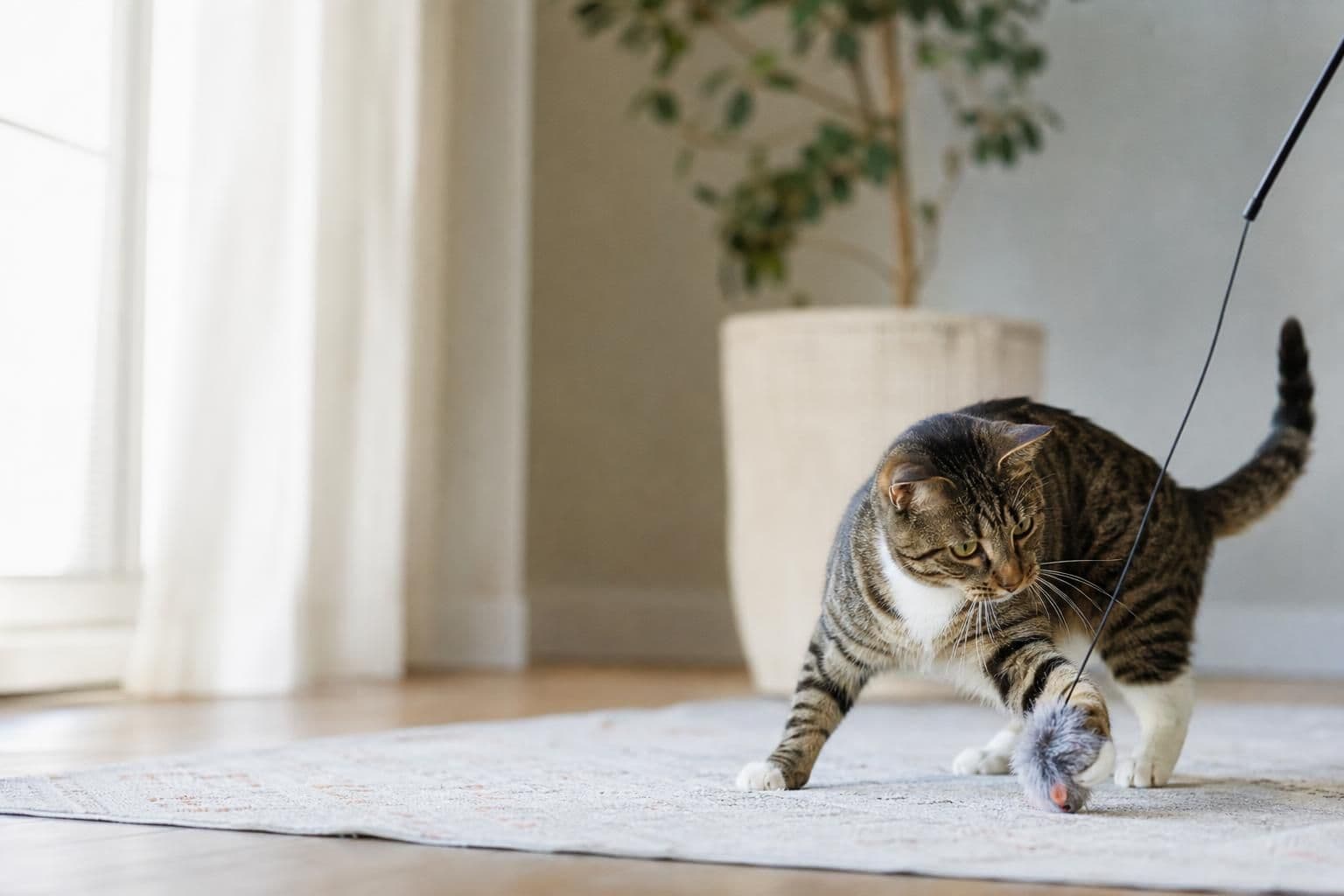
- Wand toys: dragging a feather or fabric lure across the floor mimics prey movement far better than a stationary toy ever will.
- Food scattering: tossing a few pieces of dry food across a room turns mealtime into a mini scavenger hunt.
At Ziva Paws, Ai and Dudu test puzzle boxes and wand-style toys before they're listed, and the pattern that shows up consistently is that cats lose interest in a toy that doesn't move or resist a little — a puzzle feeder that's too easy gets solved once and ignored. Choosing feeding toys with adjustable difficulty levels keeps the challenge relevant as your cat gets better at it.
Build vertical territory
Cats read a room by height, not just floor space. A cat that can climb to a shelf, windowsill, or tree gets a wider field of view and a sense of control over its environment, which the American Association of Feline Practitioners lists as one of the five pillars of a healthy feline environment. Practical ways to add height without a full renovation:
- Wall-mounted shelves in a stair-step pattern
- A tall cat tree near a window
- Clearing the top of a bookshelf or cabinet as a legitimate perch
If your cat also needs a low, enclosed retreat for downtime — especially one prone to hiding when stressed — the same enrichment logic that helps anxious dogs settle applies to cats too; see what to look for in a cozy bed for anxious pets for guidance on choosing bedding that actually gets used instead of ignored.
Rotate toys instead of buying more
Cats habituate to toys fast — often within a few days of constant exposure. Instead of leaving every toy out permanently, keep three or four in circulation and store the rest in a closed bin. Swap them weekly. A toy that's been "gone" for two weeks often gets treated as brand new when it reappears. This costs nothing extra and solves the common complaint that a cat "doesn't play with any of its toys anymore" — usually the toys are just stale, not disliked.
Good categories to rotate between:
- Squeaky or crinkle plush toys for solo batting
- LED or laser teaser toys for supervised chase sessions
- Catnip-filled toys for cats that respond to it (not all do)
- Treat-dispensing puzzle toys for independent play while you're busy
Set a short, consistent play schedule
Two or three sessions of 5-10 minutes each, timed around a cat's natural activity peaks (early morning and early evening), tend to work better than one long session. Wand play should end with the toy "caught" — letting the cat pin or bite it — followed by a small treat or meal, which mimics the natural catch-and-eat sequence and helps signal that hunting mode can switch off. Skipping this step is a common reason cats seem overstimulated or bite at hands after play.
Don't overlook a window view
A secure window perch gives a cat hours of passive entertainment watching birds, cars, or pedestrians, at essentially zero ongoing effort from you. If the window doesn't get much foot traffic outside, a small fish tank, bird feeder placed outside the glass, or even a slow-moving fan can add visual interest.
Grooming and enrichment overlap more than people expect
Short grooming sessions — a few minutes with a slicker brush or grooming glove — double as a form of interaction that many cats accept even if they resist longer handling. Ai and Dudu's reaction to test grooming tools has consistently been that self-cleaning brushes with gentle bristle spacing get tolerated far longer than stiff, dense-bristle brushes, which matters if grooming is going to double as a bonding activity rather than a chore both of you dread.
When entertainment isn't enough
Sudden changes in play interest, appetite, or litter box habits can signal a medical issue rather than boredom. The American Veterinary Medical Association recommends a veterinary check if behavior changes appear suddenly or persist beyond a couple of weeks, since pain or illness can look identical to disinterest from the outside.
Frequently Asked Questions
Q: How many toys does an indoor cat actually need at once?
Three to five toys in rotation is usually enough. Leaving a large pile out permanently tends to reduce interest in all of them, since novelty — not quantity — drives engagement.
Q: Is a laser pointer bad for cats since they can never "catch" it?
Laser play is fine occasionally but works best paired with a physical toy at the end so the cat gets an actual catch. Ending every laser session with a treat or plush toy to pounce on avoids leaving the hunting sequence unresolved.
Q: How much daily play does an indoor cat need?
Most cats do well with two or three sessions of 5-10 minutes of interactive play per day, plus passive enrichment like window access or puzzle feeders throughout the day.
Q: Can scratching posts or cat trees replace toys?
They serve a different purpose — scratching and climbing satisfy territorial and physical needs, while toys satisfy hunting instinct. A well-rounded setup includes both vertical space and rotating play items.
Q: My cat ignores new toys immediately — what's wrong?
Often nothing; some cats need a toy to smell familiar before engaging. Placing a new toy near a favorite blanket or feeding area for a day or two before playing with it can help it feel less foreign.